How to Remove Tooth Gems Safely: Professional Removal Guide
Tooth gems need to come off eventually — and how they're removed matters as much as how they're applied. This guide explains the professional removal process step by step: the correct tools, why DIY removal risks enamel damage, how adhesive residue is polished away, and when a client should be referred to a dental professional.
Why how you remove a tooth gem matters
Tooth enamel is irreplaceable. It does not regenerate once damaged. A tooth gem applied correctly sits on the enamel surface — it is not embedded in it. That means removal, when done correctly, leaves the tooth intact. When done incorrectly — pried, picked, or pulled — it can fracture or scratch the enamel, leaving the tooth sensitive or permanently marked.
The good news: professional removal is straightforward when the right tools are used and the correct sequence is followed. The process is non-invasive, takes a few minutes, and leaves the enamel smooth and clean.
Why DIY tooth gem removal is not recommended
What clients try at home (and why it's risky)
-
✕Using a fingernail to pry — can chip enamel at the bonding edge.
-
✕Using a toothpick or hard object to lever the gem off — risks scratching or fracturing enamel.
-
✕Soaking in acetone or acetone-based products — not safe for oral tissue and doesn't reliably dissolve dental-grade adhesive.
-
✕Biting hard foods to dislodge it — unpredictable force can damage the gem site and surrounding enamel.
What can go wrong with improper removal
-
✕Enamel micro-fractures — invisible to the naked eye but detectable clinically.
-
✕Adhesive tearing off with a fragment of enamel at the bond site.
-
✕Rough or pitted surface where the gem sat — especially if forceful tools are used.
-
✕Tooth sensitivity after aggressive removal attempts on the labial surface.
Client aftercare reminder: Tell every client at the time of application that removal must be done professionally. Include this in your printed or digital aftercare instructions to prevent DIY damage between appointments.
The professional tooth gem removal process
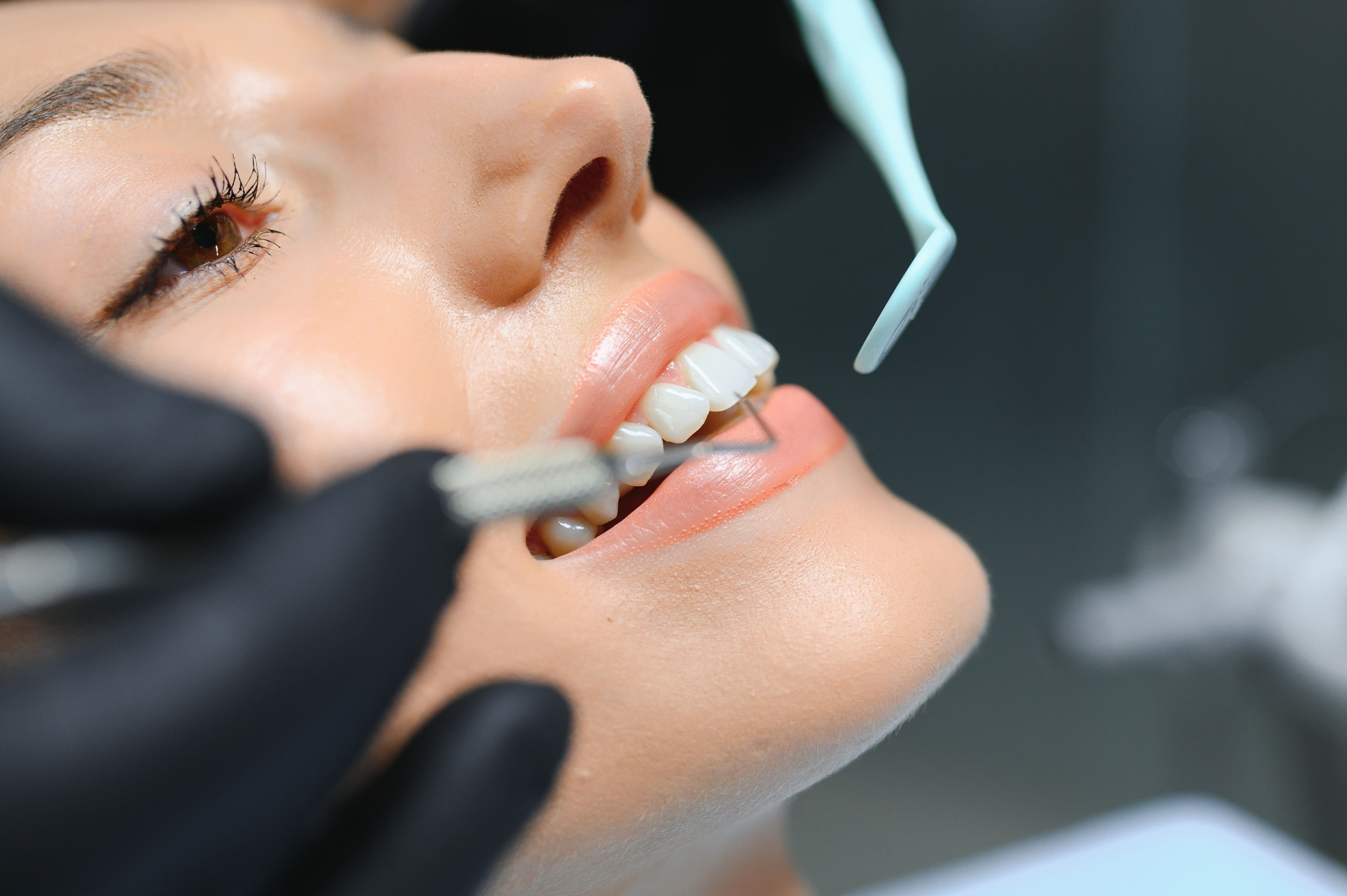
Professional removal follows a controlled sequence that releases the adhesive bond without applying destructive lateral or prying force to the enamel surface. The process is typically completed in under ten minutes by a trained provider.
-
1
Inspect the gem and bond
Assess whether the gem is still fully bonded, partially lifted, or loose. A gem that has partially lifted is easier to remove but the margin area needs extra care during polishing.
-
2
Isolate the field
Dry and isolate the tooth to have a clear, dry view of the bond margin. Soft-tissue retractors make the area easier to work in and protect the lip and cheek.
-
3
Apply controlled lateral force to release the gem
Using an appropriate dental instrument, apply controlled lateral force at the base of the gem to shear the adhesive bond. Do not lever or pry upward. The motion is sideways — not upward. The gem should dislodge cleanly with minimal force when the correct instrument and angle are used.
-
4
Remove adhesive residue
After the gem is off, a thin layer of adhesive almost always remains on the enamel. Do not leave this in place — it will accumulate plaque and stain. Use a fine polishing instrument to carefully remove the residue from the enamel surface without over-polishing the surrounding area.
-
5
Polish and smooth the surface
Finish with a fine-grit polishing cup or point to leave the enamel surface smooth, clean, and with no rough edges. The final result should feel identical to the surrounding tooth surface.
-
6
Inspect and advise
Do a final visual check under good lighting. Advise the client to contact you or their dentist if they notice any sensitivity or unusual texture in the days following removal.
The entire process is non-invasive — no drilling, no anesthetic, no alteration of tooth structure. When done correctly, the enamel is left intact and the surface is as smooth as before the gem was placed.
Tooth gem removal: at a glance
| Method | Safe? | Risk level | Notes |
|---|---|---|---|
| Professional removal (correct instrument) | ✓ Yes | Minimal | Controlled lateral release, residue polished, surface finished. Recommended. |
| Fingernail or prying at home | ✕ No | Moderate–High | Risk of enamel chip at the bond edge. Unpredictable force direction. |
| Toothpick or hard object | ✕ No | High | High risk of enamel scratching and surface damage around the bond site. |
| Acetone or solvents orally | ✕ No | High | Not safe for oral tissue; dental-grade adhesives are not reliably dissolved by acetone. |
| Leaving a loose gem in place | ✕ No | Moderate | A partially lifted gem can collect bacteria under the bond margin. Schedule removal promptly. |
When to refer to a dental professional
Most standard tooth gem removal falls within the scope of a trained tooth gem provider. However, there are specific situations where the client should be referred to a licensed dentist or dental hygienist before or instead of provider-led removal.
Refer immediately if the client reports
-
✓Tooth pain or sensitivity at the gem site that was not present before application.
-
✓Visible discoloration or staining of the enamel at or around the bond site.
-
✓Any rough, pitted, or "chalky" texture noticed at the gem site after a failed DIY removal attempt.
-
✓Swollen or irritated gum tissue around the gem site.
Refer before removal if
-
✓The client has existing enamel wear, cracks, or hypersensitivity noted on intake.
-
✓The gem was applied with an unknown adhesive or incorrect technique.
-
✓There are signs the adhesive may have migrated onto the gingival margin.
-
✓The client is under 16 or has any dental appliance nearby that could complicate removal.
Removal tools and what they do
Using the correct instrument makes the difference between a clean, five-minute removal and a stressful situation that risks the enamel. These are the tools that matter in the removal workflow.
Removal instruments
-
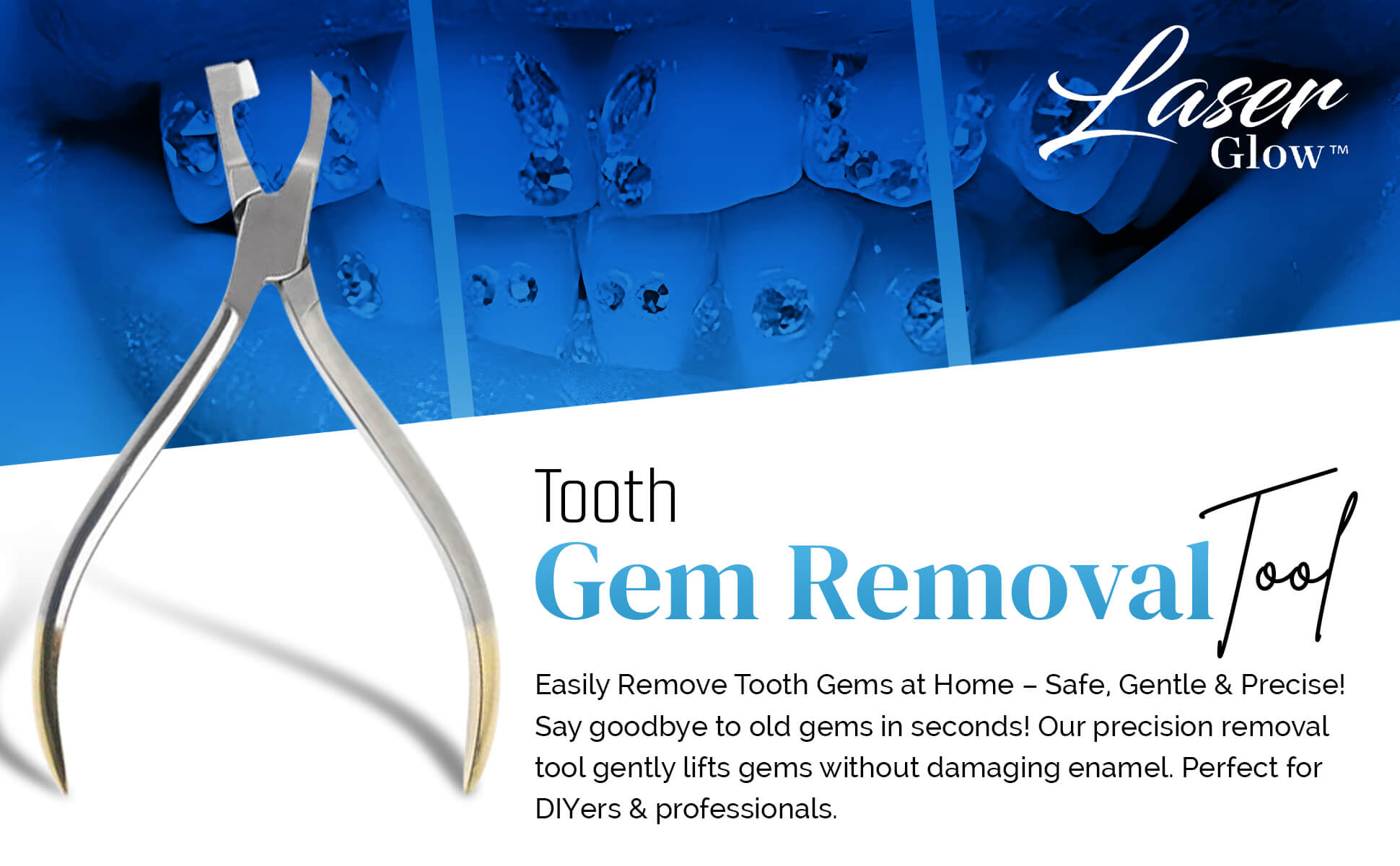
✓Tooth gem removal tool — designed to apply controlled lateral force at the bond base. The correct angle is critical.
-
✓Scaler or bonding instrument (for trained providers) — for adhesive residue at the bond margin.
-
✓Soft-tissue retractor — keeps the field clear and protects the lip during the procedure.
Polishing and finishing
-
✓Fine polishing cup or point — removes remaining adhesive and returns enamel to a smooth, clean finish.
-
✓Prophy paste (fine grit) — the final step to restore a clean, polished surface at the former gem site.
-
✓Good lighting — essential for inspecting residue and enamel condition before and after polishing.
Tooth gem removal FAQ
Can I remove my tooth gem at home?
Professional removal is strongly recommended. Attempting to pry, pick, or force a tooth gem off at home risks enamel damage at the bond site. A trained provider can remove the gem and polish away the adhesive residue in a few minutes without harming the tooth.
Does tooth gem removal hurt?
No. When performed correctly with the right instrument and technique, professional removal is quick and painless. There is no drilling and no anesthetic required. If you experience tooth sensitivity after removal, contact your dental provider.
Does removing a tooth gem damage the enamel?
Correct professional removal does not damage enamel. The tooth gem sits on the enamel surface rather than embedded in it. The bonding agent is released with controlled lateral force, and any remaining adhesive residue is polished away gently. Enamel damage is only a risk with improper DIY removal.
What happens to the tooth after a gem is removed?
After professional removal and polishing, the enamel surface should look and feel identical to the surrounding tooth. There is no permanent mark, indentation, or discoloration when removal is done correctly. The tooth returns to its natural appearance within a day as salivary remineralization continues.
Can I get a new tooth gem put on the same spot after removal?
Yes. Once the adhesive residue has been fully polished away and the enamel is smooth, a new gem can be applied to the same or a different position following the same etch–bond–place–cure–seal sequence. Allow the area to be fully clean and dry before starting a new application.
How long does professional tooth gem removal take?
Typically five to ten minutes for a single gem, including adhesive polishing. Multiple gems or a gem that was applied with a thicker adhesive layer may take slightly longer, but the procedure is still fast and straightforward for a trained provider.