How Long Do Tooth Gems Last?
Most professional tooth gem placements last 3–12 months, with well-placed single crystals sometimes lasting a year or more. This guide covers real-world timelines, the daily habits that help or hurt retention, and a simple plan to get the most months out of your gem.
Most clients ask this right away: "Will it stay for my vacation? For the semester?" The honest answer is that longevity is not a single number — it is a combination of materials, placement location, bonding technique, and your daily habits.
For a clinical breakdown of bonding protocols and edge sealing, see the LaserGlow Tooth Gem Resource Center. This guide focuses on what everyday wear actually looks like.
Real-World Tooth Gem Longevity by Scenario
These timelines are based on professional application using dental-grade etch, bond, and LED curing. DIY kit timelines are lower because consumer adhesives are not formulated for intraoral bonding.
| Scenario | Typical Wear Time | Key Factor |
|---|---|---|
| Single crystal, professional bond, ideal placement | 6–12+ months | Placed away from biting edges, full LED cure, good aftercare |
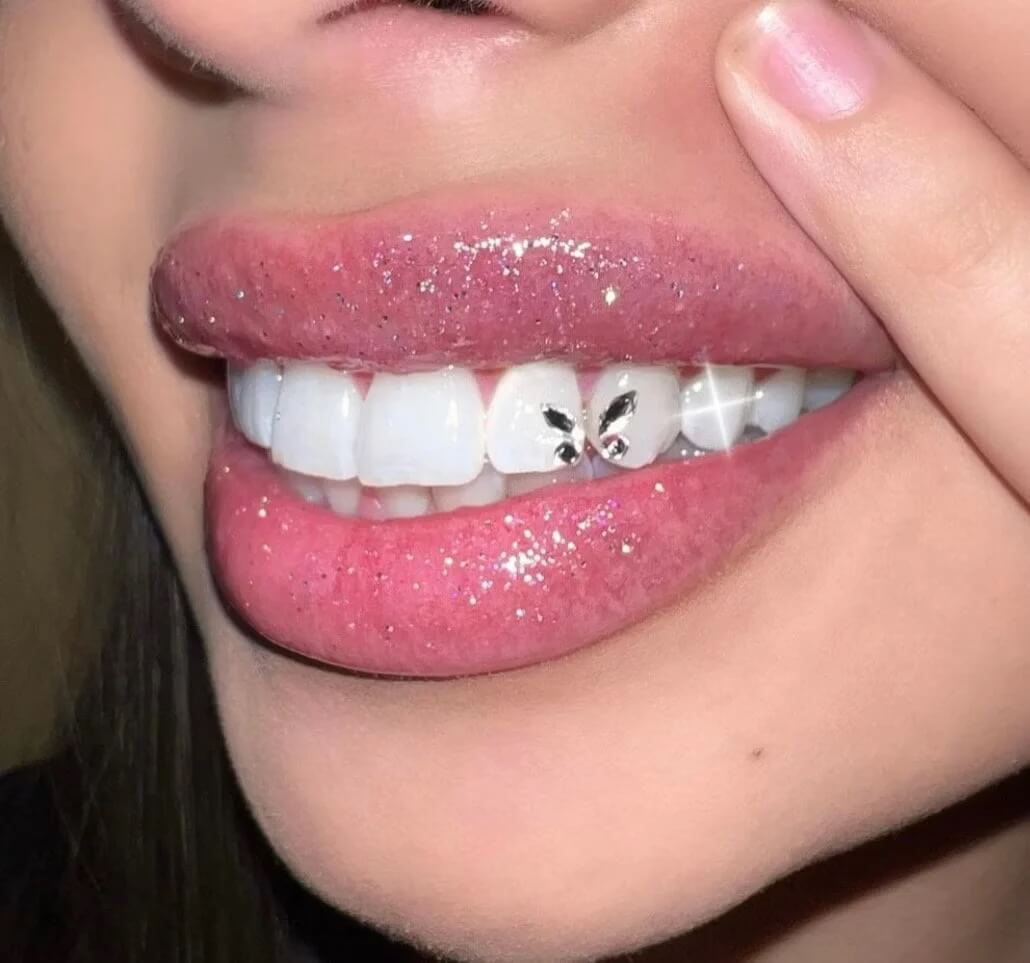
| Shaped gem (heart, butterfly, star) | 4–10 months | More edge surface area; gentle brushing around contours extends life |
| Multi-gem cluster, professional bond | 4–8 months | More adhesive points; one loose gem can affect neighbors |
| DIY kit (home application) | 2–6 weeks | Simplified prep and non-dental adhesive limit retention significantly |
| High-stress placement (near biting edge) | 1–4 months | Chewing forces and micro-impacts shorten lifespan at biting surfaces |
Note: The table above assumes professional placement. DIY kits can be fun for short-term use (events, photoshoots) but are not designed for months-long wear. See: Professional vs. DIY Tooth Gem Value.
Habits That Help and Hurt Tooth Gem Retention
The difference between a gem that lasts 6 weeks and one that lasts 8 months is often behavior, not just materials. Here is what to keep and what to avoid:
Habits that help retention
- Soft-bristle brushing around gem edges (not directly across the gem)
- Avoiding hard biting on the gem for the first 24–48 hours after placement
- Rinsing after sticky or acidic snacks
- Wearing a nightguard if you grind or clench
- Scheduling a quick professional polish if an edge starts to feel rough
Habits that shorten gem life
- Chewing ice, biting nails, or opening packaging with your teeth
- Constant tongue or finger contact with the gem
- Ignoring a rough edge until it fully dislodges
- Applying over cracked enamel, crowns, or existing bonding
- Using whitening strips or high-peroxide treatments directly on the gem area
3-Step Plan to Make Your Tooth Gem Last Longer
- Choose placement wisely: Ask your provider to place the gem away from primary biting surfaces. The center of a front tooth (away from the incisal edge) is ideal for longevity.
- Protect the first 48 hours: The bond continues curing after the appointment. Avoid hard foods, very hot drinks, and sticky candy for at least 24–48 hours to let the adhesive fully set.
- Maintain the edges: If the gem ever feels sharp, catchy, or slightly loose, book a quick professional check instead of picking at it. Early intervention prevents a full dislodgement.
For full clinical bonding protocol, cure times, edge sealing, and maintenance schedules:
Visit the Tooth Gem Resource Center →What to Do If Your Tooth Gem Falls Off
- Stay calm — a properly applied and removed gem should leave enamel intact.
- Run your tongue over the area: if you feel roughness or sensitivity, schedule a quick professional polish to smooth any adhesive residue.
- Save the gem if possible — some providers can clean and rebond the same gem, which is typically $30–$75.
- If the gem fell off very quickly (within days), ask your provider about technique — under-curing and inadequate etching are the most common causes of early loss.
Tooth Gem Longevity: Frequently Asked Questions
How long do tooth gems usually last?+
Most professionally applied tooth gems last between 3 and 12 months. Single crystals placed away from biting edges and cured thoroughly can last a year or more. DIY kits with non-dental adhesive typically last 2–6 weeks.
Why do some tooth gems fall off early?+
Early loss is most often caused by insufficient etching, under-curing the adhesive, placement on a high-stress biting surface, or habits like chewing ice, biting nails, or picking at the gem. Quality materials and proper LED curing dramatically reduce early failure rates.
How can I make my tooth gem last longer?+
Avoid hard biting for 24–48 hours after placement, brush gently around the gem with a soft-bristle brush, rinse after sticky or acidic foods, and do not pick at the edges. If an edge feels rough, see a professional for a quick polish rather than waiting for it to fully dislodge.
Do tooth gems last longer on some teeth than others?+
Yes. Central incisors placed mid-tooth (away from the biting edge) show the best longevity. Gems placed near the incisal edge or on canines and premolars experience more chewing force and typically have shorter lifespans.
Can I get a tooth gem rebonded after it falls off?+
In most cases, yes. If the gem is intact and the enamel is healthy, a provider can clean and rebond the same gem. Rebonding is typically priced at $30–$75 depending on the provider and whether any adhesive polish is needed first.
Professional Supplies That Extend Tooth Gem Lifespan
Longevity starts with dental-grade materials. Craft crystals and household adhesives are not designed for intraoral use and will not produce the same bond strength or safety profile as professional-grade systems.
- Premium Crystal Tooth Gems — flat-back crystals sized for dental bonding
- Tooth Gem Kit (Etch · Bond · Adhesive) — complete professional bonding system
- LED Curing Light — consistent polymerization for stronger, longer-lasting bonds
- Butterfly Tooth Gems
- Heart Tooth Gems
Bottom Line
Expect 3–12 months for most professionally applied tooth gems — longer with smart placement, quality materials, and simple care habits. Treat your gem like semi-permanent jewelry: protect it on day one, avoid stress habits, and let a professional handle polish or removal when needed.