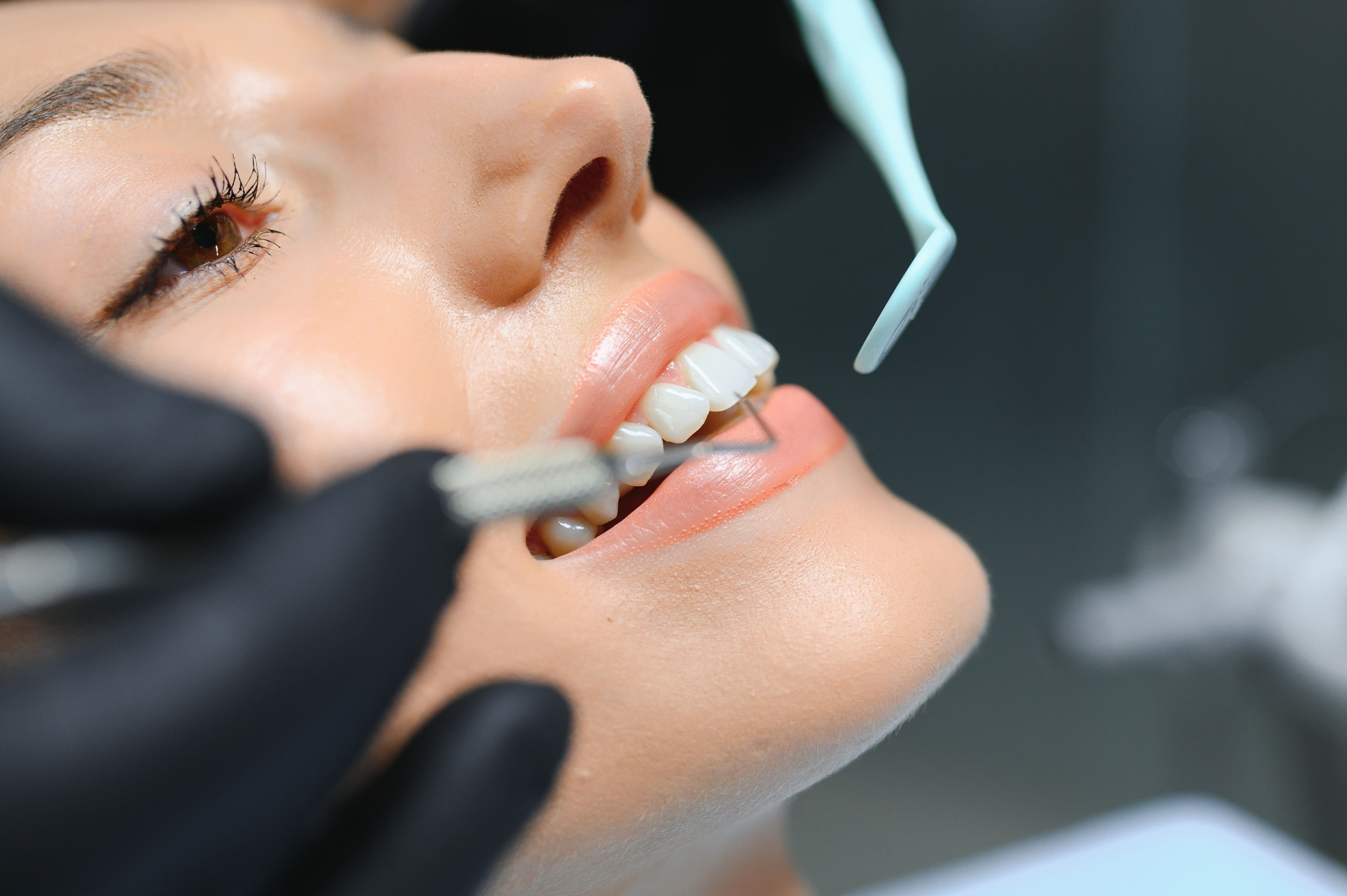
Getting rid of bad breath permanently means treating the cause, not covering it. For most people the odor is coming from the tongue, from between the teeth, from the gumline or from a dry mouth — and mints do nothing about any of those.
Clinically reviewed by David Hanna, RDH · Registered Dental Hygienist
 Tongue Scraper Set
 Alcohol-Free Mouthwash
 Alcohol-Free Breath Spray
Quick Answer: How Do You Get Rid of Bad Breath Permanently?
You get rid of bad breath permanently by finding which source is producing the odor and removing it every day — not by masking it. In most people the source is bacteria on the back of the tongue, plaque between the teeth, inflammation at the gumline, or a mouth that runs dry. Fix the source and the odor stops returning. Mask it and it comes back within the hour.
The short version: brush twice daily, clean between your teeth once daily, clean your tongue every morning, switch to an alcohol-free mouth rinse, stay hydrated, and treat any cavity, gum disease, dry mouth, sinus problem, reflux or tonsil stones that is contributing. Breath spray is for the gap between routines, not a replacement for one.
“Permanently” is the honest sticking point. Bad breath is not a condition you cure once; it is a condition you stop feeding. A routine that removes the bacteria daily keeps breath fresh indefinitely. The moment the routine stops, so does the result. And if odor persists despite a genuinely complete routine, that is a signal to be evaluated rather than a signal to buy stronger mints.
Why Does My Breath Still Smell After Brushing?
Brushing cleans roughly a quarter of the surfaces in your mouth. It does not reach the back of the tongue, it does not reach between the teeth, and it does not reach under the gumline. If your breath smells an hour after brushing, the odor is almost certainly coming from somewhere your brush never went.
The seven places odor actually hides
- The back of the tongue. The most common source by a wide margin. The tongue's surface traps bacteria, debris and the sulfur compounds that cause the smell.
- Between the teeth. Plaque and trapped food ferment. Brushing the front surfaces does nothing for the contact points.
- Under the gumline. Periodontal pockets hold bacteria a toothbrush cannot reach.
- A dry mouth. Saliva is the mouth's rinse cycle. Without it, bacteria multiply and odor concentrates.
- Cavities and failing dental work. Decay, cracked fillings and abscesses all produce persistent odor.
- Appliances. Retainers, night guards and dentures grow biofilm exactly like teeth do.
- Outside the mouth. Postnasal drip, tonsil stones and reflux produce odor that no amount of brushing will touch.
The most common mistake: responding to persistent odor by buying stronger mints or a more aggressive mouthwash. Stronger masking does not treat any of the seven sources above, and an alcohol-heavy rinse can make the problem worse by drying the mouth further.
The single highest-yield change for most people is adding tongue cleaning — it targets the biggest source and takes under a minute. We cover the technique in full in the guide to cleaning your tongue for bad breath.
What Causes Bad Breath? The Six Main Sources
Bad breath, clinically called halitosis, starts inside the mouth in the large majority of cases. Working out which of these applies to you is what turns a temporary fix into a permanent one.
The leading oral cause. Bacteria on the tongue's surface break down proteins and release volatile sulfur compounds — the actual smell.
Reduced saliva from mouth breathing, dehydration, caffeine, alcohol, tobacco or medication lets odor build faster and is the usual reason for morning breath.
Inflamed gums and periodontal pockets shelter bacteria below the gumline. Bleeding when you brush is the signal to get this checked.
Decay, abscesses and failing restorations trap debris and bacteria. This type of odor does not respond to hygiene changes alone.
Garlic and onion compounds are absorbed and released through the lungs, so they outlast brushing. Tobacco and vaping add odor and dry the mouth.
Tonsil stones, chronic sinus drainage and acid reflux are the three most common non-dental sources. Each needs its own treatment.
Useful self-check: if your breath is worst on waking and improves after eating and drinking, dry mouth is likely involved. If it is constant regardless of time of day, look at the tongue, the gums and dental work first.
The Daily Routine That Keeps Bad Breath Away
This routine is not long, but it has to be complete. Every step targets a different odor source, which is why skipping one is usually what keeps breath from improving.
Angle the bristles into the gumline rather than scrubbing straight across. Most people miss the inside surfaces of the lower front teeth and the outer surfaces of the upper molars.
Floss, interdental brushes or a water flosser — whichever you will actually use every day. This is the step that removes the fermenting debris a brush cannot reach.
Scrape from the back forward with light pressure, rinsing between passes. This targets the single largest source of oral odor and takes about thirty seconds.
Alcohol-based rinses give a strong initial sensation, then leave the mouth drier — which is counterproductive if dry mouth is part of your problem.
After coffee, after lunch, before a meeting. A spray handles the hours between routines without the sugar load of mints.
Especially after coffee, alcohol and exercise. Supporting saliva flow is one of the most underrated things you can do for breath.
Replace your toothbrush every three to four months, and clean retainers, night guards and dentures daily. An unclean appliance will undo the rest of the routine.
If you only add one thing: add tongue cleaning. It targets the largest odor source, costs almost nothing in time, and is the step most people are missing when they say brushing has not helped.
Best Mouthwash for Bad Breath: What to Look For
Mouthwash is the step people most often get wrong, because the rinse that feels the most powerful is frequently the one making things worse. Here is how to choose a mouth rinse for bad breath rather than a mouth rinse that simply stings.
Alcohol-free, every time
An alcohol-based rinse delivers an intense clean sensation and then leaves the mouth drier than it found it. Because dry mouth is one of the main drivers of halitosis, a drying rinse can produce a short burst of freshness followed by a worse afternoon. If dry mouth is any part of your picture, alcohol-free is not a preference — it is the requirement.
Judge it by hour four, not by minute one
Strong mint flavor is a masking agent, not a mechanism. The useful question is not how the rinse feels immediately, but whether your breath is still acceptable four hours later. A rinse that only performs for twenty minutes is a breath freshener being sold as a solution.
| Rinse type | Best for | Watch out for |
|---|---|---|
| Alcohol-free hydrating rinse | Daily use, dry mouth, morning breath, sensitive tissue | Milder flavor, which some people read as “not working” |
| Alcohol-based antiseptic rinse | Short-term use when directed by a dental professional | Drying effect can worsen odor with daily long-term use |
| Cosmetic mint rinse | A quick pre-event freshen | Masks only; does nothing to the underlying source |
| Breath spray | On-the-go top-ups between full routines | Not a substitute for brushing, flossing or tongue cleaning |
LaserGlow HA5 Hydrating Mouthwash is alcohol-free and formulated with hyaluronic acid to support oral hydration, which makes it a reasonable daily choice when dry mouth is part of the problem. If you want the longer comparison, read how to choose a mouthwash when dry mouth is involved.
How Dry Mouth Causes Bad Breath
Saliva does more work than people realize. It rinses debris, neutralizes acid and physically carries bacteria away. When saliva drops, all three stop — which is why breath is at its worst first thing in the morning after a night of reduced flow, and why it worsens through an afternoon of coffee.
Common dry mouth triggers
- Sleeping with your mouth open, or nasal congestion that forces mouth breathing.
- Caffeine and alcohol, both of which reduce saliva.
- Smoking and vaping.
- Many common medications, including antihistamines, antidepressants and blood pressure medication.
- Dehydration from exercise, heat or simply not drinking enough.
- Medical conditions and treatments that affect the salivary glands.
What actually helps
- Sip water steadily rather than drinking a large amount occasionally.
- Switch to an alcohol-free rinse.
- Use a breath spray when the mouth feels stale between routines.
- Sugar-free gum or lozenges can stimulate saliva flow.
- Address nasal congestion so you are not mouth-breathing overnight.
- If dry mouth is persistent or medication-related, raise it with your dentist or doctor rather than working around it.
Where Breath Spray and Oral Probiotics Fit
A breath spray is the most practical product for the hours between routines — after coffee, after a meal, before a conversation where you would rather not be thinking about it. It is genuinely useful for that, and it is not a replacement for anything above.
Oral probiotics are the newer idea: rather than killing oral bacteria, they aim to add strains associated with a healthier oral environment. The research is promising but mixed, and results depend heavily on the specific strain, dose and how long it is used. We look at that evidence honestly in the guide to oral probiotics for bad breath, including where the claims outrun the studies.
Realistic expectation: a spray gives you the next few hours. The routine gives you the next few years. Use the spray as the top-up it is, and do not let it become the reason you skip a step that actually removes bacteria.
Habits That Keep Bad Breath Coming Back
If you are already brushing well and the odor persists, the cause is usually on this list rather than in your brushing technique.
- Skipping cleaning between the teeth, or doing it occasionally rather than daily.
- Never cleaning the tongue — the single most common gap.
- Using an alcohol-heavy rinse when the mouth is already dry.
- Smoking, vaping or chewing tobacco.
- Drinking coffee all day without any water in between.
- Wearing a retainer, night guard or denture that is not cleaned daily.
- Ignoring bleeding gums, which is an early sign of gum disease rather than a sign of brushing too hard.
- Treating mints as the solution instead of as a stopgap.
When Bad Breath Needs a Dentist or Doctor
Give a complete routine a fair trial — two to four weeks of brushing, daily interdental cleaning, daily tongue cleaning, alcohol-free rinsing and proper hydration. If the odor is unchanged after that, the cause is not hygiene and no product will resolve it.
See a dentist if you have
- Gums that bleed when you brush or floss.
- Swollen, tender or receding gums.
- A tooth that feels loose.
- Tooth pain or new sensitivity.
- A visible cavity, a broken tooth, or dental work that has failed.
- A persistent bad taste alongside the odor.
See a doctor or ENT if you suspect
- Tonsil stones, or you can see white debris in the tonsils.
- Chronic sinus infection or postnasal drip.
- Acid reflux or GERD.
- Dry mouth caused by medication or an underlying condition.
- An unusual breath odor accompanied by other symptoms.
Worth saying plainly: persistent halitosis is most often a hygiene or dry-mouth issue, but it can also be the first noticeable sign of gum disease or an untreated infection. That is a reason to be evaluated, not a reason to panic — and it is exactly why masking it indefinitely is the wrong strategy.
Independent Oral-Health Sources
This guide was clinically reviewed by David Hanna, RDH, a licensed dental hygienist. For independent information, see the American Dental Association overview of mouthrinse and the NIDCR guidance on dry mouth. Product links on this page are commercial. No breath product replaces professional evaluation of persistent odor.
Bad Breath FAQ
How do you get rid of bad breath permanently?
Permanent improvement comes from removing the source daily rather than masking it. Brush twice daily, clean between the teeth once daily, clean the tongue each morning, use an alcohol-free rinse and stay hydrated. If odor persists after several weeks of a complete routine, it should be evaluated for gum disease, decay, dry mouth, reflux or a sinus cause.
Why does my breath still smell after brushing?
Brushing does not reach the back of the tongue, the surfaces between teeth or the area below the gumline, which is where most odor originates. Dry mouth, cavities, gum disease, uncleaned retainers, tonsil stones, sinus drainage and reflux can all produce odor that survives brushing.
What is the best mouthwash for bad breath?
An alcohol-free rinse is the better daily choice, because alcohol-based formulas leave the mouth drier and dry mouth is one of the main causes of halitosis. Judge a rinse by how your breath is several hours later rather than by how strong it feels on contact.
How long does it take to get rid of bad breath?
When the cause is tongue coating or debris between the teeth, most people notice a difference within a few days of a complete routine. Odor linked to gum disease, decay or a medical cause will not improve until that cause is treated, which is why several weeks without change is the point to seek evaluation.
Does tongue scraping help bad breath?
Yes. The back of the tongue is the most common source of oral odor, and cleaning it directly removes the coating and bacteria involved. For most people it is the single highest-impact step to add to an existing brushing and flossing routine.
Can dry mouth cause bad breath?
Yes. Saliva rinses away bacteria and food debris, so reduced saliva allows odor to concentrate. This is why breath is typically worst on waking. Hydration, an alcohol-free rinse and addressing the cause of the dryness all help.
Does breath spray actually work for bad breath?
Breath spray works for the few hours between routines and is a practical alternative to sugary mints. It does not remove the bacteria producing the odor, so it should be treated as a top-up rather than as the solution.
Can bad breath be a sign of something serious?
Usually it is a hygiene or dry mouth issue, but persistent halitosis can also indicate gum disease, an untreated infection, tonsil stones, chronic sinus problems or reflux. Odor that does not respond to a complete routine should be assessed by a dentist or doctor.
Why is my breath worse in the morning?
Saliva flow drops substantially during sleep, so bacteria and the compounds they produce accumulate overnight. Mouth breathing makes it more pronounced. Cleaning the tongue in the morning addresses the buildup directly.
Do mints and gum get rid of bad breath?
They mask odor temporarily and do not remove its source. Sugar-free gum has a small additional benefit because chewing stimulates saliva flow, but neither is a substitute for cleaning the tongue and the spaces between the teeth.
Build the Routine That Actually Fixes It
Tongue scraper for the biggest source, alcohol-free rinse for daily use, breath spray for the hours in between. Three products, one routine, and a cause that finally stops coming back.