Professional Teeth Whitening Guide: Gels, Setup & Protocols
Everything a whitening provider needs to select gel strengths, run a chairside session, stock a treatment room, and price the service profitably. Written for dentists, med spas, salons, and whitening technicians.
How to Start Offering Professional Teeth Whitening
Whitening is one of the few services that can be added to an existing treatment room without renovating it. A session runs 20 to 60 minutes, consumable cost per client is a few dollars, and the equipment footprint is a lamp, a gel kit, and a drawer of disposables. That combination is why it has become a standard add-on for med spas and salons rather than a dental-only procedure.
What separates a provider who runs whitening well from one who struggles is almost never the gel. It is isolation technique, client screening, and knowing which concentration a given case actually calls for. Providers who skip those and simply buy the strongest gel available tend to see more sensitivity complaints, uneven results, and clients who do not rebook.
Before taking a single client, three things need to be settled: confirm what your state and locality allow for your provider type, decide whether you are running whitening as an add-on or a dedicated service line, and stock enough of the right concentrations that you are not forced into one protocol for every case.
Licensing varies and changes. Some states restrict whitening to dental professionals or require direct supervision. Others permit trained non-dental operators under defined conditions. Purchasing supplies does not grant a license, certification, or authority to provide services. Confirm the rules that apply to your business, your staff, and your location with your state dental board before booking clients.
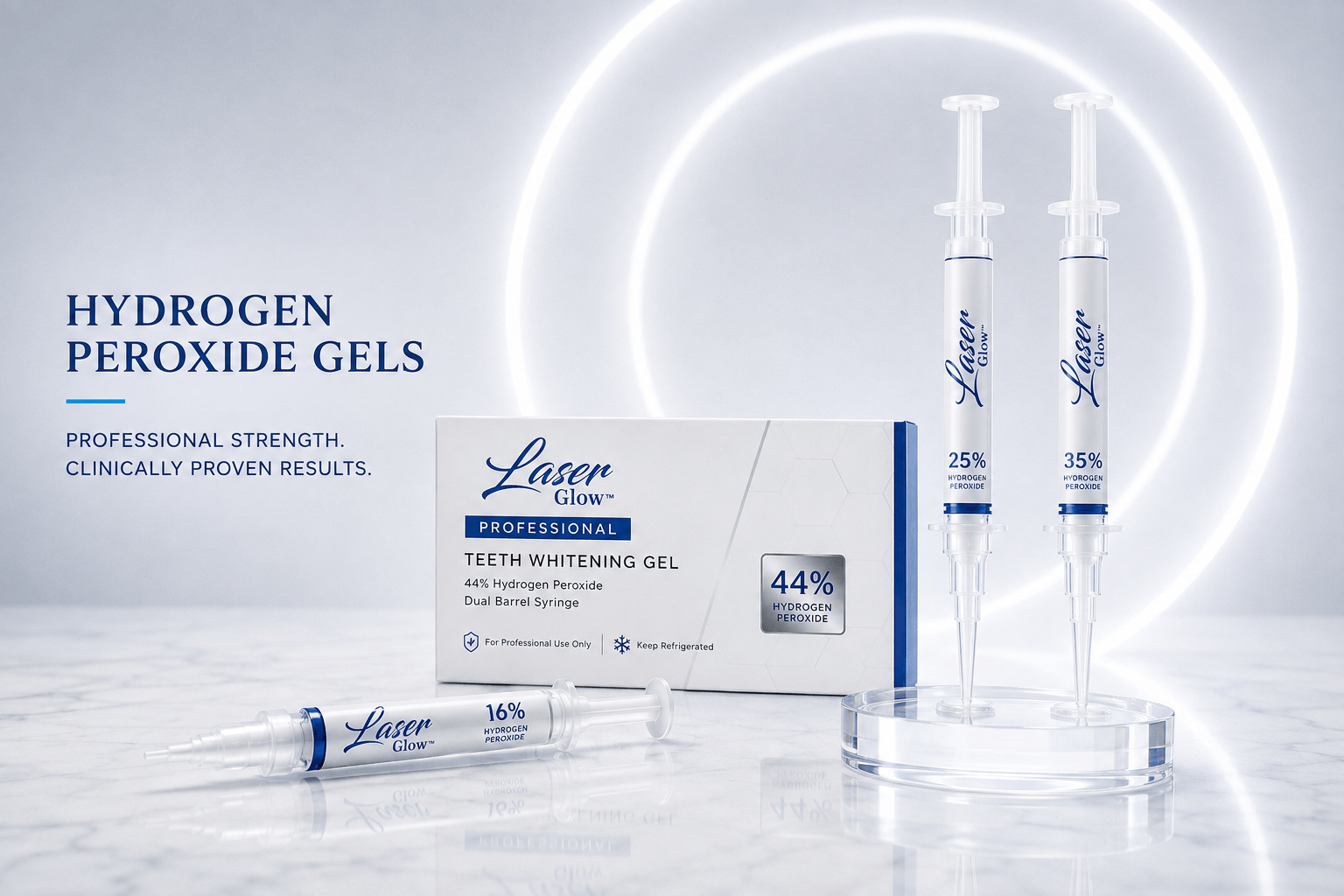
Professional Whitening Gel Strengths: 16% to 44% HP
Concentration is the single most consequential decision in a whitening protocol, and higher is not automatically better. A 44% gel on a sensitivity-prone client produces a shorter appointment, a worse experience, and a client who does not come back. A 16% gel on heavy intrinsic staining produces a result the client cannot see.
| Concentration | Typical use | Gingival barrier |
|---|---|---|
| 16% HP | First-time clients, reported sensitivity, conservative protocols | Recommended |
| 25% HP | The workhorse. Routine chairside whitening for most healthy clients | Strongly recommended |
| 35% HP | Stronger single-barrel formula for more resistant staining | Required |
| 36% HP dual barrel | Fresh-mixed at application. Advanced providers | Required |
| 44% HP dual barrel | Maximum strength. Complex cases only | Required |
| 44% carbamide peroxide | Take-home maintenance between sessions. Retail product | Not applicable |
Carbamide peroxide and hydrogen peroxide are not interchangeable at the same percentage. Carbamide breaks down into hydrogen peroxide at roughly a third of its stated concentration and releases far more slowly, which is what makes 44% CP appropriate as a take-home product and inappropriate as a chairside substitute for 44% HP.
Most providers settle on 25% HP as their default and stock 16% for sensitivity cases and 35% or 44% for the clients who need more. Compare formats in the dual-barrel vs single syringe guide or browse the full range in professional whitening gels.
Professional Teeth Whitening Supplies Checklist
A complete treatment setup is five categories. Missing any one of them turns a booked appointment into a rescheduled one.
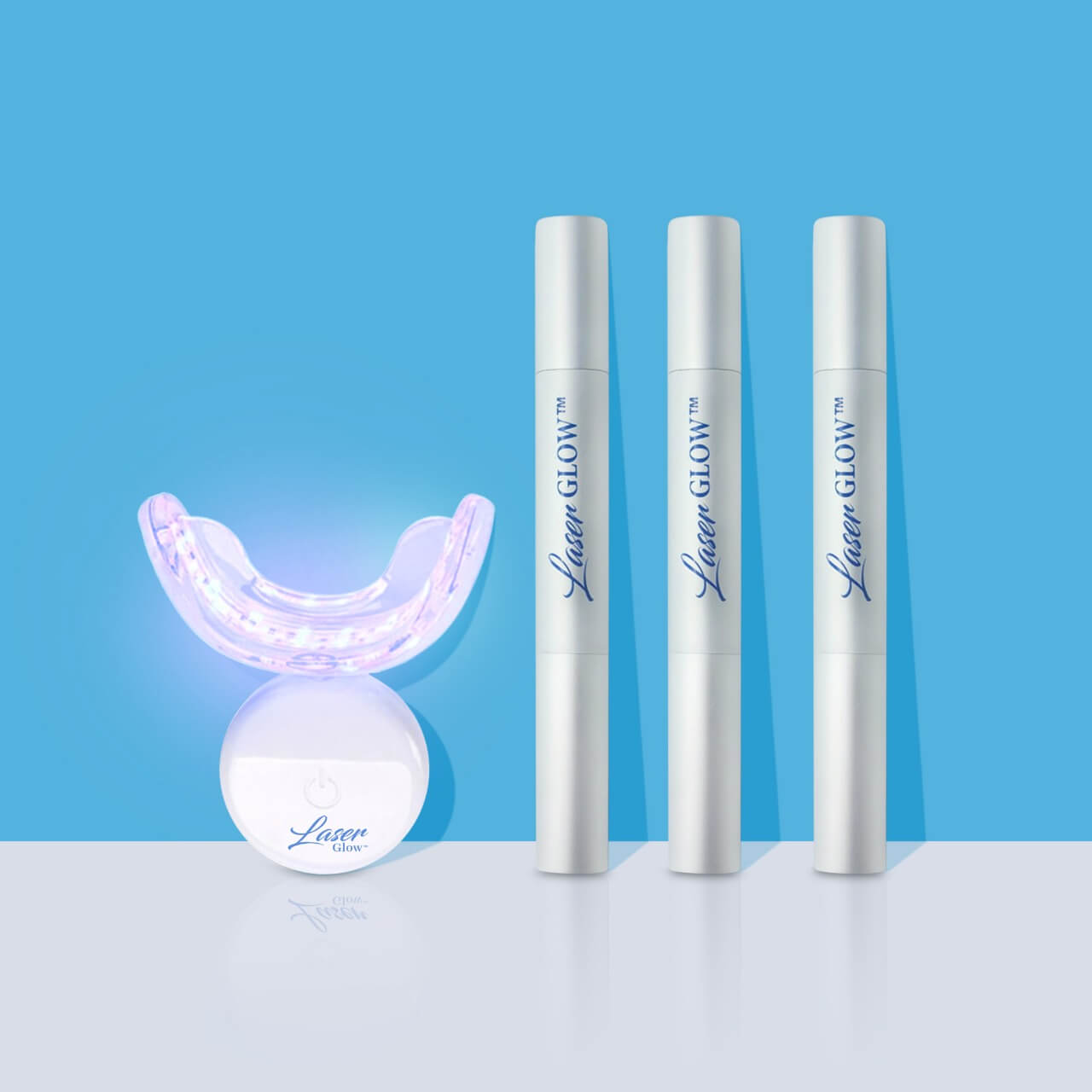
- Whitening lamp. A floor-standing or chair-mounted LED whitening machine positioned in front of the teeth during the protocol. Light does not whiten on its own — it accelerates gels formulated for activation.
- Gel inventory across concentrations. At minimum two strengths so protocol can flex to the client rather than the reverse.
- Soft-tissue isolation. Gingival barrier plus a handheld LED curing light to set it. This is a different tool from the whitening lamp and both are needed.
- Chairside disposables. Cheek retractors, protective eyewear, cotton rolls, and a shade guide for documenting starting and finishing shade.
- Aftercare. Desensitizing and remineralizing gel for the client to take home, and ideally a maintenance pen as a retail attachment.
Providers outfitting a room from scratch usually find a teeth whitening starter kit cheaper than sourcing each component separately, and it removes the compatibility guesswork between etch, barrier, and curing light.
What a Professional Whitening Session Looks Like
A standard session runs in five stages. Timings shift with concentration and product instructions, so treat this as the shape of the appointment rather than a fixed schedule.
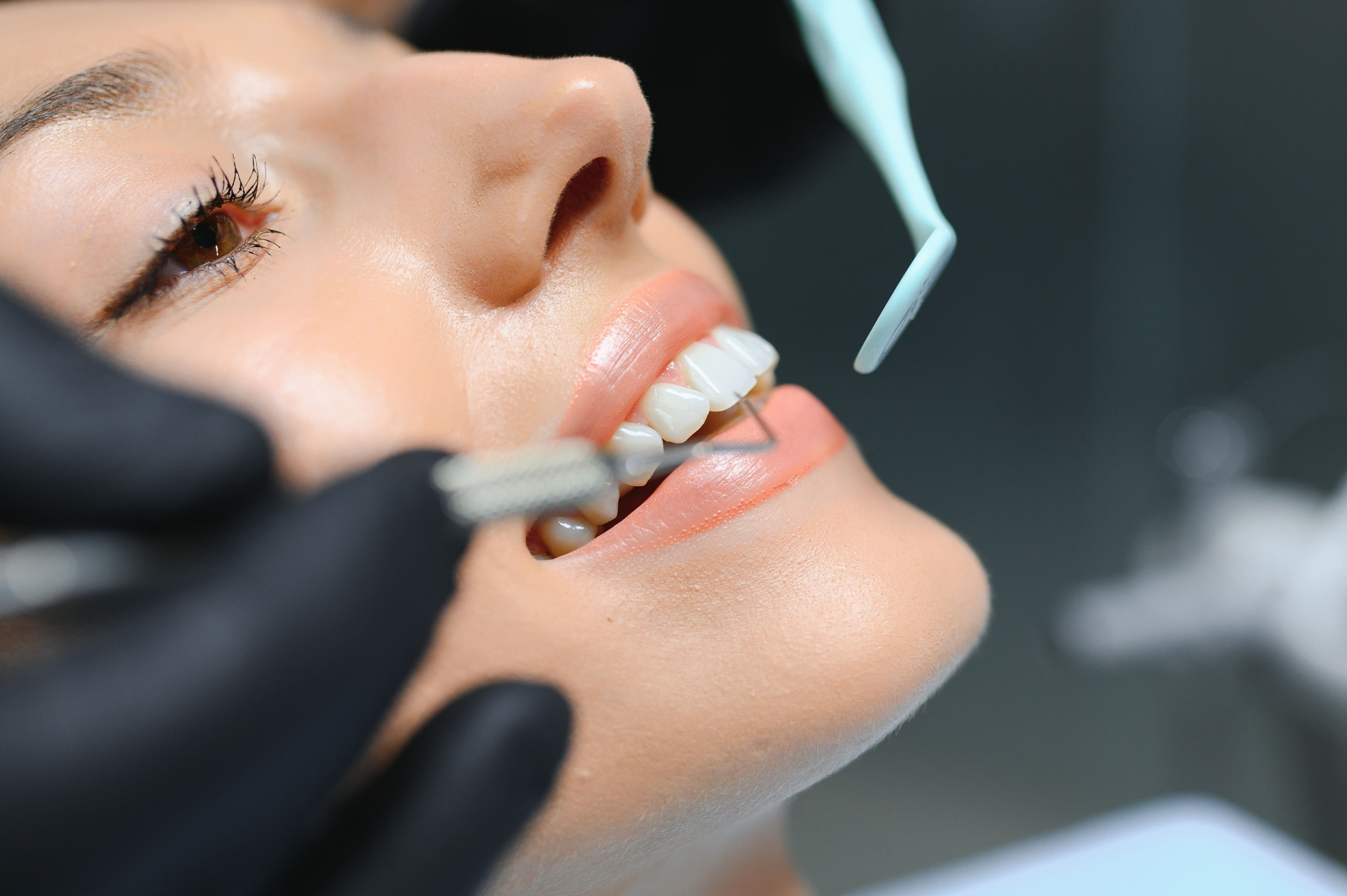
Screening and shade documentation. Review the client's whitening history, sensitivity history, and any visible restorations. Record starting shade against a guide and photograph it. This takes five minutes and it is the difference between a client who sees their result and one who insists nothing happened.
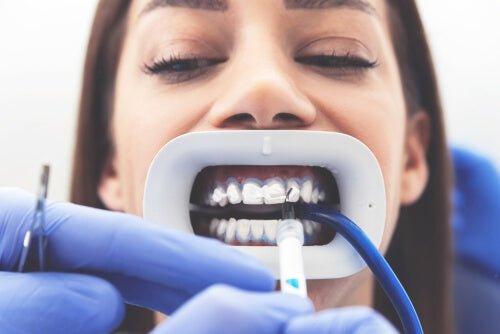
Isolation. Place the retractor, dry the field, and apply gingival barrier along the entire gumline. Cure until firm and inspect the seal before any gel goes on. Gaps in the barrier are the most common cause of soft-tissue irritation, and they are almost always at the interdental papillae.
Gel application and light rounds. Apply gel across the visible facial surfaces, position the lamp, and run the round per product instructions. Most protocols run two to four rounds with gel refreshed between each.
Removal and aftercare. Suction and rinse thoroughly, remove the barrier in one piece where possible, and record finishing shade against the same guide. Send the client home with written aftercare and a desensitizing product.
Detailed timing by concentration is in the LED session timing guide, and barrier placement technique is covered in the isolation protocols guide.
Teeth Whitening Cost Per Client and Pricing
Whitening margins are unusually good, which is exactly why the pricing conversation is worth doing properly rather than guessing at a number that sounds right.
Your real cost per session is gel volume dispensed, one barrier syringe, one retractor, eyewear if disposable, and aftercare if you include it. That total typically lands in the single digits to low teens. Against a session priced between $99 and $300 depending on market, the equipment pays for itself inside the first handful of appointments.
The number most providers get wrong is gel yield. A syringe treats a specific number of clients only if you are dispensing consistently, and over-application is the fastest way to erode margin without improving the result. Work out your actual per-session dispense before you set pricing — the syringe yield guide and the cost per client guide both break this down.
Multi-session packages and a take-home maintenance pen are the two highest-leverage additions to a whitening menu. Both raise average order value without adding chair time.
What New Whitening Providers Get Wrong
Reaching for the strongest gel by default. Concentration should follow client screening, not provider preference. A 44% result on a client who cannot tolerate it is not a better outcome.
Rushing the barrier. Barrier placement is the slowest part of the appointment and the part most often shortened under time pressure. Nearly every soft-tissue complaint traces back to it.
Skipping shade documentation. Without a recorded starting shade, the result is a matter of opinion, and the client's opinion at the end of an hour in a chair is rarely generous.
Not disclosing restorations upfront. Whitening does not change the shade of veneers, crowns, or bonding. A client who learns this after treatment feels misled even when the natural teeth responded well.
Selling no aftercare. The 24 to 48 hours after a session determine how long results hold. A client who eats curry that evening blames the treatment.
Diagnostic help for specific problems is in the troubleshooting guide.
Professional Whitening by Provider Type
Four provider categories, each with different concentration needs, protocol requirements, and service menu structures.
Professional Whitening Supplies
Professional Whitening Resources
Professional Teeth Whitening FAQ
What do you need to start offering professional teeth whitening?
Which whitening gel strength should professionals start with?
Do you need a license to offer teeth whitening?
When is gingival barrier required for teeth whitening?
How much can you charge for teeth whitening?
Do crowns, veneers, or bonding whiten?
How long do professional whitening results last?
What is the difference between professional and at-home whitening gel?
Can you buy professional teeth whitening supplies wholesale?
Written by David Hanna, RDH
LaserGlow's professional whitening resources are written and reviewed by David Hanna, RDH, who develops the protocols, evaluates the gel formulations, and works with providers on equipment selection and treatment workflow.