Whitening Maintenance & Shade Stability Guide
Provider guide · Shade stability · Maintenance protocol
Whitening Maintenance & Shade Stability: How to help clients keep their results
Teeth whitening maintenance starts before your client leaves the chair. Professional results are not permanent: shade relapse is normal, predictable and manageable. This guide covers how long results typically last, what speeds up relapse, a three-layer maintenance protocol, touch-up intervals and the take-home products that help clients hold their shade between professional sessions.
- Typical longevity: 6–18 months
- Rehydration rebound: settles within 48 hours
- Take-home CP pen: 2–3 times per week
- Most clients: touch-up every 6–12 months
Set expectations before treatment
How long professional whitening results last
Professional whitening results typically last 6–18 months before significant shade relapse. That range varies widely with lifestyle, stain exposure, enamel characteristics and maintenance compliance. Give clients a realistic timeframe before treatment: it protects the relationship and prevents disappointment.
0–48 hours: rehydration rebound
Enamel rehydrates after whitening, so the shade can look slightly less white than it did immediately after treatment. This is normal, not relapse, and it settles within 48 hours.
First weeks: elevated stain window
Stain risk is highest in the first 24–48 hours and stays elevated in the weeks that follow. Dietary compliance in this window has the largest impact on long-term shade retention.
3–6 months: gradual relapse begins
Surface stain from food, drinks and environmental factors starts to build. Maintenance whitening or carbamide peroxide pen use here manages relapse before it becomes visible.
6–18 months: typical touch-up window
Most clients benefit from a professional maintenance session in this range. Heavy coffee, tea or tobacco users may need one sooner; low-exposure clients may hold their shade well past 12 months.
Need a plain-language version for clients? Share how long does teeth whitening last, written for the people sitting in your chair.
What speeds up shade relapse
Six habits that undo shade stability after whitening
Relapse is mostly driven by what clients eat, drink and skip at home. Ask about these habits at the consultation and adjust your expectations conversation to match.
Coffee and tea
The highest-impact dietary stainers and the number one driver of post-whitening shade relapse. Timing and rinsing habits matter.
Red wine
Chromogens plus acidity make red wine especially effective at staining newly whitened enamel.
Tobacco
Among the fastest relapse drivers. Clients who keep using tobacco after whitening need adjusted expectations.
Dark foods and sauces
Soy sauce, tomato sauce, berries and similar foods add stain, especially during the post-whitening window.
Inconsistent oral hygiene
Plaque and pellicle build-up accelerates surface staining. Clients with inconsistent brushing lose results faster.
Skipping home maintenance
Clients who use neither a carbamide peroxide maintenance pen nor a whitening toothpaste between sessions relapse visibly sooner.
Give clients the full list in what to eat after teeth whitening.
Three layers
The teeth whitening maintenance protocol
A complete maintenance plan works in three layers: immediately after treatment, over the first few weeks, and ongoing. The goal is to slow stain build-up and catch relapse before it calls for a full re-whitening session.
Immediate aftercare
Protect comfort and the fresh result before the client walks out.
- Apply desensitizing gel before the client leaves
- Advise no staining foods or drinks for at least 24–48 hours
- Recommend only white or clear foods and drinks for the first 24 hours where possible
Short-term protection
Manage surface stain while the enamel settles.
- Whitening toothpaste twice daily
- Reduce stain exposure where possible
- Rinse with water right after coffee or tea
Ongoing maintenance
Prevent visible relapse instead of correcting it later.
- 44% CP whitening pen 2–3 times per week, used as directed
- Professional touch-ups timed to the client’s stain exposure
- A 16% HP maintenance session instead of a full 25%+ protocol
Hand clients the written first-48-hours instructions from our teeth whitening aftercare guide.
Measure, don’t guess
Track shade stability at every visit
Record the client’s shade before treatment, after treatment and at every maintenance visit with a consistent teeth shade guide. Then schedule the next touch-up on the client’s actual relapse rate rather than a fixed calendar interval.
- Baseline shade before any gel is applied
- Final shade after treatment (allow for rehydration rebound)
- Shade at each follow-up, with stain-exposure notes
Before you whiten
Set expectations that hold up
Clients who know what to expect stay happy longer. Cover these points at the consultation, in writing.
- Results fade gradually; whitening is not permanent
- Veneers, crowns and bonding do not whiten
- Coffee, tea, red wine and tobacco shorten results
- Home maintenance extends the time between visits
Professional touch-ups
How often clients need a maintenance session
Use these ranges as a starting point, then adjust to the relapse you actually record.
| Client profile | Typical touch-up interval |
|---|---|
| Moderate stain exposure, consistent home maintenance | Every 6–12 months |
| Heavy stain exposure (daily coffee plus tobacco) | Every 4–6 months |
| Uses a CP whitening pen between sessions | Often 12+ months |
| Low stain exposure | May hold results well past 12 months |
Use a lower concentration for maintenance
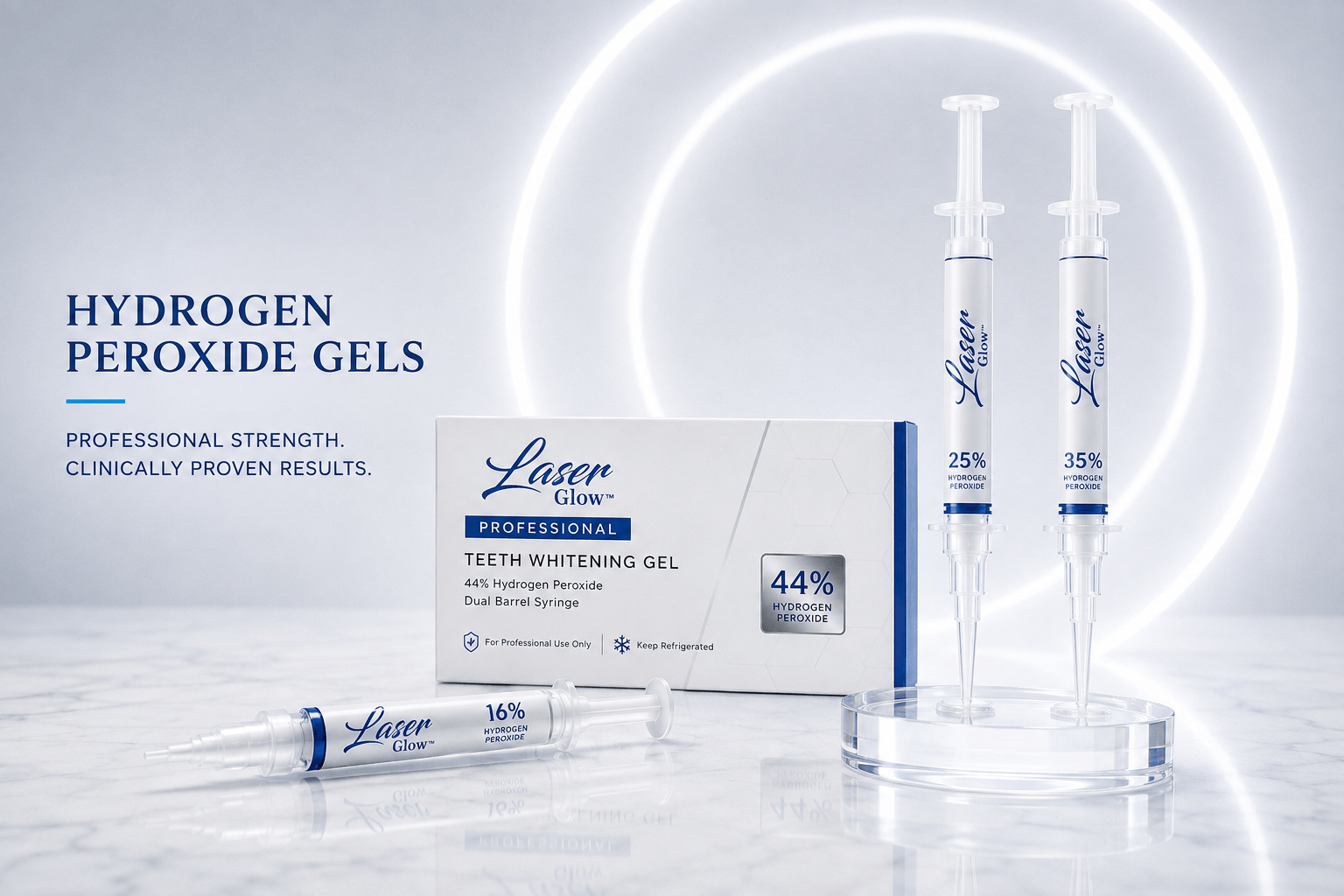
For clients who are maintaining a shade rather than chasing a big change, a 16% hydrogen peroxide teeth whitening gel session is usually a better fit than a full-protocol 25%+ HP session: lower cost and lower sensitivity. Follow the 16% hydrogen peroxide teeth whitening protocol and plan rounds with our guide to teeth whitening session timing.
Barrier rule still applies: a gingival barrier is required with every LaserGlow professional hydrogen peroxide gel (16%–44%) and is mandatory at 35% and above. Use a light-cured gingival barrier at maintenance sessions too. Professional use only, for trained providers; follow product instructions and confirm the rules in your state.
Retail and chairside
Maintenance products to recommend
A take-home product is also a natural retail add-on after every whitening session. The 44% carbamide peroxide pen breaks down into hydrogen peroxide and urea, releasing its whitening action gradually, which suits routine maintenance between visits.
Comparing take-home chemistry? Read our 44% carbamide peroxide guide and carbamide peroxide vs hydrogen peroxide.
How long does professional teeth whitening last?
Professional whitening results typically last 6–18 months before significant shade relapse, with wide variation based on diet, tobacco use, oral hygiene and home maintenance. Clients who use a carbamide peroxide maintenance pen between sessions and limit high-stain foods tend to keep results longer.
Share how long does teeth whitening last with clients who want the details.
Is the shade change in the first 48 hours a sign of relapse?
No. Enamel rehydrates after whitening, so the shade can look slightly less white than it did straight after treatment. This rehydration rebound is normal and settles within 48 hours.
Record the final shade with that in mind, and see troubleshooting professional whitening results if results look weak.
Why did my client’s teeth relapse quickly after whitening?
Fast relapse usually comes down to heavy stain exposure (daily coffee, tea or tobacco) during the post-whitening window, no home maintenance plan, or skipping post-treatment desensitizing and remineralizing gel.
Set stain-avoidance expectations before treatment and recommend the 44% CP whitening pen for ongoing use.
How often should clients get professional whitening maintenance?
Every 6–12 months for most clients with moderate stain exposure and consistent home maintenance. Heavy stain exposure (daily coffee plus tobacco) may call for 4–6 month touch-ups, while clients using a CP pen between sessions often extend to 12+ months.
Track shade at each visit and schedule from the actual relapse rate rather than a fixed calendar interval.
What’s the best home product for maintaining whitening results?
We recommend the LaserGlow 44% carbamide peroxide whitening pen between professional sessions. Used 2–3 times per week as directed, it helps prevent relapse before it becomes visible instead of correcting it afterwards.
It is also a natural retail add-on after every session. See our 44% carbamide peroxide guide.
Which gel should I use for a maintenance session?
For clients maintaining an existing shade, a 16% hydrogen peroxide session is usually a better fit than a full 25%+ protocol: lower cost and lower sensitivity. A gingival barrier is still required with every LaserGlow professional hydrogen peroxide gel.
Compare strengths in hydrogen peroxide whitening gel strength.
Build maintenance into every whitening service
Send every client home with written aftercare, a take-home maintenance plan and their next touch-up already booked.