Teeth Whitening Aftercare & Preparation Guide
Client care guide · Preparation · White diet · Sensitivity
Teeth Whitening Aftercare & Preparation: Before your session and the first 24–48 hours
Good teeth whitening aftercare protects the result you just paid for. For the first 24–48 hours your teeth pick up stain more easily than usual, and some sensitivity is common. This guide covers how to prepare before teeth whitening, what to eat and avoid afterwards, how to handle sensitivity and the simple habits that keep your smile brighter for longer. Providers: a copy-ready instruction sheet is at the end.
- Stick to white and clear foods and drinks
- No coffee, tea, red wine or tobacco
- Brush gently with a soft toothbrush
- Mild sensitivity is normal
Before your appointment
Before teeth whitening: how to prepare
Preparation affects your result, your comfort and how long the result lasts. Here is what to expect, and what to share with your provider.
- Complete intake and consentShare your medical history, medications and any previous whitening, and sign consent before treatment begins.
- Get a cleaning firstA professional cleaning or polish removes plaque and film so the gel reaches the enamel more effectively.
- Mention any sensitivityIf your teeth are sensitive, your provider may apply a desensitizing gel for 10–15 minutes before whitening.
- Know what won’t whitenVeneers, crowns and bonding don’t change shade. Read whitening with crowns, veneers or braces.
- Baseline shadeYour provider records your starting shade with a shade guide so you can compare before and after.
- The right gel strengthYour provider matches the gel to your case, not to the strongest available. Pregnant or nursing? Ask first and see whitening and pregnancy.
After your appointment
Teeth whitening aftercare: the first 24–48 hours
Right after whitening, enamel is temporarily more porous and absorbs color more readily. What you eat and drink in this window has an outsized effect on how long your results last.
In the chair
Your provider finishes the session so you leave comfortable and informed.
- Desensitizing gel applied to your teeth
- Your final shade recorded
- Written aftercare instructions handed to you
Protect the result
This is the highest-risk period for new stain.
- Follow the white diet below
- No tobacco or smoking
- Brush gently with a soft toothbrush
- Use your desensitizing gel as directed
Build the habit
Small daily habits stretch the time between visits.
- Rinse with water after coffee, tea or wine
- Use a maintenance pen 2–3 times per week
- Book a maintenance visit in 6–12 months
The white diet
The white diet for the first 48 hours
For 24–48 hours, choose light-colored foods and water or clear drinks. Everything darker can wait. For meal ideas and the full list, see what to eat after teeth whitening.
Enjoy
Safe to eat and drink (24–48 hours)
- Water, still or sparkling
- White rice, pasta and bread
- Chicken, fish and turkey
- Milk, yogurt and white cheese
- Bananas, peeled apples and pears
- Clear or white soups
- Eggs (not fried)
Skip for now
Avoid (24–48 hours)
- Coffee and tea
- Red wine
- Dark sodas such as cola
- Soy sauce, tomato sauce and ketchup
- Berries and dark fruits
- Turmeric, curry and beets
- Energy drinks
- Tobacco and smoking
The white shirt rule: if it would stain a white shirt, it will stain freshly whitened teeth faster than usual. Use it for anything not on the list. The full breakdown is in foods that stain teeth.
What’s normal
Sensitivity after whitening
Mild sensitivity for 24–48 hours after whitening is common and typically resolves on its own. If it’s uncomfortable, an over-the-counter pain reliever used as directed on the label is appropriate.
The LaserGlow desensitizing gel pen contains potassium nitrate, calcium phosphate and sodium fluoride to help reduce sensitivity and support remineralization after whitening. The 3 mL pen has a brush tip for direct application.
How does desensitizing gel work? →
Gums looked white right after treatment? Read gums turned white after teeth whitening.
When to call
Contact your provider if
- Sensitivity lasts beyond 72 hours
- Gum irritation doesn’t settle within 48 hours
- You notice anything unusual after your session
Long-term care
How to keep your whitening results longer
Whitening is not permanent; shade fades gradually with everyday stain. These habits slow it down.
- Brush twice daily and keep up with flossing
- Rinse with water right after staining drinks
- Use a whitening toothpaste after the first 48 hours
- Use a 44% CP whitening pen 2–3 times per week, as directed
- Limit tobacco, which is among the fastest causes of fading
- Return for maintenance every 6–12 months, as advised
Why shade fades over time: how long does teeth whitening last. For providers planning touch-ups: teeth whitening maintenance.
For whitening providers
Aftercare instructions to hand every client
Verbal instructions get forgotten. Hand over (or email) written instructions at the end of every session.
Copy-ready client sheet
After your whitening treatment
- For 24–48 hours: avoid coffee, tea, red wine, dark sodas, soy sauce, berries and tobacco. Stick to light-colored foods and drink water or clear drinks.
- Sensitivity: mild sensitivity for 24–48 hours is normal. If it’s uncomfortable, an over-the-counter pain reliever used as directed is appropriate.
- Home care: use the desensitizing gel tonight, then the CP whitening pen 2–3 times per week to maintain your results.
- Long term: brush twice daily, rinse with water after staining drinks, and return for your maintenance visit in [X] months.
- Contact us if: sensitivity lasts beyond 72 hours, or gum irritation doesn’t settle within 48 hours.
Your before-and-after protocol
Chairside checklist
- Intake, medical history and signed consent
- Clean or polish before gel
- Baseline shade with a shade guide
- Pre-treat sensitive clients with desensitizing gel for 10–15 minutes
- Match HP concentration to the case
- Light-cured gingival barrier, inspected before gel
- Desensitizing gel before the client leaves
- Final shade, written aftercare and the next visit booked
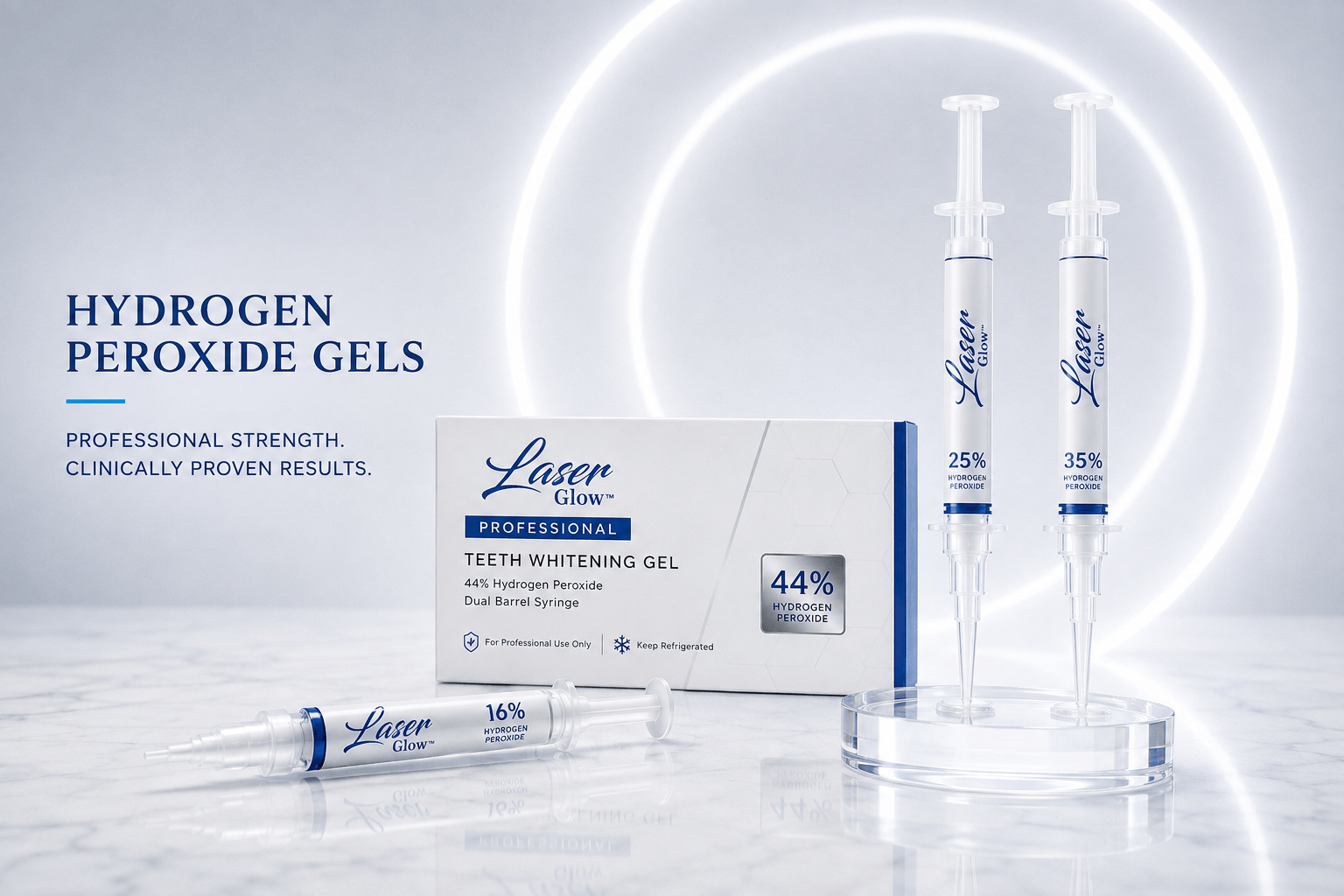
For trained providers: LaserGlow professional gels are for professional use only. A gingival barrier is required with every LaserGlow professional hydrogen peroxide gel (16%–44%) and is mandatory at 35% and above. Record shade with a teeth shade guide and cure a gingival barrier before any gel goes on. Follow product instructions and confirm the rules in your state. Choosing a strength? Use the whitening gel selection checklist.
What should I do after teeth whitening?
For 24–48 hours, avoid staining foods and drinks (coffee, tea, red wine, dark sodas, dark sauces and berries) and tobacco. Use the desensitizing gel as directed, brush gently, then use a carbamide peroxide whitening pen 2–3 times per week and return for maintenance in 6–12 months.
What can I eat after teeth whitening?
Stick to the white diet for 24–48 hours: water, white rice, pasta and bread, chicken, fish and turkey, milk, yogurt and white cheese, bananas, peeled apples and pears, clear or white soups and eggs that aren’t fried.
If it would stain a white shirt, skip it for now. More detail: foods that stain teeth.
When can I drink coffee after teeth whitening?
Wait at least 24–48 hours. After that, rinse with water right after coffee or tea to slow new stain.
How long does sensitivity last after professional whitening?
Post-whitening sensitivity typically resolves within 24–48 hours, and a desensitizing gel applied after treatment helps. Sensitivity lasting beyond 72 hours is outside the normal range, so contact your provider.
Can I brush my teeth right after whitening?
Yes, gently, with a soft toothbrush and a non-abrasive toothpaste. Teeth are temporarily more porous and can be sensitive, so a light touch for the first brushing is a sensible precaution.
How should I prepare before teeth whitening?
Complete your intake and consent honestly, including medications and previous whitening, get a cleaning first if you’re due, and tell your provider about any sensitivity so they can pre-treat it.
Remember that crowns, veneers and bonding won’t change shade. See whitening with crowns, veneers or braces.
Book whitening, or stock up on aftercare
LaserGlow offers in-office whitening in Clifton, Edgewater and Paterson, NJ, and Miami, FL.