Does Professional Teeth Whitening Damage Enamel?
Direct answer — by David Hanna, RDH
No — professional teeth whitening does not damage healthy enamel when performed correctly.
This is one of the most common client questions about whitening — and one of the most consistently misunderstood. The clinical evidence is clear: professional HP whitening at appropriate concentrations with correct protocol does not permanently damage healthy enamel. Here's what the research actually shows, what does cause enamel damage, and what providers need to know.
What Research Shows About Whitening and Enamel
The question of whether professional whitening damages enamel has been studied extensively. The consistent finding across multiple published studies: professional hydrogen peroxide whitening at clinically appropriate concentrations, used correctly, does not cause permanent, clinically significant enamel damage in patients with healthy teeth.
What research does find are temporary, reversible changes:
- Temporary reduction in enamel microhardness during and shortly after HP exposure — this reverses with remineralization
- Minor surface roughness changes at very high concentrations — generally within the range of normal enamel variation and reversible with fluoride and saliva
- Increased enamel permeability during active HP contact — this is the mechanism by which whitening works and is temporary
These are temporary changes observed under research conditions — not clinical damage that causes long-term tooth problems in patients receiving professionally administered whitening at indicated concentrations.
What Whitening Actually Does to Enamel — Temporarily
Understanding what whitening actually does helps providers explain it accurately to clients. The whitening process involves real, temporary changes that reverse naturally:
Enamel dehydration
HP whitening temporarily dehydrates the outer enamel surface. This is why teeth appear more white immediately after whitening and then slightly "rebound" over 24–48 hours as enamel rehydrates. This is normal and not harmful — it's just physics.
Temporary microhardness reduction
Research shows temporary reduction in enamel surface microhardness during HP exposure. This effect reverses within days as saliva remineralizes the enamel surface. The remineralization process is natural and requires no intervention in healthy patients — the desensitizing remineralizing gel applied post-treatment accelerates this.
Temporary surface porosity increase
HP opens micro-pores in enamel to access stain molecules in subsurface enamel. This porosity closes as enamel remineralizes. It is not permanent erosion — it's the mechanism of action, and it reverses.
What Actually Causes Enamel Damage From Whitening
Enamel damage from whitening does occur — but from specific causes that are either protocol failures or misuse, not from professional whitening performed correctly. These are the real risks:
Non-dental adhesives
Super glue, nail glue, and similar consumer adhesives are not formulated for oral use and can chemically damage enamel. This is tooth gem territory primarily but applies broadly.
Excessive concentration
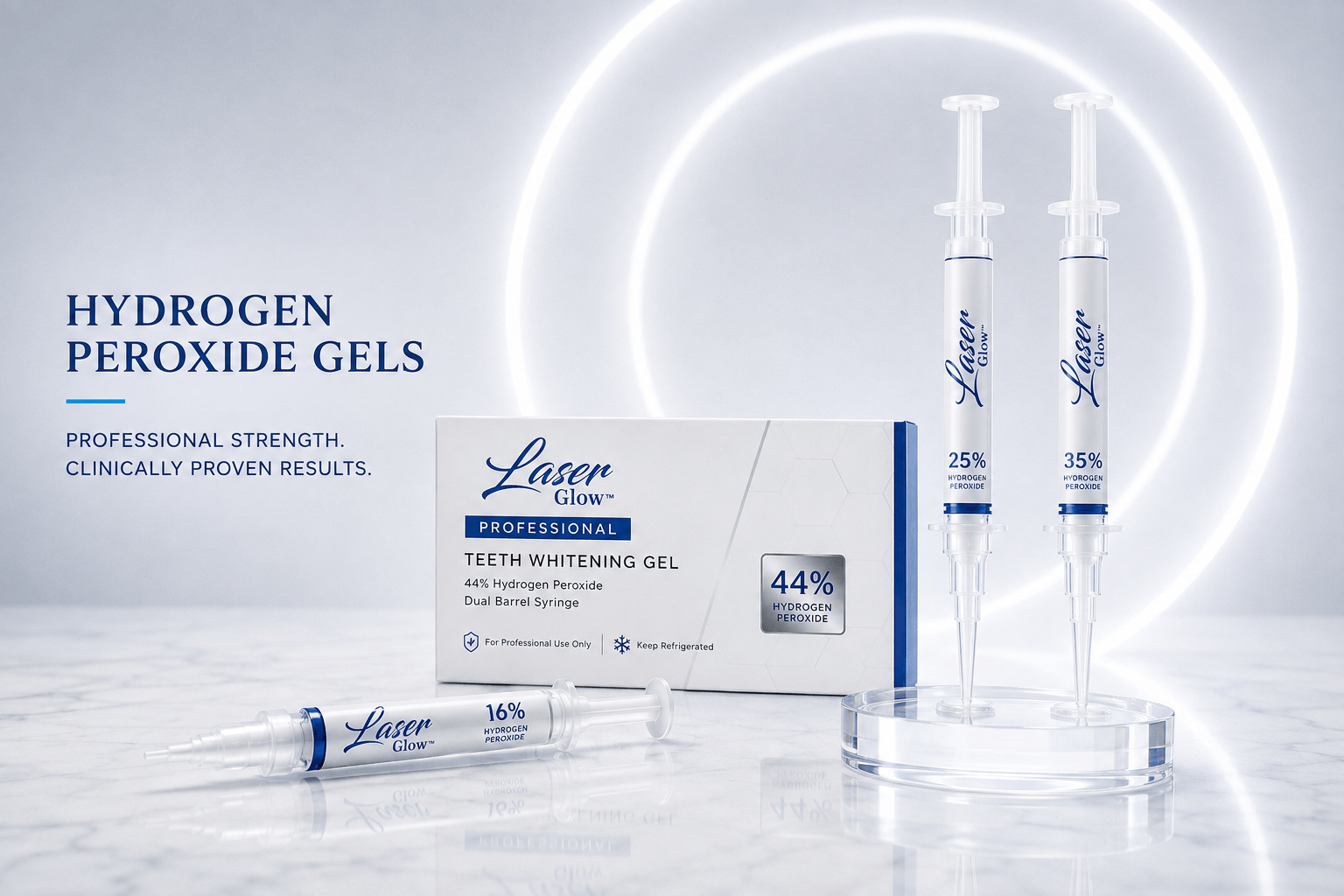
Using 44% HP on a client whose case doesn't warrant it, or at an inappropriate concentration without proper screening, increases enamel exposure without benefit.
Pre-existing enamel defects
Whitening over active decay, significant erosion, or enamel cracks can worsen pre-existing conditions. This is a screening failure, not a whitening inherent risk.
Overuse of OTC whitening products
Consumers using OTC high-concentration strips or gels more frequently than directed can accumulate enamel impact over time. Different from professional use.
Inadequate remineralization
Not using desensitizing/remineralizing gel post-treatment leaves enamel in a temporarily vulnerable state longer than necessary. Easy to prevent.
Applying gel to compromised enamel
Applying HP gel to teeth with exposed dentin, significant recession, or erosion causes sensitivity and potential harm because the protective enamel barrier has already been compromised.
What Keeps Professional Whitening Safe for Enamel
- Correct client screening — ruling out active decay, erosion, exposed dentin, and pre-existing enamel compromise before treatment
- Matching concentration to the case — using the appropriate HP strength, not automatically the highest available
- Gingival barrier — protecting soft tissue prevents irritation that providers sometimes misidentify as enamel damage
- Staying within protocol timing — not extending gel contact time beyond indicated protocol under the incorrect belief that longer equals better results
- Post-treatment remineralizing gel — accelerating enamel remineralization after HP exposure with a desensitizing remineralizing formula
- Fluoride — regular fluoride use between professional whitening sessions supports enamel mineralization
Teeth Whitening and Enamel FAQ
Does professional teeth whitening damage enamel?
No — professional teeth whitening does not damage healthy enamel when performed correctly. Research shows temporary, reversible changes to enamel microhardness and surface porosity during HP exposure, but these reverse with natural remineralization. Permanent enamel damage from professionally administered whitening at appropriate concentrations on healthy teeth is not supported by clinical evidence.
Why do teeth feel sensitive after whitening if it doesn't damage enamel?
Whitening sensitivity is caused by hydrogen peroxide temporarily increasing enamel permeability and affecting the fluid dynamics in the dentinal tubules — not by enamel damage. Sensitivity is a physiological response to HP exposure that resolves as enamel remineralizes. Sensitivity does not equal damage. The distinction matters: sensitivity is expected and manageable; structural enamel damage from correctly performed professional whitening is not a normal outcome.
Sensitivity management: Professional Whitening Safety & Compliance Guide
Does hydrogen peroxide weaken enamel permanently?
Published research shows temporary reduction in enamel microhardness during HP exposure that reverses within days as enamel remineralizes with saliva and fluoride. This is not permanent weakening. The temporary effect can be accelerated back to baseline by applying remineralizing gel post-treatment and using fluoride regularly. On healthy enamel, professional HP whitening at appropriate concentrations does not cause permanent microhardness reduction.
Can clients whiten teeth too often?
Professional chairside whitening is typically performed in series with maintenance intervals. There is no universally defined maximum frequency, but whitening more frequently than the enamel needs to remineralize between sessions — without post-treatment remineralizing protocol — can accumulate effects. Standard professional guidance: allow full remineralization between series, use remineralizing gel post-treatment, and monitor client sensitivity across multiple sessions. Clients wanting to "touch up" more frequently should use the maintenance CP pen rather than repeating full HP chairside sessions.
Is whitening safe for enamel on clients with veneers or crowns?
HP whitening is safe for adjacent natural enamel on clients with veneers or crowns. The HP gel cannot damage porcelain or composite restorative materials — it also cannot whiten them. The only concern with restorations is the potential shade mismatch between whitened natural teeth and restorations that remain the same shade. This is an expectation management issue, not a safety issue.