Hydrogen peroxide, carbamide peroxide and PAP+ are different whitening agents with different evidence bases, release profiles and intended uses. This parent guide helps providers identify which chemistry deserves deeper review before choosing a specific product or concentration.
HP vs. CP vs. PAP+: What Is the Main Difference?
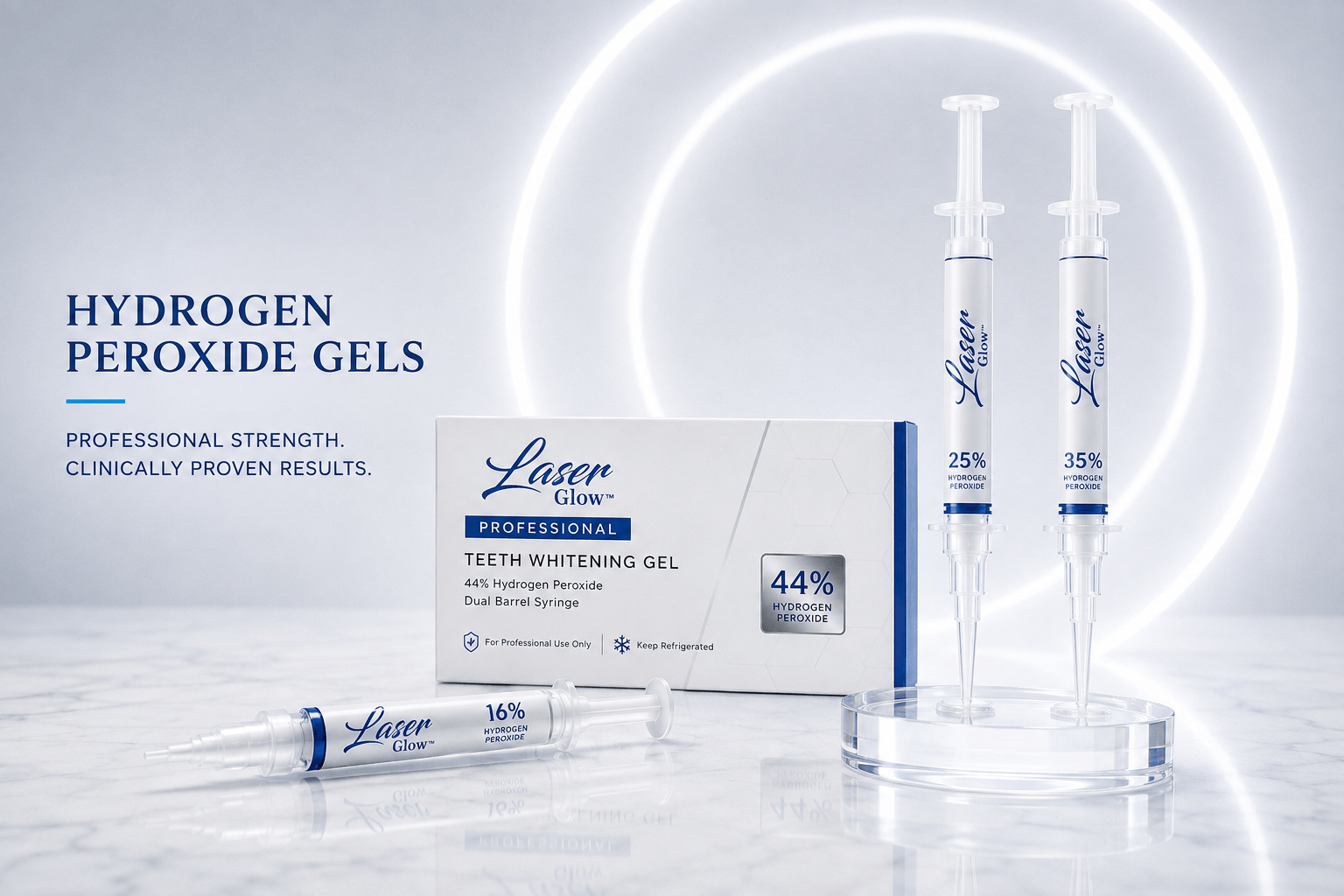
Hydrogen peroxide is directly active; carbamide peroxide releases hydrogen peroxide as it breaks down; PAP+ is a peroxide-free whitening system whose performance depends on the complete formulation. None is universally “best.” Selection depends on the product’s intended use and instructions, provider scope, treatment setting, client factors, evidence, contact time and desired service plan.
Three Whitening Agents at a Glance
| Agent | How it is described | Common planning questions | Evidence context |
|---|---|---|---|
| Hydrogen peroxide (HP) | Direct peroxide whitening agent used in many professional and consumer formulas. | Is the formula appropriate for the provider and setting? What do the IFU require for isolation, timing, storage and monitoring? | Long-established whitening ingredient; temporary sensitivity and gingival irritation are recognized possible effects. |
| Carbamide peroxide (CP) | Compound that breaks down into hydrogen peroxide and urea, generally creating a different release profile from direct HP. | Is the product intended for professional, tray, pen or other use? What contact time and delivery system are specified? | Also established in tooth whitening; do not compare its stated percentage directly with the same stated HP percentage. |
| PAP+ | Peroxide-free system built around PAP, often combined with supporting ingredients; the “+” formula varies by manufacturer. | What ingredients and claims are substantiated for this finished formula? Is the product intended for professional or at-home use? | Promising but less mature and less standardized than the clinical evidence base for peroxide whitening. |
How to Choose Which Chemistry to Evaluate
- Define the treatment setting. Chairside, take-home, maintenance and retail products can require different release profiles and instructions.
- Check provider authorization and product labeling. A chemistry is not appropriate merely because it is available for purchase.
- Review client-specific factors. Pain, damaged teeth, recession, exposed dentin, sensitivity history, oral irritation, restorations and unexplained discoloration may change the plan or require dental evaluation.
- Compare finished products. Active ingredient, concentration, pH, viscosity, delivery format, storage, contact time and IFU all matter.
- Set realistic expectations. Whitening changes natural teeth; crowns, veneers, bonding and tooth-colored fillings do not whiten like natural enamel.
Deeper HP vs. CP Explanation
The most common comparison is direct hydrogen peroxide versus carbamide peroxide. Their percentages are not interchangeable, and release profile matters when evaluating chairside, take-home and maintenance formats.
Read the focused hydrogen peroxide vs. carbamide peroxide guide for the deeper two-agent explanation. This reciprocal link keeps the present page focused on three-way selection while the specialist article owns the HP-vs-CP query.
HP vs. CP vs. PAP+ FAQs
Is PAP+ the same across every brand?
No. “PAP+” can describe different finished formulations and supporting ingredients. Evaluate the exact label, substantiation and instructions.
Is carbamide peroxide weaker than hydrogen peroxide?
The same stated percentage does not represent the same immediate HP concentration. The two agents also have different release profiles, so finished products and intended use should be compared rather than label numbers alone.
Is peroxide whitening unsafe?
Peroxide whitening has a substantial evidence base, but temporary tooth sensitivity and gingival irritation can occur. Appropriate assessment and use according to the product instructions matter.
Does peroxide-free mean sensitivity-free?
No. “Peroxide-free” describes the active system; it does not guarantee that every person will have no sensitivity or irritation.
Which chemistry whitens crowns or veneers?
Whitening agents do not change tooth-colored restorations the way they change natural teeth. Shade mismatch should be discussed before whitening.