LaserGlow Teeth Whitening Strips are designed for convenient at-home whitening, surface-stain removal and a brighter-looking smile without an in-office whitening appointment. This review explains how the strips work, who they are best for, how to use them and what results to realistically expect.
The Fast Answer: Are LaserGlow Teeth Whitening Strips Worth It?
LaserGlow Teeth Whitening Strips are designed for people who want convenient at-home teeth whitening without trays, lights or a professional appointment. They are intended to address yellowing and surface discoloration associated with coffee, tea, wine and other everyday sources of staining on natural teeth.
Whitening strips are generally less intensive than professional in-office whitening, but they are easier to incorporate into an at-home routine. Individual whitening results and sensitivity responses vary.
What Are Teeth Whitening Strips?
Teeth whitening strips are thin, flexible strips coated with whitening gel. They are placed over the visible front surface of the teeth so the gel can remain in contact with natural enamel for the instructed application time.
Many whitening strips use peroxide-based whitening ingredients to address discoloration associated with foods, drinks and everyday staining. Whitening strips are intended for natural teeth and will not change the color of crowns, veneers, bonding, fillings, implants or dentures.
How Do Whitening Strips Work?
The strip holds whitening gel against the visible surface of the teeth.
The whitening ingredient helps address stain compounds on and within natural enamel.
Consistent use according to the product instructions can produce a visibly brighter-looking smile.
Results may last longer when new staining is limited and an appropriate oral-care routine is maintained.
LaserGlow Whitening Strips: Key Benefits
Whiten your natural teeth at home without scheduling a professional appointment.
Flexible strips are designed to fit over the visible front surface of the teeth.
Designed for yellow tones and surface stains associated with coffee, tea, wine, soda and everyday discoloration.
Whitening strips can be incorporated into an at-home routine or used between professional treatments when appropriate.
Who Are LaserGlow Teeth Whitening Strips Best For?
LaserGlow Teeth Whitening Strips are designed for people who want an uncomplicated at-home whitening option for natural teeth. They may be useful when teeth appear dull or yellow because of coffee, tea, wine, smoking, colored sauces or other common sources of surface staining.
Helps address the appearance of stain buildup associated with dark beverages.
A convenient option before weddings, photos, parties, vacations and other special events.
Intended for people who prefer whitening strips over trays or office visits.
May help support brightness between professional whitening sessions.
When Whitening Strips May Not Produce Significant Results
Whitening strips work on natural tooth enamel. They do not whiten veneers, crowns, bonding, fillings, implants or dentures. They may also be less effective on deep intrinsic stains, tetracycline staining, fluorosis, trauma-related discoloration or discoloration associated with existing dental restorations.
If tooth discoloration is deep, uneven or associated with a dental condition, ask a dentist whether professional evaluation or another whitening option would be more appropriate.
How to Use Teeth Whitening Strips Correctly
Always follow the instructions supplied with the product. A general whitening-strip routine may include the following steps:
Follow the package directions concerning brushing, rinsing and drying your teeth before application.
Place the strips against the visible front surfaces of the teeth and press gently for contact.
Do not exceed the instructed application time. Leaving whitening gel on longer does not guarantee better results and may increase sensitivity or irritation.
Remove the strips as directed, clear away remaining gel and follow the recommended aftercare instructions.
How Long Do Whitening Strips Take to Work?
Some users may notice a brighter-looking smile after several applications, with more visible results after completing the instructed routine. The exact timeline depends on starting shade, stain type, application consistency and daily habits.
Coffee, tea, red wine, smoking and deeply colored foods can contribute to new staining and may affect how long whitening results remain visible.
Teeth Whitening Strips vs. Whitening Toothpaste
| Option | How It Works | Best For | Expected Role |
|---|---|---|---|
| Whitening Strips | Whitening gel remains in contact with natural enamel during repeated applications. | At-home shade improvement | May provide more visible whitening than toothpaste alone. |
| Whitening Toothpaste | Helps polish or remove certain surface stains during brushing. | Daily stain maintenance | Supports gradual surface-stain control and brightness maintenance. |
| Purple Toothpaste Serum | Uses purple color-correcting pigments to visually neutralize yellow tones. | Temporary cosmetic color correction | Produces a temporary brighter-looking effect rather than bleaching enamel. |
Teeth Whitening Strips vs. Professional Whitening
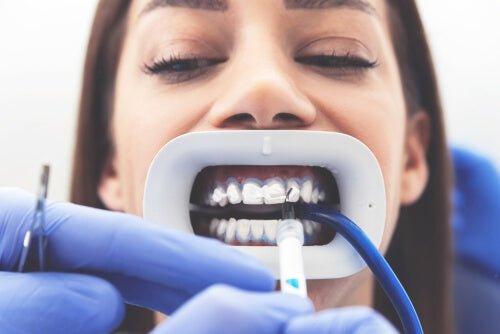
Professional whitening is typically performed using a professionally selected protocol under controlled conditions. It may be appropriate for people seeking faster or more substantial shade improvement. Whitening strips are designed to provide a more affordable and convenient at-home option.
The best choice depends on your starting shade, restorations, sensitivity history, timeline and desired result. A dental professional can help assess discoloration that is deep, uneven or resistant to at-home products.
Continue reading: Whitening Toothpaste vs. Professional Teeth Whitening
How to Maintain Results After Whitening Strips
Day & Night Whitening Toothpaste can help address surface-stain buildup during regular brushing.
Purple Toothpaste Serum provides temporary cosmetic color correction for visible yellow tones.
A cordless water flosser can help remove debris between teeth and along the gumline as part of a complete oral-care routine.
Consider rinsing with water after coffee, tea, wine, dark soda, berries and tomato-based sauces.
LaserGlow Whitening Strips Review Verdict
Editorial disclosure: This review is published by LaserGlow about a LaserGlow product. It is not an independent consumer review. The purpose is to explain the product’s intended use, practical limitations and relevant precautions.
LaserGlow Teeth Whitening Strips are a convenient at-home option for people who want to address yellowing and common surface stains on natural teeth without scheduling a professional appointment.
They are not designed to whiten restorations or treat deep intrinsic discoloration, and they should not be expected to reproduce every result obtainable through professionally supervised whitening. Individual results and sensitivity responses vary.
Recommended LaserGlow Products
Designed for convenient at-home whitening and yellow surface-stain reduction.
Designed for daily surface-stain maintenance after whitening.
Provides temporary cosmetic color correction for visible yellow tones.
A more complete at-home whitening system for suitable users.
Recommended Articles
Compare daily surface-stain maintenance with professionally supervised whitening.
Compare peroxide and PAP+ whitening, including formulation, use, results and sensitivity considerations.
Learn how whitening toothpaste can support daily surface-stain maintenance.
Learn why cleaning between teeth is an important part of a complete oral-care routine.
Frequently Asked Questions
Do teeth whitening strips really work?
Teeth whitening strips can help whiten natural teeth by keeping whitening gel in contact with enamel during repeated applications. They are generally best suited to yellowing and common surface discoloration. Individual results vary.
How long do teeth whitening strips take to work?
Some users may notice brightness after several applications, with more visible results after completing the instructed routine. The timeline varies based on starting shade, stain type, consistency and diet.
Are whitening strips safe for enamel?
Whitening strips are intended for natural teeth when used according to their instructions. Do not exceed the recommended wear time or apply them to irritated oral tissues. Stop use and consult a dental professional if sensitivity or irritation becomes significant or persistent.
Can whitening strips cause sensitivity?
Temporary tooth sensitivity or gum irritation can occur with peroxide-based whitening products. Follow the application and wear-time instructions and avoid overuse.
Do whitening strips work on crowns, veneers or bonding?
No. Whitening strips are designed for natural tooth enamel. They will not change the color of crowns, veneers, bonding, fillings, dentures or implants.
Can I use whitening strips with whitening toothpaste?
Whitening toothpaste may be used as part of a daily oral-care routine to address surface-stain buildup. Follow the directions for both products and reduce use if sensitivity develops.
Can I use purple toothpaste after whitening strips?
Purple toothpaste serum may be used as a temporary cosmetic color-correcting step. It visually neutralizes some yellow tones but does not bleach enamel.
Are whitening strips better than whitening toothpaste?
Whitening strips and whitening toothpaste serve different purposes. Strips keep whitening gel in contact with enamel, while whitening toothpaste primarily helps address certain surface stains during brushing.