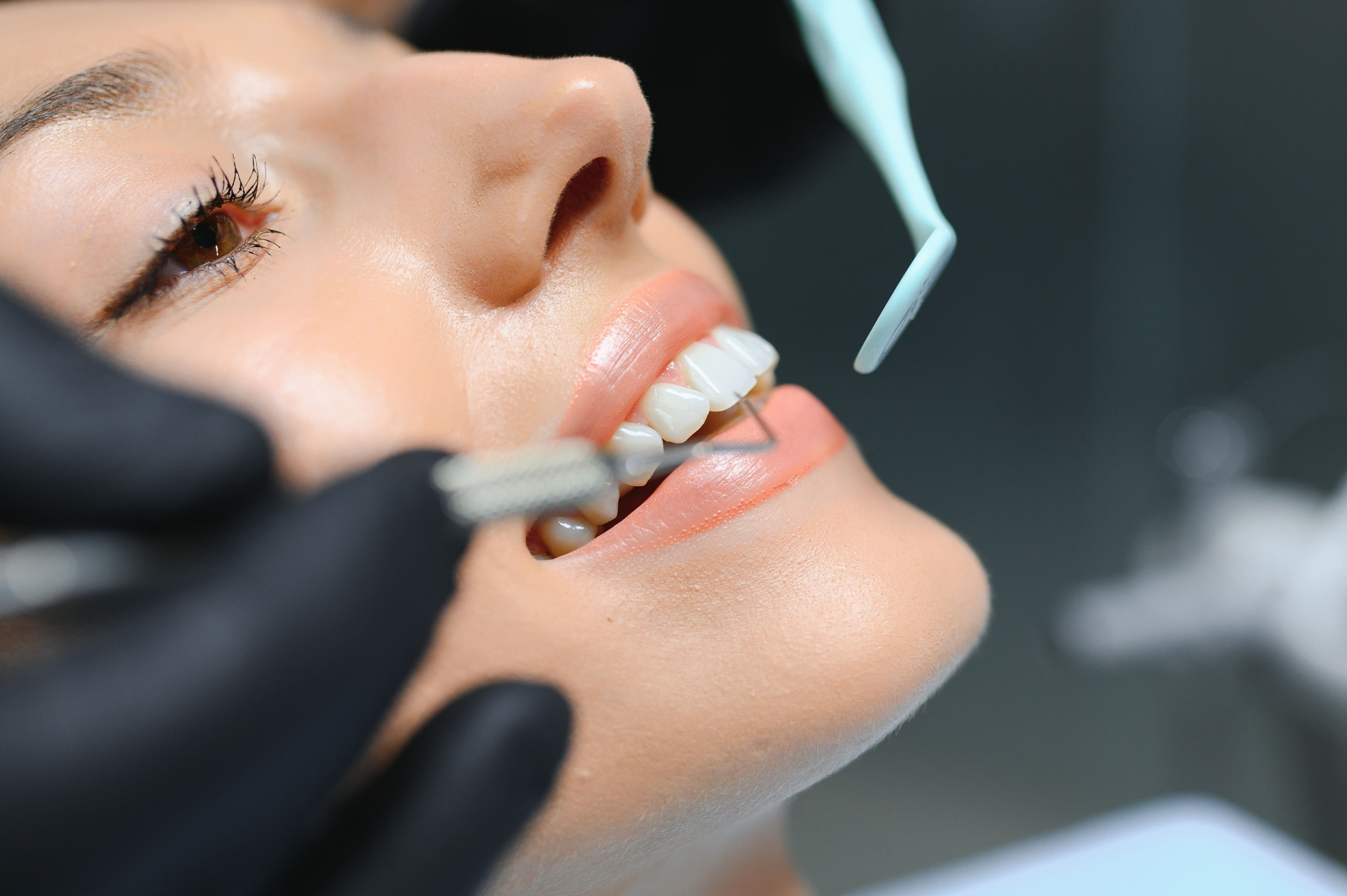
Whitening toothpaste and professional bleaching solve different problems. Toothpaste mainly removes surface stains through polishing and mild chemical action; professional peroxide whitening changes the underlying color of the tooth itself. Understanding the difference helps you pick the right method — or combine both for a maintenance routine that actually holds.
The key difference: stain removal vs. bleaching
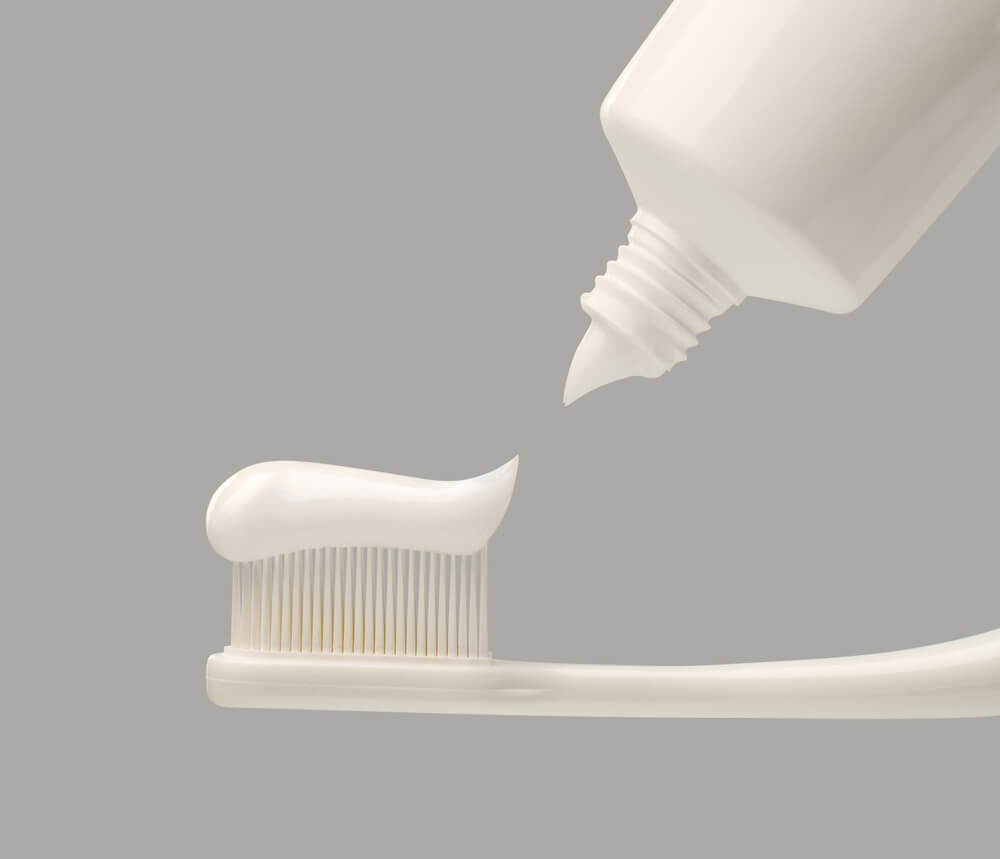
All toothpastes contain cleaning and polishing components. Whitening toothpastes use additional polishing or chemical agents to remove more surface stain than a standard toothpaste. They generally do not bleach tooth color the way hydrogen peroxide or carbamide peroxide treatments do.
Professional whitening uses a bleaching agent selected and applied under a clinician's protocol. The dental examination matters because discoloration can come from decay, trauma, medication, restorations or other causes that whitening may not correct.
How whitening toothpaste actually works
Most whitening toothpastes rely on one or a combination of three mechanisms. Understanding which one a product uses explains why results vary so widely between brands.
- Mechanical polishing. Hydrated silica or other mild abrasives buff away surface stain from coffee, tea, wine and tobacco. This is the most common mechanism and works only on stain sitting on top of the enamel.
- Chemical stain dissolvers. Some formulas add ingredients such as sodium hexametaphosphate or blue covarine to help lift or optically mask surface discoloration between brushings.
- Low-dose peroxide. A smaller number of whitening toothpastes include a low concentration of hydrogen peroxide or PAP (phthalimidoperoxy caproic acid). These can produce a mild bleaching effect over weeks of consistent use, but at a fraction of the strength and contact time of an in-office protocol.
Because whitening toothpaste sits on the teeth for only the length of a brushing cycle, even peroxide-containing formulas work slowly. Consistency, not switching products, is what drives whatever bleaching effect a toothpaste can offer.
How professional whitening works
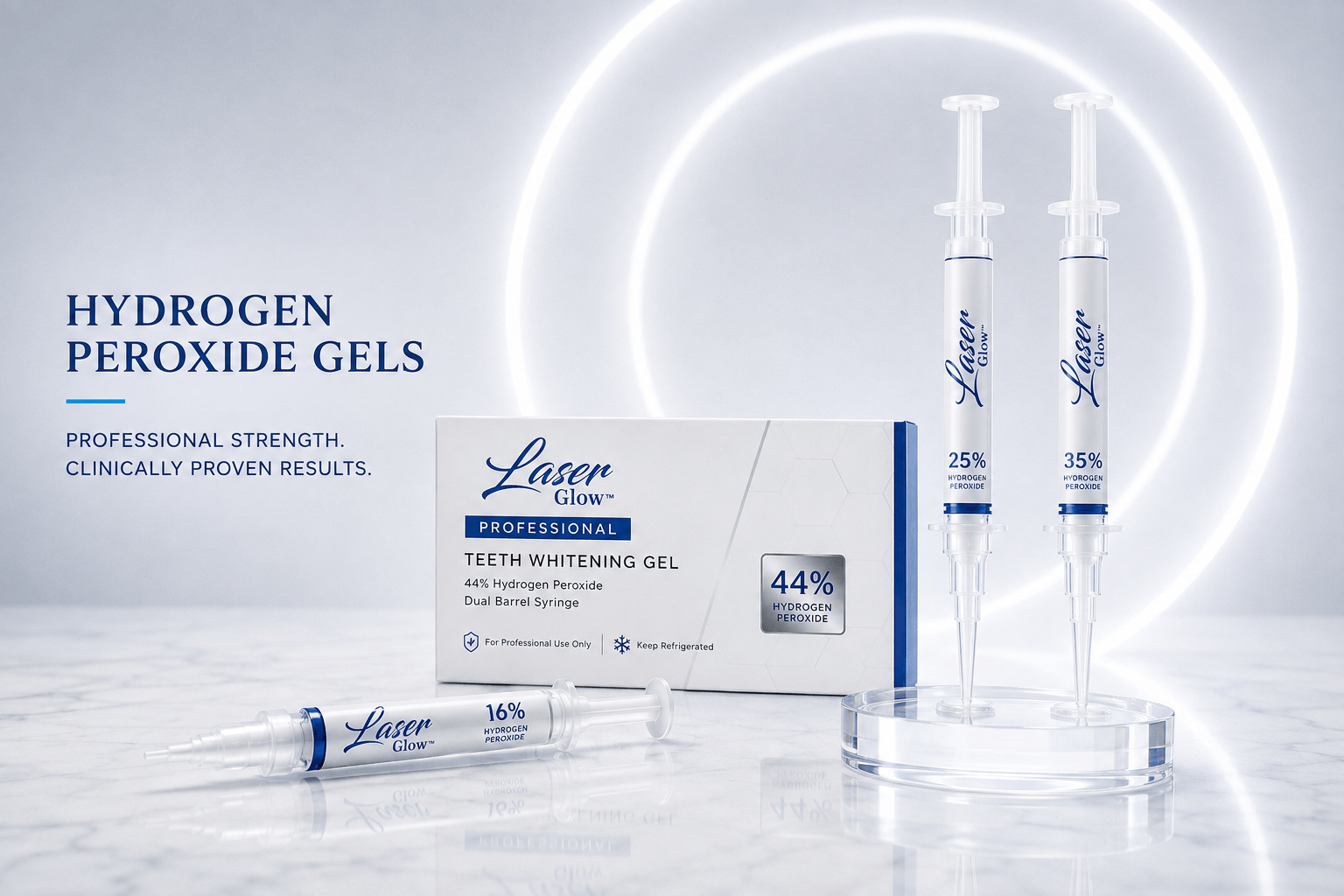
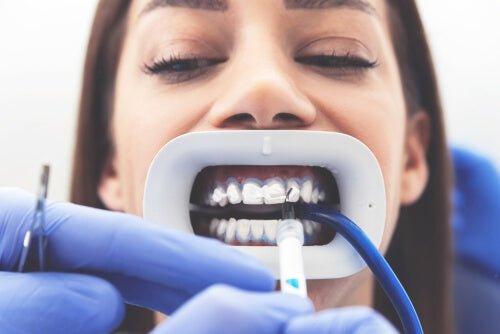
In-office whitening uses a much higher concentration of hydrogen or carbamide peroxide gel — often 16% to 44% hydrogen peroxide — applied directly to isolated teeth under provider supervision, frequently with LED light activation to accelerate the reaction. A gingival barrier protects the gum tissue whenever the higher-strength gels are used. Because the gel has extended, controlled contact time with the enamel, the peroxide can penetrate deeper into the tooth structure and break down the pigmented molecules that cause intrinsic discoloration, not just what sits on the surface.
This is the core reason professional whitening produces a more dramatic and more predictable shade change in a single visit than any toothpaste can achieve on its own. LaserGlow supplies professional-strength hydrogen peroxide whitening gels in a full range of concentrations for providers running in-office and chairside protocols.
Side-by-side comparison
| Factor | Whitening toothpaste | Professional whitening |
|---|---|---|
| Main action | Removes external surface stain | Bleaches natural tooth color |
| Typical strength | No peroxide, or a low-dose peroxide/PAP formula | 16%–44% hydrogen peroxide, provider-applied |
| Timing | Gradual with regular brushing, weeks to see any change | Noticeable change may occur in one supervised visit |
| Supervision | Self-directed daily care | Clinical screening and supervised application |
| Sensitivity | Some formulas may irritate sensitive teeth if too abrasive | Temporary tooth sensitivity and gum irritation can occur |
| Typical cost | Low, ongoing cost of a daily-use product | Higher one-time cost per session, reflecting the treatment and provider time |
| Best maintenance role | Helps manage recurring surface stain | Establishes a lighter baseline for responsive natural teeth |
How many shades can each option realistically lift?
This is one of the most common questions we get, and the honest answer is that it depends on starting shade, stain type and individual response — no product can promise an exact number of shades for every person. That said, the general pattern providers see is consistent: whitening toothpaste, used as directed over several weeks, mainly restores brightness that surface stain was masking, rather than lifting the tooth's baseline color. Professional whitening works on the baseline color itself, which is why a single supervised session can produce a more noticeable shade change than months of toothpaste use alone. If shade change is your main goal — for an event, photos or simply a bigger visible difference — professional whitening is the more direct route; if you're maintaining a shade you already like, whitening toothpaste is a reasonable daily step.
Who is a good candidate for whitening toothpaste?
- You mainly want to manage surface staining.
- You want an easy maintenance step after whitening.
- You are willing to wait for gradual changes.
- Your dentist has not advised you to avoid the product's abrasive or active ingredients.
When professional whitening makes more sense
- You want a more noticeable change than stain-removal toothpaste can offer.
- You have an event deadline and need a professionally selected plan.
- You have sensitivity history, restorations or uneven discoloration that should be evaluated.
- You want shade documentation and individualized aftercare.
Can you use both? Building a maintenance routine
Often, yes. A common strategy is professional or provider-directed whitening to change the baseline shade, followed by a suitable whitening toothpaste to support daily cleaning and surface-stain control between sessions. The exact combination should reflect your sensitivity and oral health, so check with your provider before combining products.
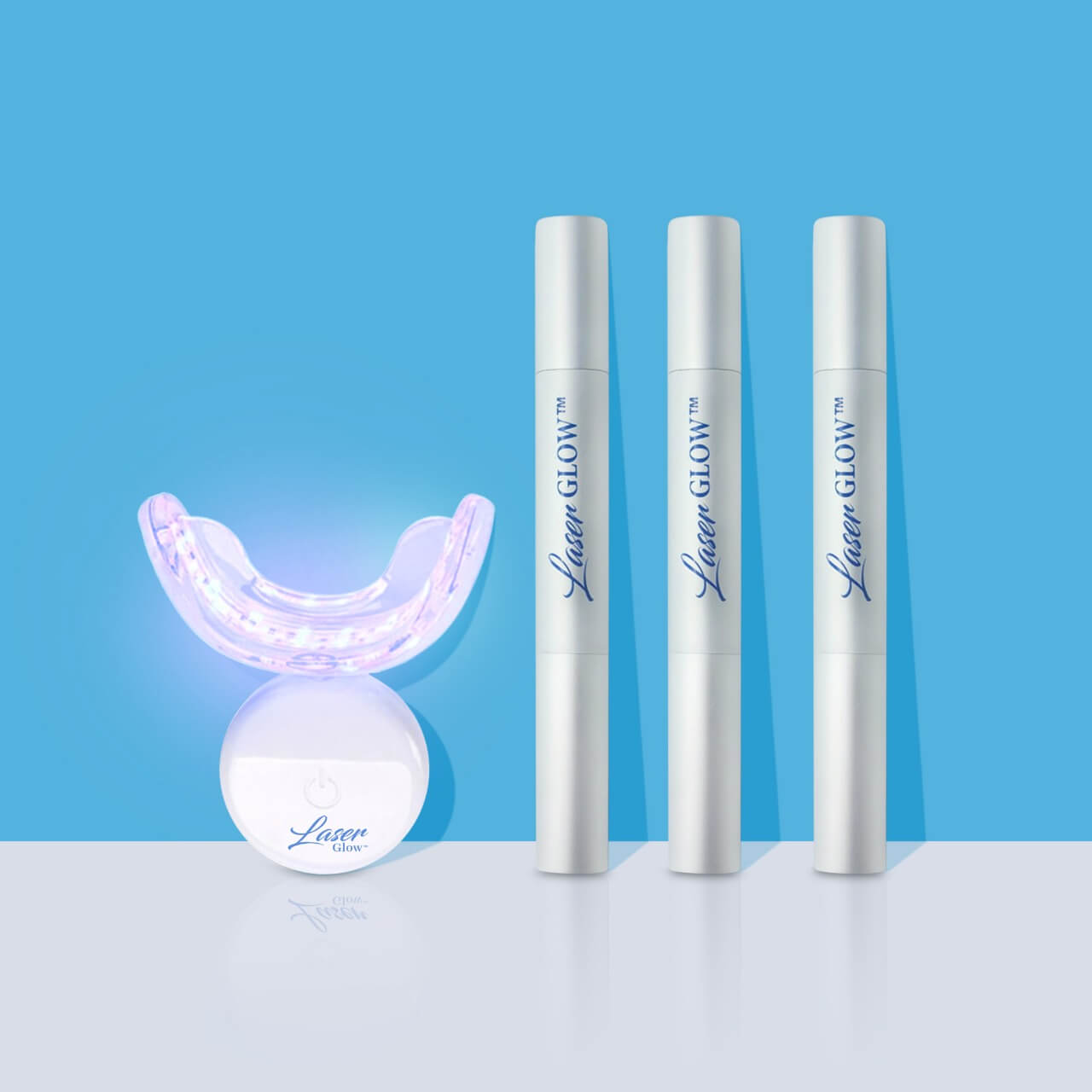
For at-home maintenance between professional visits, LaserGlow's Day & Night Whitening Toothpaste is formulated as an enamel-safe daily step, and our Purple Toothpaste color corrector is a popular option for reducing the look of yellow tones between whitening treatments.
Frequently asked questions
Does whitening toothpaste actually whiten teeth?
How quickly does professional whitening work?
Which whitening toothpaste is more effective — the regular formula or the professional-strength version?
How many shades can professional whitening lift compared to whitening toothpaste?
Can whitening toothpaste damage enamel?
Will either option whiten veneers or crowns?
Clinical references
- ADA: how whitening toothpaste removes surface stains
- ADA: evidence and adverse effects for tooth whitening
- ADA: what whitening can and cannot change
Professional vs. at-home whitening
Compare treatment strength, timing, cost and supervision beyond toothpaste alone.