In-office results
Teeth whitening before and after photos show what one session can do, but your result depends on your starting shade, stain type and enamel. Here is what professional teeth whitening before and after results realistically look like, how the change is measured with a shade guide, what affects it and how to keep it.
Short answer: In-office whitening usually gives a visible change in one visit on natural teeth with surface stain. Deeper or medication-related discoloration responds more slowly, restorations do not change, and no specific number of shades can be promised.
Realistic results
In-office teeth whitening before and after: what results really look like
Before-and-after photos are useful, but they only show one person’s starting point. Here is what professional results realistically look like and why they vary.

Before and after whitening. Results vary with starting shade, stain type, enamel condition and whitening history.
The goal
Your own shade, lifted
Most people arrive with teeth that have dulled or yellowed gradually from coffee, tea, wine or time, and leave with a noticeably brighter, cleaner-looking smile in one visit.
A good result looks natural rather than opaque or chalky. It is a brighter version of your own teeth, which is why it photographs well and looks right in person.
The change is visible immediately. It then settles slightly over the next day or two, which is normal.
Measuring the change
How a before-and-after shade change is measured
A shade guide turns “looks whiter” into something you can actually compare.
-
01
Baseline with a shade guide
Before any gel goes on, your provider matches your teeth against a teeth shade guide under consistent light and records the closest tab. Our teeth color chart explains what each tab means.
-
02
Matching photos
Before-and-after photos only compare fairly when the lighting, angle, distance and camera settings are the same. Filters and different rooms change how white teeth look.
-
03
Final shade after treatment
The same guide is used again at the end of the session, so you see the difference against a fixed reference rather than memory.
-
04
Allow for rehydration
Teeth dry out slightly during whitening and look their brightest right afterwards, then settle over 24–48 hours. The science is in does teeth whitening damage enamel.
No honest provider can promise a set number of shades. The size of the change depends on your teeth, not on the appointment length alone.
What affects your result
What affects professional teeth whitening before and after results
Two people can sit through the same session and see very different changes. Stain type is the biggest reason.
Coffee, tea and wine
Surface stain from daily drinks is among the most responsive to professional whitening.
Tobacco
Brown and yellow nicotine and tar staining responds visibly, though heavy staining may need more than one visit.
Age-related yellowing
As enamel thins, the yellow dentin beneath shows through more. Whitening generally improves it well.
Food pigments
Tomato sauce, berries, soy sauce and curry build gradual surface stain that standard in-office whitening addresses.
Medication staining
Internal discoloration from tetracycline and some other medications responds poorly to peroxide and may need a different cosmetic approach.
Veneers, crowns and bonding
Restorations do not change shade. See whitening with crowns, veneers or braces.
Your starting shade, enamel thickness and how recently you last whitened matter too. Teeth that have never been whitened, or not for over six months, often show the most obvious change.
In-office vs strips
Why in-office before and after results differ from strips
Strength and supervision
The chemistry is the same at home and in the office: hydrogen peroxide reaches the stain inside the tooth and breaks it apart. What changes is concentration and control. Home products are kept at low strengths for unsupervised use; professional gel is far stronger and is applied by a trained provider with the gums isolated. That gap is why teeth bleaching before and after photos from home kits rarely match a single in-office session.
An LED light is part of the chairside protocol, though research on how much the light itself adds is mixed; most of the result comes from the gel. Read does LED teeth whitening work.

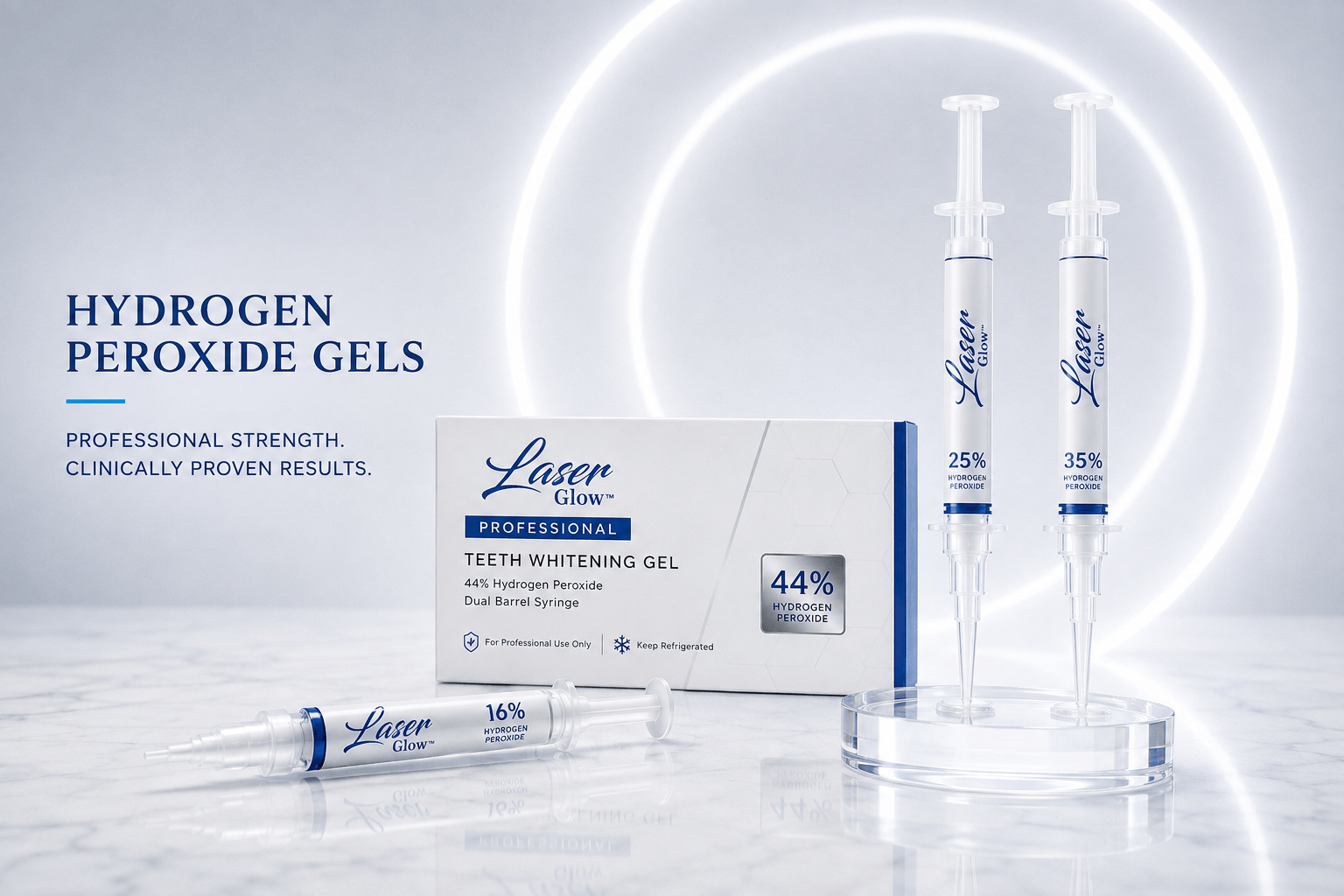
LaserGlow professional hydrogen peroxide gels: professional use only, for trained providers.
| Factor | In-office (LaserGlow) | Whitening strips |
|---|---|---|
| Gel strength | Professional strength, applied by a provider | Low strength, made for home use |
| Speed of results | One visit | About 7–14 days of daily use |
| Light | Chairside LED lamp as part of the protocol | None |
| Coverage | Full smile, applied evenly | Limited to where the strip touches |
| Gum protection | Provider-placed gingival barrier | User-managed |
| Best for | A visible change for an event or a fresh start | Gradual brightening and maintenance |
Protect the after
How to keep your after looking like your after
- Guard the first 48 hoursSkip coffee, tea, red wine and dark sauces while teeth are most stain-prone. Follow the teeth whitening aftercare guide.
- Maintain at homeRinse after dark drinks and use a 44% carbamide peroxide whitening pen as directed between visits.
- Book a touch-upA shorter touch-up visit, offered at Clifton and Edgewater, refreshes the shade before it visibly fades.
Professional results commonly hold 6–18 months, depending on diet, tobacco and oral hygiene. Why shade drifts back, and what slows it: how long does teeth whitening last and teeth whitening maintenance.
FAQ
Teeth whitening before and after FAQ
Quick answers about professional results. Still have a question? Contact our team.
How many shades whiter will I get?
Nobody can promise a number. It depends on your starting shade, stain type and enamel. Surface stain from coffee, tea and wine usually shows the most visible change.
Your provider records your shade before and after with a shade guide so you can see the difference.
Are before and after photos a fair guide to my result?
They show what is possible for that person’s teeth. Use them as a range, not a promise, and compare photos taken in the same lighting.
Is in-office whitening worth it compared with strips?
For a visible change in one appointment, yes. Strips work better for gradual maintenance between professional visits.
Compare the options in professional vs at home teeth whitening.
Will in-office whitening work on coffee stains?
Coffee stain is one of the best candidates for professional whitening because it responds well to hydrogen peroxide gel.
Why do my teeth look whiter right after, then slightly less a day later?
Teeth lose a little moisture during whitening, which makes them look brighter at first. They rehydrate over 24–48 hours and the shade settles.
Does professional whitening hurt?
Some people feel temporary sensitivity, which usually settles within 24–48 hours. Mention any sensitivity history at booking so the session can be adjusted.
Where can I get in-office whitening?
LaserGlow offers in-office whitening in Clifton (1412 Main Ave), Edgewater (125 River Road, Suite 105) and Paterson, NJ, and in Miami, FL.
Find hours and booking on the whitening office page.
Ready for your own before and after?
First-time clients start with a full in-office session. Book at LaserGlow in Clifton, Edgewater or Paterson, NJ, or Miami, FL.