Compare your options
Professional vs at home teeth whitening comes down to strength, speed, control and cost. In-office whitening uses provider-applied professional gel for a visible change in one visit; at-home products use lower strengths over days or weeks. Here is how they compare on results, cost and safety, and how to choose.
Short answer: Choose in-office for the biggest change in the shortest time, under supervision. Choose at-home for gradual brightening and upkeep. Most people get the longest-lasting result by combining the two.
Side by side
Professional vs at home teeth whitening: the real difference
Both routes rely on the same chemistry: peroxide oxidizing stain inside the tooth. The difference is strength, control and how quickly you see a change.
| Factor | Professional (in-office) | At-home |
|---|---|---|
| Who applies it | A trained provider, chairside | You, following the product directions |
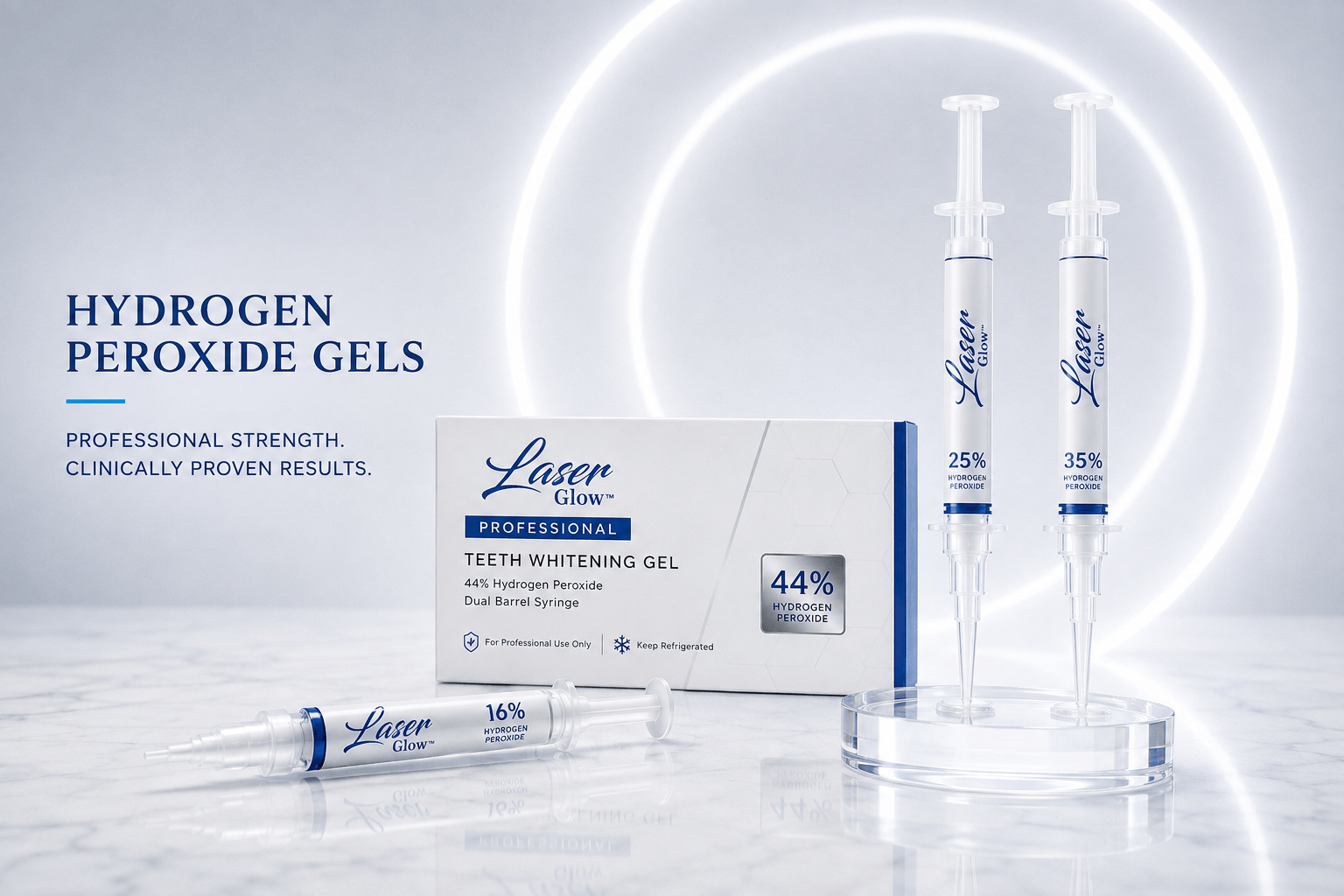
| Strength | Professional hydrogen peroxide gels (16%–44%), professional use only | Lower-strength formulas made for unsupervised use |
| Time to a visible change | One session, typically 45–60 minutes | Days to weeks of consistent use |
| Gum protection | Gingival barrier placed and checked before any gel | Up to you: good fit and wiping away excess |
| Screening and shade record | Intake, consent and a before-and-after shade check | Self-directed |
| Best for | A bigger change fast, events, stubborn stain | Gradual brightening and maintenance |
| Cost pattern | Higher per visit, fewer visits | Lower per product, repeat purchases |
Not interchangeable: professional hydrogen peroxide gels are for trained providers and are not for home or tray use. Home kits are designed around much lower strengths for a reason.
What can change
What each option can change: stain type and dental work
Surface stain vs deep discoloration
Extrinsic stain from coffee, tea, red wine, tobacco and pigmented food sits on and just under the enamel. It responds to both routes, faster in the chair.
Intrinsic discoloration lives deeper in the tooth, from aging, trauma or certain medications such as tetracycline. It lightens slowly and sometimes not fully with whitening alone, whichever route you choose.
Dental work
Restorations keep their shade
Veneers, crowns, bonding and fillings do not respond to peroxide, at home or in the office. Whitening the teeth around them can create a mismatch, so plan with your provider. Read whitening with crowns, veneers or braces and can you whiten veneers.
What it looks like
In-office vs at-home teeth whitening in practice
An in-office session at LaserGlow
- A short intake about sensitivity, dental work and goals
- Your starting shade recorded with a shade guide
- Lips and gums protected, then professional gel applied under an LED light in timed rounds
- Final shade check and written aftercare
See your first teeth whitening appointment and realistic teeth whitening before and after results.
At-home options that work
- LED whitening kits give a structured routine that builds results over several sessions
- Teeth whitening strips for sensitive teeth are pre-portioned and low commitment
- A PAP+ whitening pen is a peroxide-free brush-on option for touch-ups
- Whitening toothpaste removes surface stain only; see does whitening toothpaste work
A water flosser does not whiten, but clearing plaque first helps any gel reach the enamel evenly.
Safety and sensitivity
Safety and sensitivity: who should be cautious
Sensitivity
It depends on dose: higher strength and longer contact raise the odds. It is usually temporary either way. Gentle routes are covered in teeth whitening for sensitive teeth.
Gum protection
In the chair, every LaserGlow professional HP gel is used with a gingival barrier, mandatory from 35% upward. At home, fit and wiping away overflow do that job. Learn what a gingival barrier is.
Reasons to wait
Active decay, untreated gum disease and exposed roots come first. Pregnant or nursing? Read whitening and pregnancy. LaserGlow protocols are written for adults.
Worried about enamel? The short version is that correct use on healthy teeth does not cause lasting harm. The evidence is in does teeth whitening damage enamel, and myths are covered in is teeth whitening safe.
Which one is for you
Is professional teeth whitening worth it?
For most people the answer depends on the timeline and the type of stain, not on one option being better in every case.
Choose in-office if
You want the biggest change in one visit, you have an event coming up, or home products have stalled.
Find a whitening office →Choose at-home if
Your stain is light, you are happy to build results gradually and you want a lower cost per use.
At-home whitening →Combine both if
You want a professional reset followed by home upkeep to stretch the time between visits.
44% CP maintenance pen →Wait on both if
You have tooth pain, gum problems or untreated decay. Get those checked and treated first.
Is teeth whitening safe? →Making it last
How long results last, whichever route you take
Professional reset + at-home upkeep = a longer-lasting shadeProfessional results commonly hold 6–18 months, depending on diet, tobacco and oral hygiene.
Protect the first 24–48 hours with the teeth whitening aftercare guide, then keep stain in check with teeth whitening maintenance. Why shade drifts back: how long does teeth whitening last.
FAQ
Professional vs at-home whitening FAQ
Quick answers for choosing a route. Still deciding? Contact our team.
Is in-office whitening better than at-home whitening?
In-office whitening gives a bigger change faster, with screening and gum protection. At-home whitening is slower but cheaper per use and well suited to maintenance.
Many people combine the two.
How long does a professional whitening session take?
A typical in-office session takes about 45–60 minutes, including intake, gum protection and the whitening rounds.
Can I buy professional whitening gel and use it at home?
No. Professional hydrogen peroxide gels are for trained providers and are not for home or tray use.
Choose a product made for home use and follow its directions.
Do at-home kits damage enamel?
Home products used as directed on healthy teeth are not expected to cause lasting enamel damage. Problems come from overuse and ignoring the directions.
More in does teeth whitening damage enamel.
Will either option whiten my veneers or crowns?
No. Restorations keep their shade with both routes, so discuss any visible dental work before you whiten.
How often should I whiten?
Most people need a professional session only every 6–12 months, with home maintenance as directed in between.
Your habits, especially coffee, tea, wine and tobacco, set the pace.
Ready for a professional reset?
Book in-office whitening at LaserGlow in Clifton, Edgewater or Paterson, NJ, or in Miami, FL, then keep it up at home.