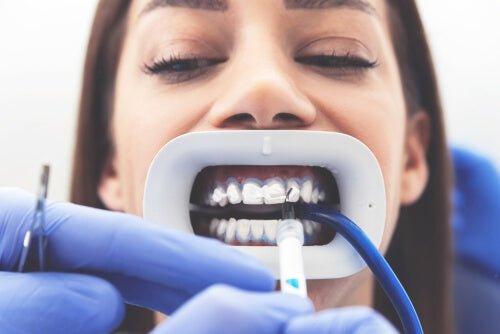
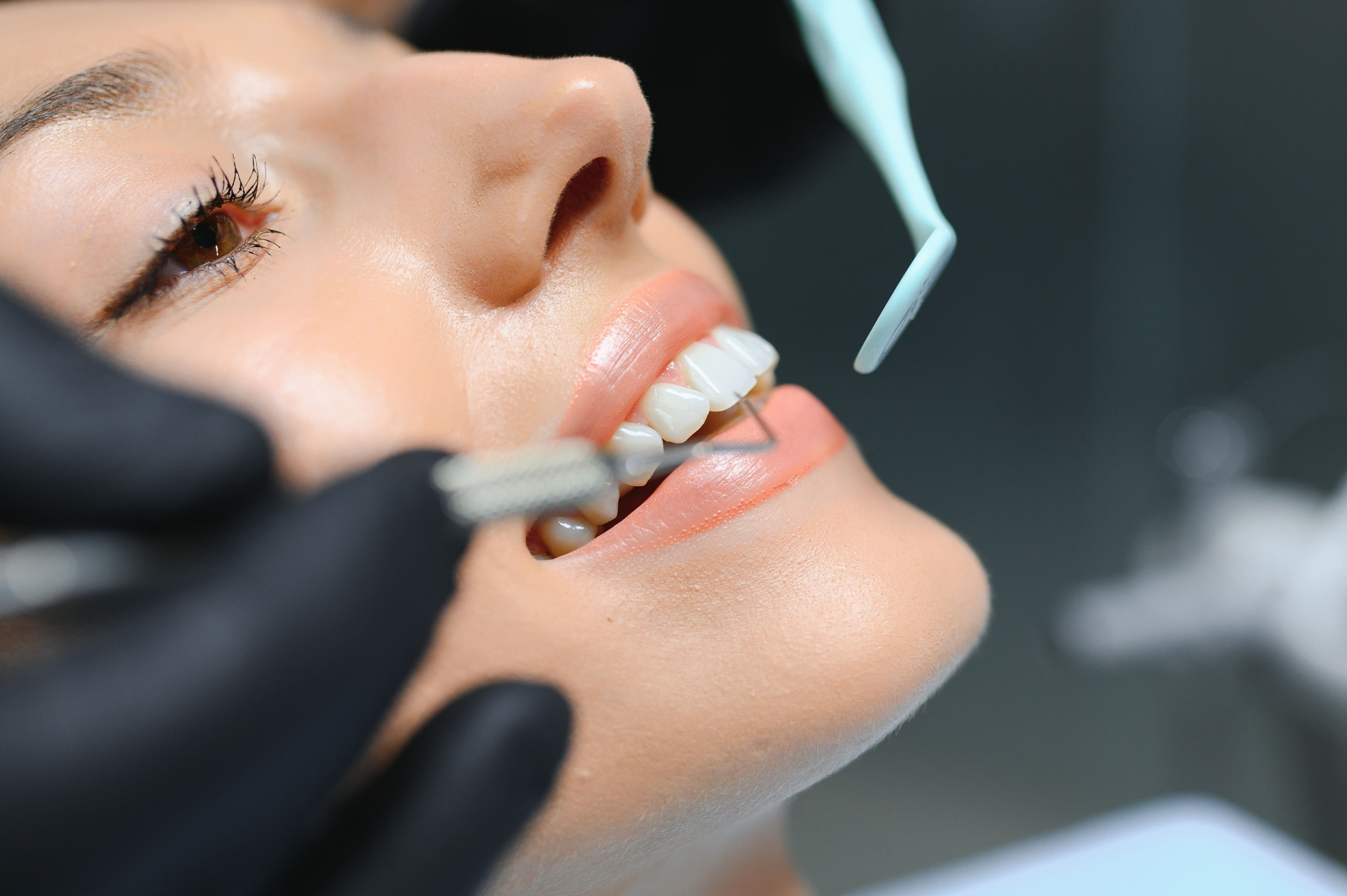
White gum tissue during a hydrogen peroxide whitening session is called blanching, and it means the gel made unprotected contact with soft tissue. It is not a normal or expected part of a correctly isolated treatment, and it is preventable.
Blanching is a chemical reaction from direct peroxide contact — not a burn in the thermal sense.
A full, gap-free, properly cured gingival barrier significantly reduces the risk before it starts.
Usually self-resolving within a day. Whitening past 48 hours or blistering needs a dental evaluation.
Why It Happens — the Real Root Causes
Barrier gaps at the margin
The most common cause. A thin edge or missed spot along the gumline leaves a direct path for gel to reach tissue.
Barrier not fully cured
An undercured barrier can shift or fail to hold its seal once gel is applied and the mouth stays open for the session.
Gel applied too close to the gumline
Even with a good barrier, gel placed directly at the margin instead of on the facial tooth surface increases wicking risk.
Overloaded syringe application
Excess gel volume increases the chance of overflow reaching unprotected tissue, especially full-arch.
What to Do If You See Blanching Mid-Session
Do not continue applying gel or running additional cycles on that area.
Use suction or a clean wipe, then rinse thoroughly with water.
Nothing beyond a water rinse unless directed by a licensed provider.
Location, extent, and how quickly it appeared — standard treatment records.
Correct the isolation gap before any further gel contacts the area.
Blanching typically resolves on its own within a few hours to about a day as normal tissue color returns. Some clients report mild tenderness during that window. Persistent whitening beyond 24–48 hours, blistering, or significant pain is outside the range of a typical episode and warrants a dental evaluation.
How Gingival Barrier Prevents This
Why This Matters for Your Business, Not Just the Client
A provider who understands why blanching happens is in a much stronger position — both for the client conversation in the moment, and for protecting the business from a complaint that assumes the gel itself was defective. Blanching from an isolation gap is an application issue, not a product issue, and being able to explain that clearly, calmly, and accurately is part of running a credible whitening service.
Frequently Asked Questions
Is white gums during whitening dangerous?
How long does gum blanching last?
Does gingival barrier completely prevent blanching?
Should I use desensitizing gel after a blanching incident?
Get your isolation protocol right every time
Review the full soft-tissue isolation guide before your next whitening session.