Whitening safety · Myths vs. facts
Is teeth whitening safe? For healthy adult teeth, yes, when the right product is used at the right strength, as directed, with the gums protected. The answer depends on conditions, not a blanket promise. Here are the conditions, the real risks and the most common teeth whitening myths checked against the facts.
Short answer: Whitening is considered safe for healthy natural teeth when it is screened, matched to the right strength and used as directed. Untreated decay, gum disease, exposed roots, pregnancy and being under 18 are reasons to pause and get advice first.
The honest answer
Is teeth whitening safe? It depends on these conditions
Whitening is not a blanket yes or no. For healthy adult teeth it is widely used and well studied. Whether it is right for you depends on the condition of your mouth and how the product is used.
Whitening is a reasonable choice when
- Your natural teeth and gums are healthy, with no untreated cavities or gum disease
- The product is made for the setting it is used in: professional gel in a provider’s chair, home formulas at home
- Strength, wear time and frequency follow the label or the provider’s protocol
- The gums are protected, either with a provider-placed barrier or by keeping home products off the gumline
- You have shared any sensitivity history, so the plan can be adjusted
Pause and get advice first
When whitening should wait
Cavities, cracked teeth, broken fillings, gum disease, receding gums or exposed roots should be treated or checked first. Whitening over them can make discomfort worse.
If you are pregnant or nursing, ask first; see whitening and pregnancy. LaserGlow’s whitening protocols are written for adults, so under-18s should speak with their dentist.
Veneers, crowns and bonding are not a safety problem, but they will not change color. Read whitening with crowns, veneers or braces before you start.
How it works
How whitening works, and why that matters for safety
Oxidation, not sanding
Peroxide whitening uses hydrogen peroxide, or carbamide peroxide that gradually breaks down into hydrogen peroxide. It oxidizes the stain molecules inside the tooth so they reflect less color. Nothing is scraped or ground away.
How far and how fast it works depends on concentration, contact time, how carefully it is applied, the type of stain and how consistently it is used. More on the two peroxides: carbamide peroxide vs hydrogen peroxide.
Strength sets the safeguards
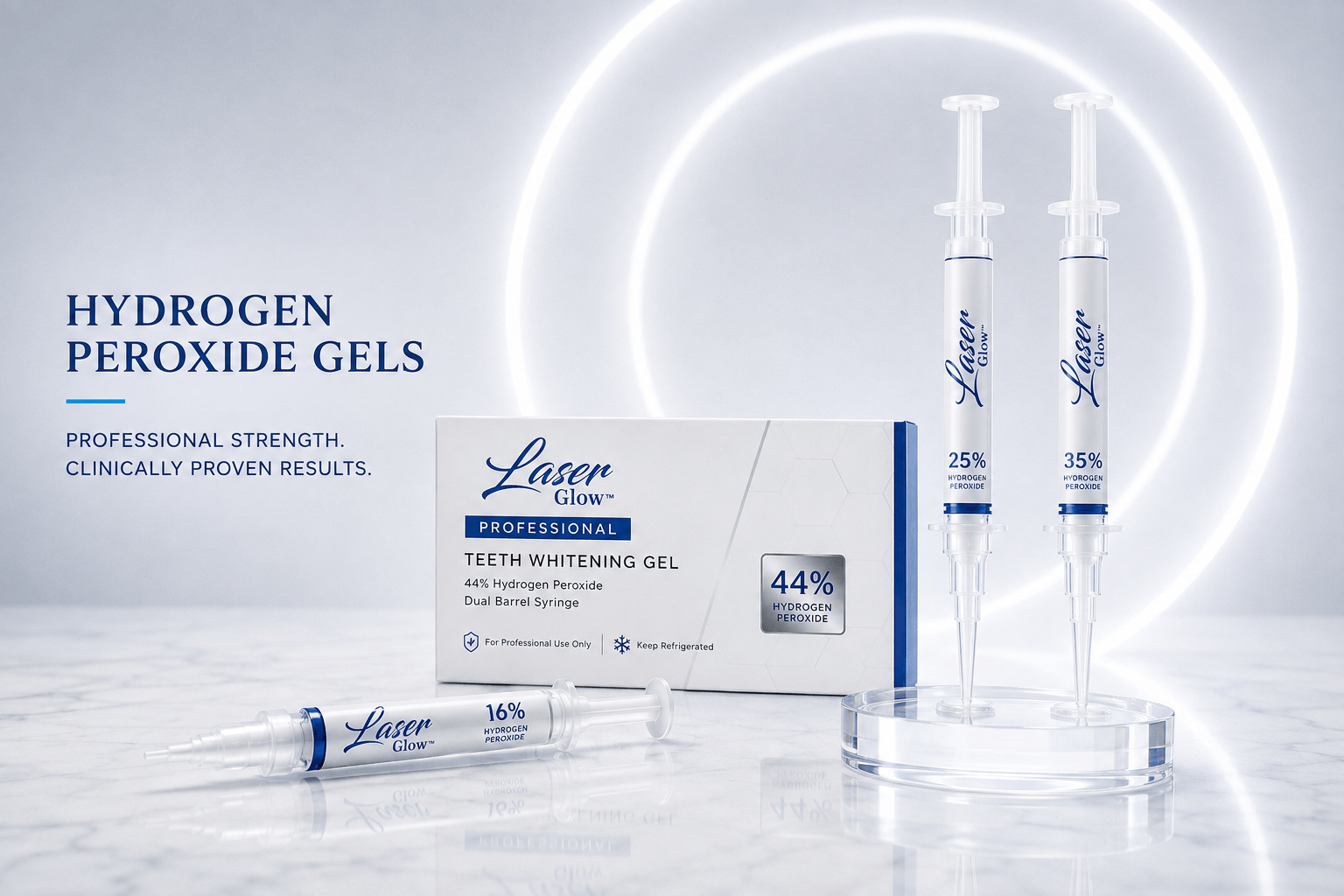
Professional-strength gels are applied by trained providers, with the soft tissue isolated first. Every LaserGlow professional hydrogen peroxide gel, from 16% to 44%, requires a gingival barrier, and at 35% and above it is mandatory.
Home products use lower strengths designed for unsupervised use. They are safe only within their directions. Professional HP gels are not for home or tray use.
Myths vs. facts
Teeth whitening myths vs. facts
Most whitening misinformation starts as a half-truth. Here is what each popular claim leaves out.
-
01
Myth: Whitening strips the enamel off your teeth.
Fact: Dental whitening changes the color of stain molecules; it does not remove tooth structure. Research on healthy teeth reports temporary, reversible changes rather than lasting harm.
-
02
Myth: Charcoal, baking soda and lemon are safer because they are natural.
Fact: Natural is not the same as gentle. Gritty powders can wear the surface when scrubbed in, and acids such as lemon juice soften enamel. Formulation and directions matter more than the ingredient list sounding natural.
-
03
Myth: A higher percentage always whitens better.
Fact: Concentration is one variable among several: contact time, application, stain type, sensitivity history and gum protection all count. Carbamide and hydrogen peroxide percentages are not equivalent either.
-
04
Myth: Whitening will brighten veneers, crowns and bonding.
Fact: Porcelain, composite, crowns and fillings keep their shade. Whitening the natural teeth around them can leave a visible mismatch, so plan for it first.
-
05
Myth: Any sensitivity means something went wrong.
Fact: Mild, short-lived sensitivity is a common response to peroxide and usually settles within 24–48 hours. Sharp, lasting or single-tooth pain is different and needs a dental check.
-
06
Myth: Once teeth are white, they stay white.
Fact: Coffee, tea, red wine, tobacco and normal aging bring color back. Professional results commonly hold 6–18 months, longer with good habits and maintenance.
-
07
Myth: The blue light is what whitens your teeth.
Fact: The peroxide gel does the whitening. A light can support a gel designed for it, but research on how much the light itself adds is mixed.
-
08
Myth: Purple toothpaste bleaches teeth.
Fact: Purple toothpaste uses violet pigment to cancel yellow tones for a short time. It is optical color correction, not bleaching. It is not a fit for anyone with veneers, crowns or bonding.
The real risks
Is teeth whitening bad for your teeth? The real risks
Whitening is not bad for healthy teeth when it is used correctly. These are the outcomes worth knowing about, and almost all of them trace back to how it is done.
Temporary sensitivity
The most common side effect. It rises with strength, contact time and frequency, and usually fades within a day or two.
Gum irritation
Gel on the gums can sting or turn the tissue white for a short time. See gums turned white after teeth whitening.
Shade mismatch
Natural teeth lighten while restorations stay the same, which can look uneven in the smile line.
Overuse
Whitening more often or for longer than directed adds exposure without adding much result.
Unclear products
Gels bought online with no stated strength, wear time or directions remove the information you need to use them safely.
Hidden problems
Whitening over decay, cracks or exposed roots can worsen discomfort and delay the care you actually need.
Is it safe to bleach teeth at home? Yes, with a product made for home use, used exactly as directed, on healthy teeth. Is bleaching your teeth bad when you ignore the label, double up products or use professional gel at home? That is where most problems start.
Do it right
How to whiten your teeth safely
- Get checked firstHave cavities, cracks and gum problems treated before you whiten.
- Match the product to the settingHome formulas at home; professional gel only in a provider’s chair.
- Follow the label exactlyLonger or more frequent sessions add irritation faster than they add whitening.
- Keep gel off your gumsUse a well-fitting tray or strip and wipe away any overflow.
- Pause when teeth reactTake rest days if sensitivity builds, and stop if pain is sharp or lasting.
- Protect the resultFollow your teeth whitening aftercare for the first 24–48 hours.
Booking a professional session for the first time? Read your first teeth whitening appointment to see what the visit involves. Curious about the ingredient itself? Read is hydrogen peroxide bad for your teeth.
FAQ
Teeth whitening safety FAQ
Quick answers to the safety questions we hear most. Still unsure? Contact our team.
Is teeth whitening safe for enamel?
On healthy teeth, used as directed, whitening does not cause lasting enamel damage. The changes research reports are temporary and reverse as enamel remineralizes.
The full evidence is in does teeth whitening damage enamel.
Is it safe to bleach your teeth at home?
Yes, with a home-use product on healthy teeth, following the directions for strength, wear time and frequency.
Professional hydrogen peroxide gels are for trained providers only and are not for home or tray use.
How long does whitening sensitivity last?
Mild sensitivity usually settles within 24–48 hours. If it lasts beyond 72 hours, contact your provider or dentist.
Prone to sensitivity? See sensitive teeth whitening options.
Can teeth whitening damage your gums?
Gel on the gums can cause temporary irritation or white patches, which normally settle. That is why gum protection matters.
Irritation that does not settle within 48 hours should be checked.
Is professional whitening safer than at-home whitening?
Both can be safe. Professional whitening adds screening, gum isolation and supervision; home products rely on you following the directions.
Compare them in professional vs at home teeth whitening.
Who should not whiten their teeth?
Anyone with untreated decay, gum disease, exposed roots or significant pain should wait until those are addressed.
Pregnant or nursing clients should ask first, and LaserGlow’s protocols are written for adults.
Want whitening with the safeguards built in?
LaserGlow offers in-office whitening in Clifton, Edgewater and Paterson, NJ, and Miami, FL, with an intake, gum protection and written aftercare at every visit.