A brighter smile can change how some people feel about photos, conversations and important events — but the research is more nuanced than most whitening marketing suggests. This guide walks through what the studies actually show about tooth color, skin tone and confidence, and how to set a shade goal that fits you instead of a generic ideal.
Why tooth color can influence smile confidence
Smiles are highly visible during face-to-face communication, and they are one of the few features people consciously manage before a photo or an important conversation. If someone feels self-conscious about staining, they may smile less freely, cover their mouth when laughing, or avoid close-up photos altogether. Addressing a concern they personally value can make them feel more comfortable showing their smile — that is a reasonable, well-supported expectation.
What is less supported is the idea that a specific shade of white makes a person more attractive to others. Those are two different claims, and the research on each points in a different direction.
What the research actually shows
A randomized clinical trial found that tooth bleaching had a moderate positive effect on oral-health-related quality of life, particularly in psychological and social domains — the people who whitened reported feeling better about their own smile. That is a real, measurable benefit, and it lines up with what patients tell dental professionals every day.
But self-perception is not the same as how others judge attractiveness, and that distinction matters for setting realistic expectations. A study published in Perceptual and Motor Skills tested whether tooth color changed how observers rated a person's attractiveness and age from photographs. The result: tooth color did not produce a statistically significant difference in attractiveness ratings. In other words, whitening appears to change how people feel about their own smile more reliably than it changes how strangers rate their looks.
Does skin tone affect your ideal shade?
Yes — and this is one of the most overlooked parts of setting a whitening goal. An observational study published in The Journal of Prosthetic Dentistry examined the relationship between natural tooth shade value and skin color in 119 participants. The researchers found an inverse relationship: people with fairer skin tended to have naturally darker (lower-value) teeth, while people with darker skin tended to have naturally lighter (higher-value) teeth. Age was also a factor — the majority of participants over 60 had teeth in the medium-to-low value range, compared to a small minority of participants under 31.
The practical takeaway is simple: there is no single "correct" white that looks natural on every face. A shade that looks bright and healthy against one skin tone can look flat, artificial, or mismatched against another. This is one reason LaserGlow avoids promoting a specific universal target shade and instead recommends working toward a shade that reads as clean and even against your own coloring — not the brightest number on a shade guide.
First impressions: appearance is only one signal
People form impressions from many cues — facial expression, eye contact, tone of voice, grooming and posture, not just tooth color. A bright, healthy-looking smile can contribute to an overall polished appearance, but healthy social confidence does not require unnaturally white teeth, and the research above backs that up.
This is worth repeating because whitening marketing often implies the opposite: that a specific shade unlocks confidence or attractiveness on its own. In practice, confidence tends to come from feeling comfortable with your own appearance rather than matching an external standard, and a natural-looking result you feel good about will usually serve you better than the whitest shade you can reach.
Choosing a confidence-friendly whitening approach: a decision framework
The right method usually comes down to three practical factors: how sensitive your teeth are, how much time you have before an event or appointment, and how much you want to spend upfront versus over time. None of these factors is more "correct" than another — they simply narrow down which approach fits your situation. Use the comparison below as a starting point, and confirm your choice with a dental professional if you have a history of sensitivity or unresolved dental issues.
| If your priority is... | Best-fit approach | What to know |
|---|---|---|
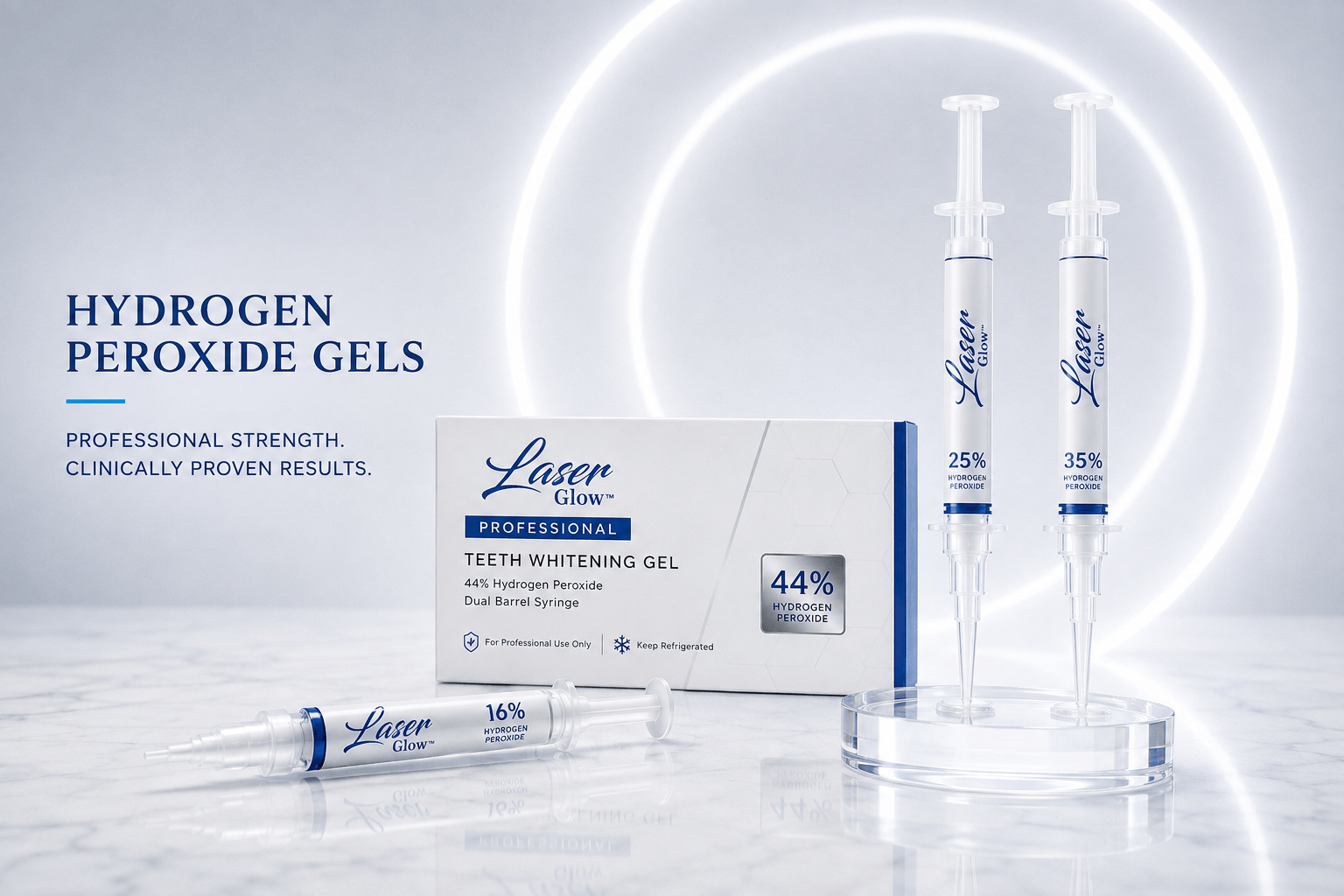
| Fastest visible result, professionally supervised | In-office professional whitening | Higher-strength hydrogen peroxide gels are applied by a trained provider with a gingival barrier for stronger formulas. Compare strengths in our guide to choosing a hydrogen peroxide gel strength (16%–44%). |
| Lower sensitivity risk | Lower-percentage or PAP-based formulas | If peroxide gels have caused sensitivity in the past, see how hydrogen peroxide compares to PAP+ whitening to find a gentler option. |
| Budget-conscious, gradual improvement | At-home whitening kit or strips | Use a product with clear directions and realistic timing. Stop and consult a dentist if sensitivity is severe or persistent. |
| Temporary color correction before an event | Purple color-correcting toothpaste | Purple products reduce the visual appearance of yellow tones. They do not bleach the internal tooth color, so results are cosmetic and short-term. |
| Unresolved dental concerns | Professional evaluation first | A dental professional can identify restorations, decay, cracks or discoloration that may not respond normally to whitening. |
LaserGlow's whitening education is developed by David Hanna, RDH, a registered dental hygienist — learn more about LaserGlow's approach to professional whitening.
Set a realistic shade goal
- Aim for an even, natural-looking improvement rather than the brightest possible shade on a guide.
- Factor in your natural skin tone — the research above shows shade value and skin color are related, not independent.
- Remember that crowns, veneers and fillings do not whiten like natural enamel, so a mismatch can appear after whitening.
- Use before-and-after photos in similar lighting; bathroom lighting can make changes look misleading.
- Do not extend wear time or combine products to chase faster results.
- Protect the result afterward — see our guide to foods and drinks that stain teeth after whitening.
When to speak with a dentist first
Ask a dentist before whitening if you have untreated decay, gum disease, dental pain, extensive restorations, pregnancy-related questions or a single dark tooth. A single tooth that has changed color may need diagnosis rather than cosmetic whitening, since whitening will not correct discoloration caused by trauma, a failing restoration or internal staining. Whitening also is not intended for use on restorations such as veneers, crowns or bonding — those materials will not lighten the way natural enamel does, which can leave a visible mismatch if the rest of the smile whitens and the restoration does not.
Frequently asked questions
Can whiter teeth improve confidence?
Does tooth color actually change how attractive other people find you?
Does my skin tone affect what whitening shade I should aim for?
Do teeth need to be extremely white to look attractive?
Does purple toothpaste permanently whiten teeth?
What if I am unhappy with one dark tooth?
Research and clinical context
- Randomized clinical trial on bleaching and oral-health-related quality of life
- Jahangiri et al., relationship between tooth shade value and skin color, The Journal of Prosthetic Dentistry (2002)
- Grosofsky et al., "Tooth Color: Effects on Judgments of Attractiveness and Age," Perceptual and Motor Skills, Vol. 96(1), pp. 43–48 (2003)
- American Dental Association: teeth whitening overview
Compare at-home and professional options
Match the method to your timeline, sensitivity history and type of discoloration.