Dual-barrel and single-syringe describe packaging and dispensing systems—not an automatic ranking of whitening strength or effectiveness. Compare the complete formulas, instructions, stability, mixing, waste, storage, and workflow.
What Is the Difference Between Dual-Barrel and Single-Syringe Gel?
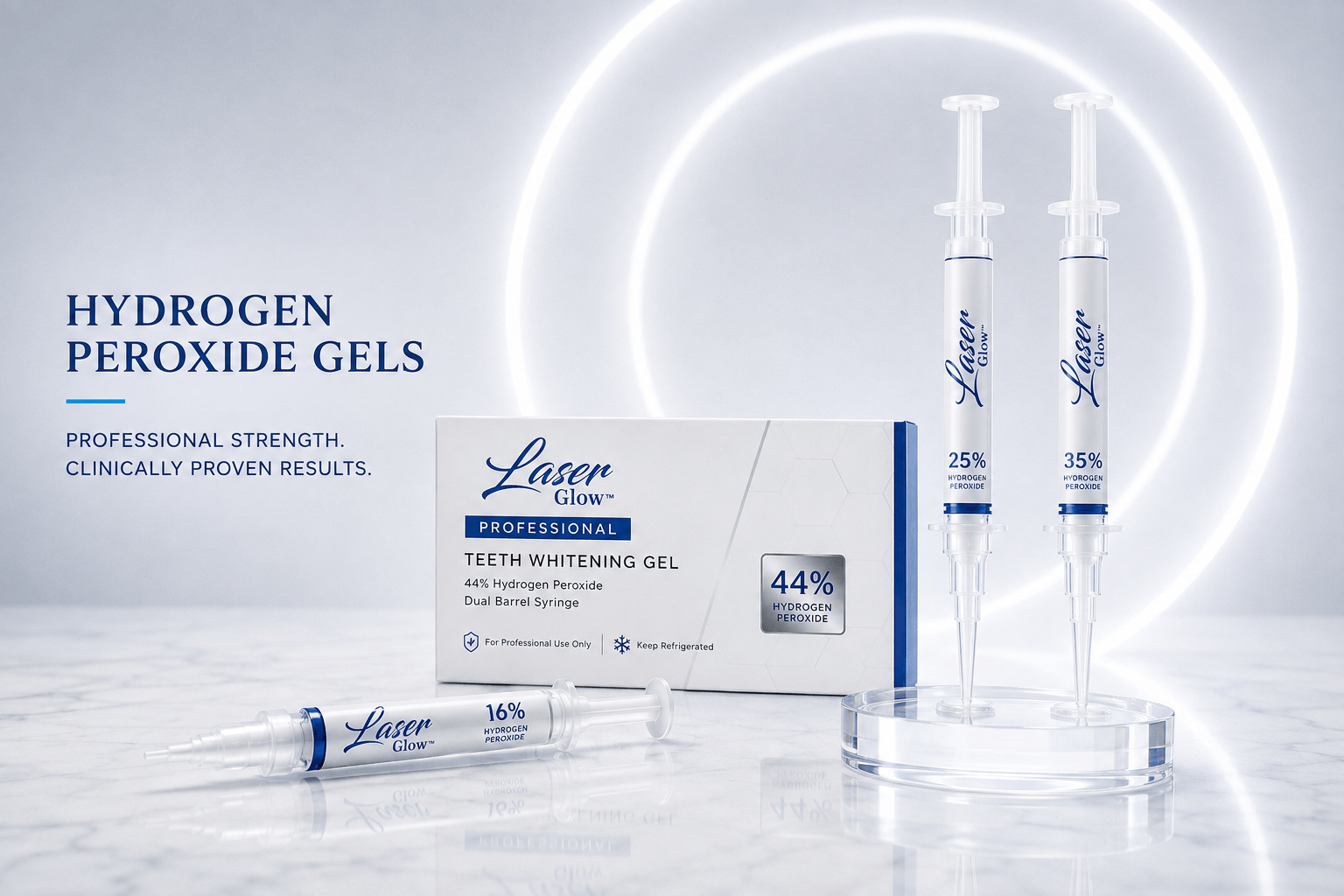
A dual-barrel syringe keeps two components separate until they pass through a compatible mixing tip. A single-syringe product dispenses from one chamber and may be premixed or otherwise formulated for direct dispensing. The dual format can support point-of-use mixing, while the single format can simplify setup. Performance depends on the finished formula and directions—not the syringe shape alone.
Format Comparison
| Factor | Dual-barrel | Single-syringe |
|---|---|---|
| Components | Separate chambers combine through the specified mixing tip. | One chamber dispenses the finished product directly. |
| Preparation | Requires correct tip attachment and any manufacturer-specified initial dispensing or purge. | Typically simpler dispensing; follow cap, tip, storage, and open-time directions. |
| Mix consistency | Depends on compatible tip, unobstructed flow, correct ratio, and directions. | Mixing occurs during manufacturing or is not required by that formula. |
| Waste | May include material retained in or dispensed through the tip. | May reduce tip-related waste but still requires controlled application. |
| Storage and stability | Product-specific. Follow temperature, light, expiry, packaging, and handling directions. | |
| Strength | Determined by the formula and concentration—not by barrel count. | |
How to Choose the Right Delivery Format
- Confirm the product is appropriate for the provider, setting, and intended procedure.
- Compare formula, concentration, directions, intended contact time, storage, and required isolation.
- Evaluate mixing-tip availability, application control, measured product yield, and reorder cost.
- Train staff on the exact device; never transfer a generic purge amount or technique between products.
- Document lot, expiry, storage, and product use according to workplace requirements.
Use the professional gel strength guide to choose an appropriate concentration tier before comparing delivery formats.
Claims to Avoid
- “Dual-barrel is always stronger.”
- “Fresh-mix automatically produces better clinical results.”
- “Single-syringe gel is unstable.”
- “Dual-barrel eliminates waste.”
- “The format determines sensitivity.”
Those outcomes depend on the specific product, formulation, storage, directions, application, and client—not packaging alone.
Dual-Barrel vs. Single-Syringe FAQs
Is dual-barrel gel stronger?
Not by format alone. Strength depends on the finished formula and active concentration.
What does the mixing tip do?
It combines the two components as specified by the manufacturer. Use only compatible tips and follow the product directions.
Does dual-barrel gel waste more product?
Material may remain in the mixing tip or be used during manufacturer-specified preparation. Measure real yield rather than assuming either format is more economical.
Is single-syringe gel better for beginners?
It may have a simpler dispensing workflow, but appropriate use still requires training, authorization, client assessment, isolation, and adherence to instructions.
Can the two formats use the same protocol?
Do not assume so. Follow each product’s specific directions, timing, application, device compatibility, and protection requirements.