Red light therapy is one of the few drug-free options people reach for at the first tingle. The published research is genuinely interesting and genuinely limited — here is what it shows, where it stops, and how an at-home device is meant to be used.
Oral-health review by David Hanna, RDH · Registered Dental Hygienist

Quick Answer: Does Red Light Therapy Help Cold Sores?
Small studies and reviews of photobiomodulation for recurrent herpes labialis report potentially helpful effects on comfort and healing time. But those trials use different wavelengths, doses and schedules, the sample sizes are modest, and results from a clinical laser protocol do not transfer automatically to any at-home device.
What red light does not do is equally worth stating plainly. It does not eliminate HSV-1, which stays in the body permanently once acquired. It does not replace diagnosis or antiviral medication. And no light device prevents future outbreaks.
The practical summary: if you are going to use one, use it at the first tingle rather than once a blister has formed — that is the pattern across nearly all of the supportive research. Follow the device instructions for session length and frequency, keep it clean, and stop if the area becomes irritated.
The LaserGlow Cold Sore Red Light Therapy Device
The LaserGlow Cold Sore Red Light Therapy Device is a handheld 660nm and 850nm LED device built for targeted use on a small area. Drug-free, UV-free, and compact enough to keep in a bag or drawer so it is actually within reach when the tingle starts.
The goal here is not to promise a cure. It is targeted support, early use, and realistic expectations about what a light device can and cannot do.
What Are Cold Sores?
Cold sores, also called fever blisters, are small fluid-filled blisters that usually appear on or around the lips. They are caused by herpes simplex virus type 1 (HSV-1), a very common virus that most people acquire in childhood and that remains in the nerve tissue for life.
Outbreaks are reactivations rather than new infections, and they are commonly triggered by stress, illness or fever, strong sun exposure, cracked or damaged lips, hormonal changes, and periods of reduced immune function.
The warning stage matters more than the blister stage
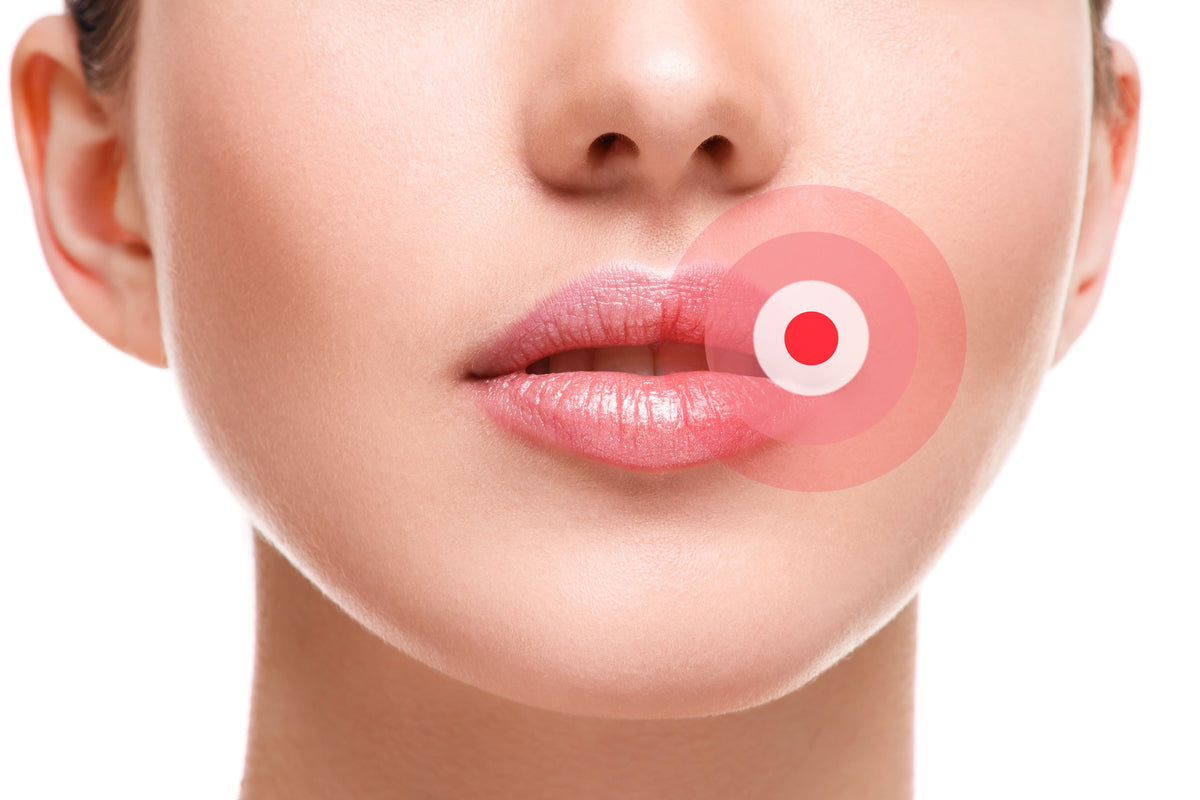
Most people notice tingling, burning, itching or tightness twelve to twenty-four hours before anything is visible. That window is when supportive care and antiviral treatment are most useful, which is why devices and medications alike are recommended for use at the first sign rather than once the blister has fully formed.
Cold sores are contagious. Avoid kissing, sharing lip products, drinks, utensils or towels while a sore is active. Wash your hands after touching the area and clean the device tip after every use. Take particular care to avoid touching your eyes — HSV-1 transferred to the eye is a serious complication that needs urgent medical attention.
How Red Light Therapy Is Thought to Work
Photobiomodulation is the umbrella term for using specific wavelengths of visible red and near-infrared light to influence cellular activity. The proposed mechanism involves light being absorbed by mitochondria and affecting cellular energy production, local circulation and inflammatory signalling.
Applied to cold sores, the aim is supportive rather than antiviral: it targets the tissue response and the discomfort rather than the virus itself. This is an important distinction, and it is where a lot of marketing in this category quietly overreaches.
What 660nm and 850nm mean
660nm is visible red light, which is absorbed at shallower depths and is the range most relevant to surface tissue like the lip border. 850nm is near-infrared, which is invisible to the eye and penetrates further. Devices combining both are aiming to cover surface and slightly deeper tissue in one session. Neither is ultraviolet — worth saying clearly, because UV exposure is itself a common cold sore trigger.
Uses LED light rather than topical or oral medication, which suits people who prefer to avoid or cannot use creams.
Visible red and near-infrared only. UV light is a known outbreak trigger and is not what these devices emit.
Applied directly to a small area rather than treating the whole body or face.
The supportive evidence consistently points to starting at the first tingle rather than mid-outbreak.
How to Use the LaserGlow Cold Sore Device
Always follow the instructions included with your device. A consistent, clean routine matters more than occasional use, and the timing of the first session matters more than the total number of them.
- Wash your hands. Before and after, every time. This is the step that prevents spreading the virus to other areas or to other people.
- Clean and dry the area. Light works on the tissue it reaches, so remove any balm, makeup or ointment first.
- Sanitise the device tip. Wipe the treatment head before and after each session according to the device instructions.
- Start at the first sign. As soon as you feel tingling, itching or tightness — not once the blister has appeared.
- Position as directed. Hold the device over the affected area at the distance stated in your instructions.
- Run the stated session length. Longer is not better. Follow the timing the device specifies.
- Repeat on the recommended schedule. Consistency through the outbreak rather than one long session.
- Do not pick or peel. Disturbing a scab restarts healing and raises the risk of scarring and spread.
Do not stop antiviral treatment to try this. If a healthcare professional has prescribed or recommended an antiviral, take it as directed. A light device is something you add alongside, not something you swap in.
When to Start: The Cold Sore Stages
Cold sores follow a fairly predictable sequence over roughly eight to twelve days. Knowing which stage you are in tells you what to expect and what is still worth doing.
| Stage | What you notice | Where supportive care fits |
|---|---|---|
|
1. Tingle Day 1 |
Itching, burning, tightness or sensitivity before anything is visible. | The highest-value window. Start here if you start at all, and this is also when antivirals work best. |
|
2. Blister Days 2–4 |
Fluid-filled blisters form, often in a cluster. Most contagious phase. | May support comfort. Handle with care and avoid touching the area. |
|
3. Weeping Days 4–5 |
Blisters break open. The most uncomfortable and most infectious stage. | Keep the area clean. Do not share anything. Continue as directed. |
|
4. Crusting Days 5–8 |
A scab forms, often cracking or itching as it dries. | Can continue gently. The main job here is not picking at it. |
|
5. Healing Days 8–12 |
Scab falls away, pink new skin underneath, tenderness fading. | Continue as directed until fully healed, and keep the area protected from sun. |
An outbreak that has not resolved after roughly two weeks, or one that keeps spreading, is a reason to see a healthcare professional rather than to keep treating it at home.
Red Light Therapy vs Creams, Patches and Antivirals
These are not competing options so much as different tools with different evidence behind them. Being straight about that is more useful than pretending a device replaces medication.
| Option | Best for | What to know |
|---|---|---|
| Prescription antivirals | Frequent, severe or complicated outbreaks | The strongest evidence base of anything here. Most effective started early. Worth a conversation with a doctor if you get outbreaks often. |
| Red light device | Drug-free, targeted at-home support | Emerging evidence, no standardised protocol, reusable across outbreaks. Does not cure HSV-1. |
| Topical creams | Symptom relief and some antiviral effect | Needs frequent reapplication. Effect on healing time is generally modest. |
| Hydrocolloid patches | Covering the sore and reducing touching | Useful physical barrier that limits spread and hides the sore. Does not shorten the outbreak. |
| Lysine and supplements | People wanting a low-risk addition | Popular but the evidence is inconsistent. Reasonable to try, unreasonable to rely on. |
If you get more than a few outbreaks a year, the highest-value step is not another product — it is a conversation with a healthcare professional about suppressive antiviral therapy. Supportive tools work best on top of that, not instead of it.
Safety and Precautions
Red light devices are generally well tolerated, but cold sores are a viral infection and basic precautions still apply — particularly around cross-contamination and eye exposure.
- Never look directly into the light, and keep the device away from the eyes.
- Clean the treatment head before and after every session.
- Do not share the device with anyone else, especially during an active outbreak.
- Wash your hands before and after touching the area.
- Do not pick, peel or squeeze the sore at any stage.
- Stop using the device if the area becomes more irritated, red or painful.
- Do not use over broken skin beyond the cold sore itself, or on an area you have not identified.
Check with a healthcare professional first if you
- Have photosensitivity or a condition affected by light exposure.
- Take photosensitising medication, including some antibiotics, retinoids and diuretics.
- Are immunocompromised, undergoing cancer treatment, or taking immunosuppressants.
- Are pregnant, or considering use on a child.
- Have a history of skin cancer in the area.
See a doctor promptly if the sore spreads beyond the lip area, if you develop sores near or in the eye, if an outbreak lasts more than two weeks, if you have a high fever alongside it, if outbreaks are becoming more frequent or severe, or if you have eczema, which raises the risk of a more widespread infection.
Reducing Cold Sore Triggers
No device is proven to prevent outbreaks. What can help is reducing the things that reliably set them off, which is worth more attention than most cold sore content gives it.
Sun exposure is one of the most consistently reported triggers. This is the single most effective preventive habit for most people.
Damaged lip tissue is a common starting point, particularly in cold or dry weather.
Balms, lipsticks and glosses used during an active sore should be thrown out rather than kept.
Both are frequently reported around outbreaks and are worth tracking if yours seem unpredictable.
Triggers are individual. A few months of noting what happened in the days before an outbreak is more useful than any general list.
Replace your toothbrush after an outbreak resolves, and store brushes somewhere they can dry properly.
Sources and Evidence Limitations
This is a brand-authored guide, reviewed by David Hanna, RDH. It deliberately separates published photobiomodulation research from claims about any specific product. The available studies use varied wavelengths, doses and protocols, so their results cannot be assumed to transfer to every at-home device — including this one.
- Systematic review of phototherapy for recurrent herpes labialis
- Review noting the need for additional clinical trials
- MedlinePlus cold sore overview and antiviral care information
Product links on this page are commercial. Nothing here diagnoses, treats, cures or prevents any disease, and none of it substitutes for medical advice.
Cold Sore Red Light Therapy FAQ
Does red light therapy help cold sores?
Some photobiomodulation studies report potentially helpful effects on comfort and healing time, but the trials are small and use different wavelengths, doses and schedules. That evidence does not transfer automatically to any specific at-home device, and red light does not eliminate HSV-1 or replace antiviral treatment.
What is the best red light therapy for cold sores?
There is no established best device, because published protocols vary widely and at-home products are not standardised. Look for a device that states its wavelengths clearly, is designed for targeted use on a small area, and comes with specific instructions for session length and frequency rather than vague guidance.
Is red light therapy good for cold sores compared with other options?
It is a drug-free option some people add to their routine, but it has a much smaller evidence base than antiviral medication. For frequent or severe outbreaks, speak with a healthcare professional about antivirals first and treat a light device as a supportive addition rather than a substitute.
When should I use red light therapy for a cold sore?
Follow the device instructions. Most supportive research points to starting at the first tingle or itch rather than once a blister has formed, but no universal red light schedule applies to every device or outbreak. Do not delay prescribed or clinician-recommended antiviral treatment in order to try it.
Does the LaserGlow device cure herpes?
No. HSV-1 remains in the body permanently once acquired, and no light device removes it or prevents future outbreaks. The device is intended as at-home supportive care during an outbreak, not as a treatment for the underlying virus.
What do 660nm and 850nm mean?
660nm is visible red light, absorbed at shallower depths and relevant to surface tissue such as the lip border. 850nm is near-infrared, invisible to the eye and penetrating further. Devices combining both aim to cover surface and slightly deeper tissue. Neither is ultraviolet.
Can I use red light therapy alongside cold sore cream or antivirals?
Many people combine supportive approaches, but follow each product's instructions and speak with a healthcare professional if you are using prescription medication. Apply light to clean, dry skin rather than over a layer of cream, and never stop a prescribed antiviral in order to use a device instead.
Is red light therapy the same as UV light?
No. Red light therapy uses visible red and near-infrared wavelengths. UV light is a different part of the spectrum and is itself a common cold sore trigger, which is why the distinction matters rather than being a technicality.
How often should I use the device during an outbreak?
Use it according to the instructions included with your product. Consistency and early use matter more than long or frequent sessions, and exceeding the recommended session length does not improve the outcome.
Is cold sore red light therapy safe?
It is generally well tolerated, but avoid eye exposure, keep the device clean, and do not share it. Check with a healthcare professional first if you have photosensitivity, take photosensitising medication, are immunocompromised, are pregnant, or are considering use on a child.
Keep It Where You Can Reach It at the First Tingle
A handheld 660nm and 850nm device is only useful if it is within arm's reach in the twelve hours before a blister appears. That window is the whole point.