Can You Whiten Teeth With Tooth Gems?
LaserGlow offers both professional tooth gem application and professional whitening — which means providers and clients regularly ask: can you do both? The answer depends on timing and sequence. Here's the complete protocol for whitening clients who have or want tooth gems.
Can You Whiten Teeth That Have Tooth Gems?
The short answer: yes, with conditions. Tooth gems are bonded to tooth enamel with a dental-grade adhesive and cured with a light-cure LED. Professional HP whitening gel does not affect the gem itself — the crystal won't be damaged or dissolved by HP contact. However, there are two important considerations that affect the service sequence and client expectations.
✓ Generally safe to proceed
- Whitening teeth that have existing tooth gems — HP gel doesn't affect the gem crystal
- Whitening before gem application — the recommended sequence for best results
- Applying gems after a complete whitening series when shade has stabilized
- Maintenance whitening (lower concentration, lower contact time) around existing gems
⚠ Requires client education
- Shade mismatch risk: whitening can change the tooth's shade around an existing gem
- Adhesive bond: HP gel may affect the adhesive at the gem margin over repeated sessions
- Gem placement timing: don't apply gems immediately after whitening — wait for shade to stabilize
- Client expectation: HP doesn't whiten the gem itself — only the surrounding enamel
The Correct Order: Whitening First, Gems After
The professional standard for clients who want both whitening and tooth gems is:
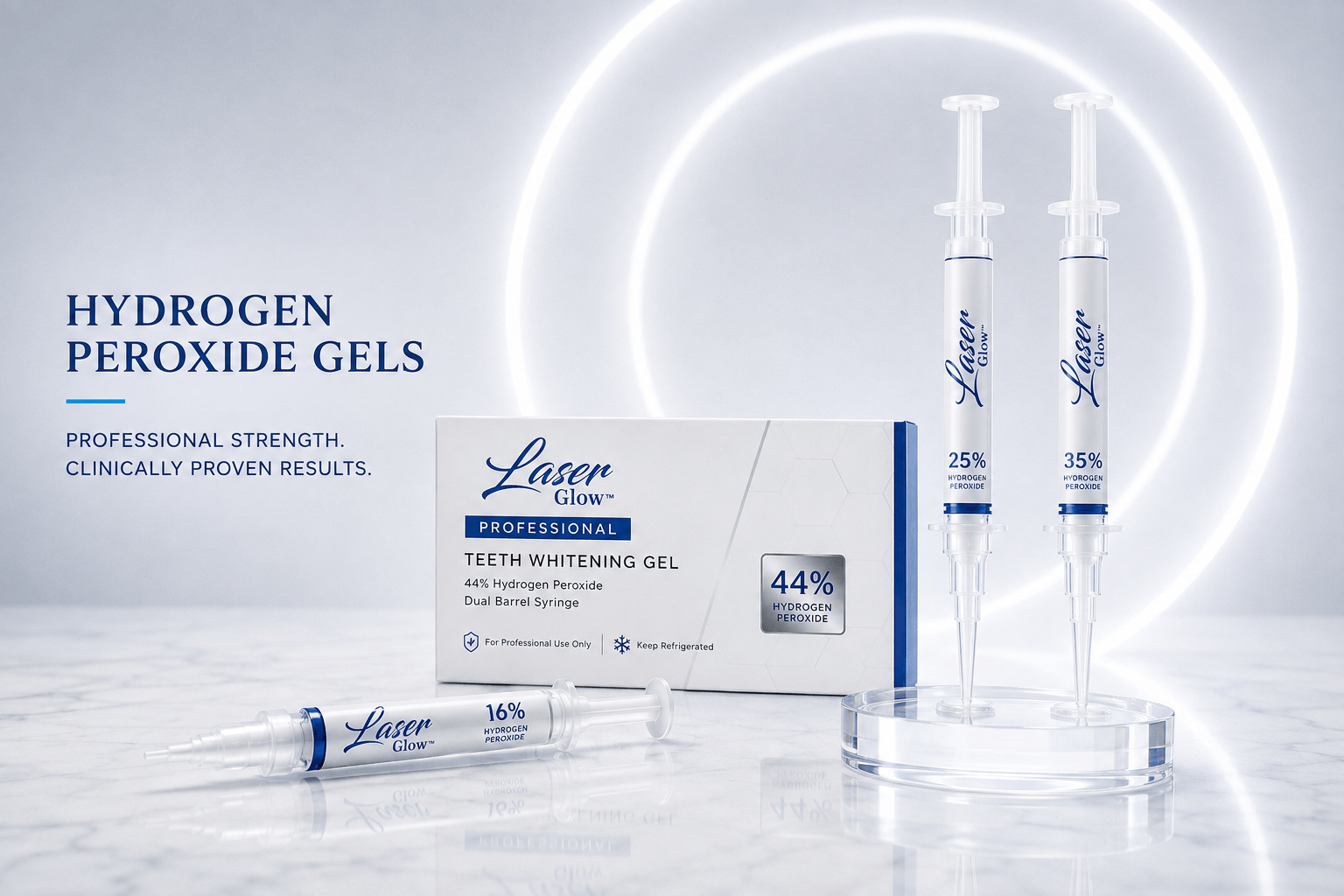
- Complete the professional whitening series first. Achieve the target shade with HP gel (16%–44% HP depending on the case) before any gem placement.
- Allow 2–4 weeks for shade stabilization. Post-whitening enamel undergoes rehydration and shade stabilization over 2–4 weeks. Bonding a tooth gem to freshly whitened enamel can result in the gem being placed at a shade that shifts slightly as the tooth stabilizes — leading to a subtle color difference around the gem bond margin.
- Apply the tooth gem after shade is stable. Bond the gem to the stabilized enamel using proper protocol: etch, bond, crystal, cure. See the LaserGlow tooth gem supply catalog for professional gem application supplies.
- For maintenance whitening after gem placement: Lower-concentration whitening (16% HP) with careful gel application that avoids the gem margin area is the appropriate protocol for clients maintaining their shade after gem placement.
How to Apply Whitening Gel Around Existing Tooth Gems
For clients with existing tooth gems who want whitening maintenance:
- Use lower HP concentration: 16% HP is the preferred concentration for whitening around existing tooth gems. It delivers maintenance whitening with less risk of adhesive exposure than 35% or 44% HP.
- Precise gel application: Apply gel carefully around the gem, not directly onto the gem body or its adhesive margins.
- Standard gingival barrier protocol applies: Gingival barrier as normal — don't skip isolation because the client has tooth gems. The barrier doesn't change based on gem presence.
- Advise clients on gem stability: Repeated professional HP whitening sessions around existing gems may over time affect the adhesive bond at the gem margin. This is not a certainty but is worth monitoring and advising clients about at higher session frequencies.
- Avoid LED light directly on gems: When activating gel with LED, avoid prolonged direct light contact on the gem itself — gems are essentially crystals that may refract or concentrate light unpredictably. Standard LED activation with normal positioning is appropriate; don't use the LED as a pointer aimed at the gem.
Tooth Gems & Whitening FAQ
Can you whiten teeth that have tooth gems on them?
Yes — HP whitening gel doesn't damage or dissolve tooth gem crystals. The key considerations are: (1) whitening may change the shade of the tooth around the existing gem, which could create a subtle visual change at the gem margin; (2) repeated whitening sessions may over time affect the adhesive bond at the gem edge. For maintenance whitening with existing gems, use 16% HP and apply precisely around the gem.
Should I whiten before or after applying a tooth gem?
Always whiten first, then apply the gem. Complete the whitening series, allow 2–4 weeks for shade stabilization, then proceed with gem placement on the stable shade. Applying a gem before whitening and then whitening afterward changes the shade of the tooth around the gem while the gem stays the same — which can affect how the gem looks against the tooth.
Will HP whitening gel damage a tooth gem?
No — HP gel doesn't damage crystal tooth gems. The crystal itself is inert to HP contact. The consideration is the adhesive at the gem margin: repeated direct HP contact at the bond margin over many sessions may over time affect adhesive integrity. This is more relevant for clients doing frequent professional whitening with existing gems than for occasional maintenance whitening.
How soon after professional whitening can I apply a tooth gem?
Wait 2–4 weeks after completing the whitening series before gem placement. This allows enamel to rehydrate, shade to stabilize, and the tooth surface to return to its normal state after HP exposure. Bonding a gem immediately after whitening may affect adhesive bond strength and places the gem on a surface that may still be shifting in shade.