Skip to content
📦 FREE US SHIPPING OVER $50+
TRUSTED BY PROFESSIONALS
how long do tooth gems last

How Long Do Tooth Gems Last? Real Timelines & Tips

Real Timelines · Retention Tips · Aftercare

Most professionally applied tooth gems last 3–12 months, with well-placed single crystals sometimes lasting a year or more. Longevity is not a single number — it depends on the materials used, placement location, bonding technique, LED curing, and your daily habits. This guide covers real-world timelines by scenario, what helps and hurts retention, and a simple plan to get the most months out of your gem.

Real-World Tooth Gem Longevity by Scenario

These timelines reflect proper application with dental-grade bonding materials, correct enamel prep, and full LED curing. Placement and client habits matter just as much as the bonding technique — a perfect application in the wrong location under regular bite pressure won't outlast a mid-tooth placement on a lateral incisor.

Scenario Typical Wear Time Key Factor
Single crystal, professional bond, ideal placement 6–12+ months Away from biting edges, fully cured from multiple angles, good aftercare habits
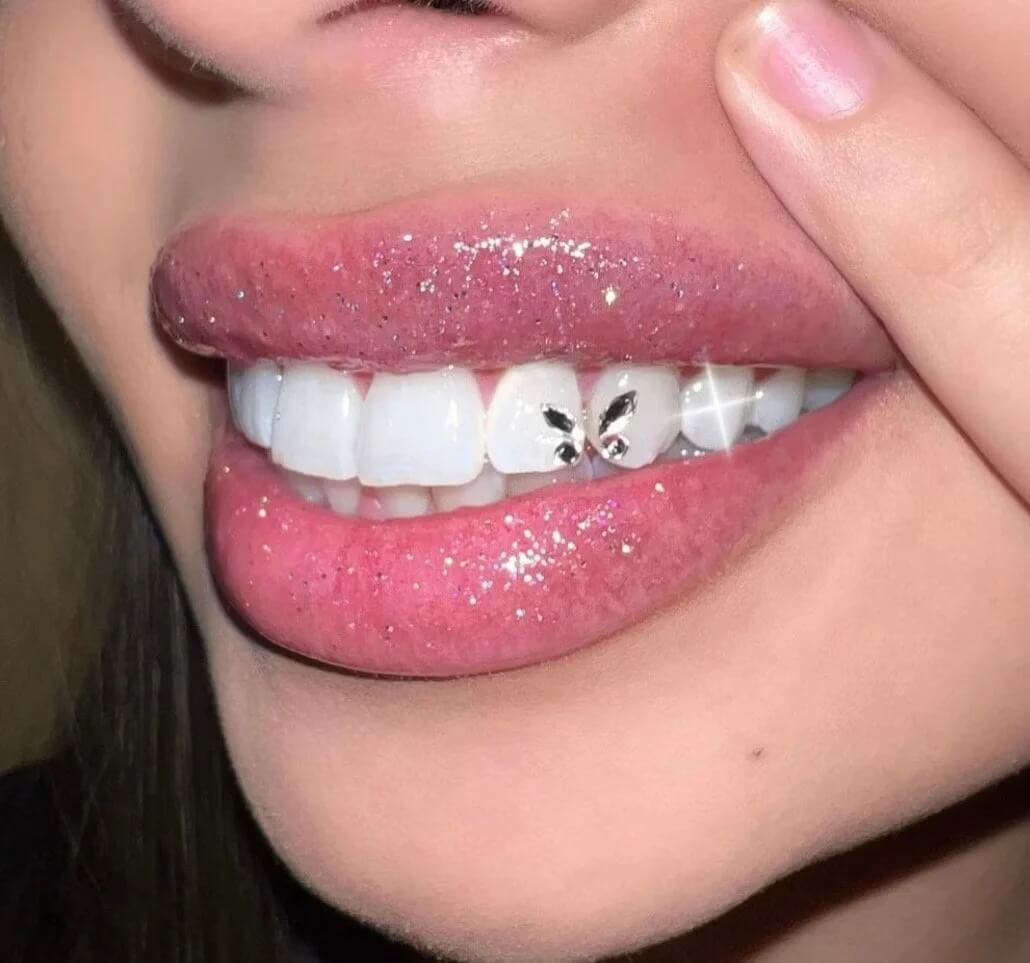
Shaped gem (heart, butterfly, star) 4–10 months More surface edges — gentle brushing and placement away from bite contact matter more
Multi-gem cluster 4–8 months Multiple bond points require clean, consistent curing and careful aftercare throughout
DIY or home application Days to months (varies widely) Results depend heavily on field isolation, bonding system quality, curing light, and following the full protocol
High-stress placement near incisal edge 1–4 months Chewing forces and micro-impacts at the biting edge shorten lifespan significantly

Professional placement lasts longer because the provider controls preparation, field isolation, adhesive placement, and multi-angle LED curing. For the full bonding protocol and curing timing, see the tooth gem glue and application guide.

Habits That Help and Hurt Tooth Gem Retention

The difference between a gem that lasts 6 weeks and one that lasts 8 months is often behavior, not just bonding materials. Here is what to do — and what to avoid.

Habits that extend wear time
  • Soft-bristle brushing around gem edges — not scrubbing directly at the base
  • Avoiding hard biting on the gem for the first 24–48 hours after placement
  • Rinsing after sticky or acidic snacks
  • Wearing a nightguard if you grind or clench
  • Scheduling a professional polish if an edge starts to feel rough or raised
Habits that shorten gem life
  • Chewing ice, biting nails, or opening packaging with your teeth
  • Constant tongue or finger contact with the gem
  • Ignoring a rough edge or looseness until the gem fully dislodges
  • Applying over cracked enamel, crowns, veneers, or existing bonding
  • Using strong whitening treatments directly over the gem without checking with a provider first
Enamel safety concerns? See: Are Tooth Gems Safe for Your Teeth? — myth-busting guide reviewed by David Hanna, RDH.

3-Step Plan to Make Your Tooth Gem Last Longer

1
Choose placement wisely Ask your provider to place the gem away from primary biting surfaces. The mid-facial area of a front tooth — away from the incisal edge — consistently produces the best longevity. Canines and upper laterals are more tolerant of everyday bite contact than central incisors.
2
Protect the first 48 hours The initial cure window is the most critical. Avoid hard foods, very hot drinks, sticky candy, and direct biting pressure for at least 24–48 hours after placement. The composite is fully set but the bond interface between the gem base and enamel is still reaching full mechanical strength in the first day.
3
Maintain the margins If the gem ever feels sharp, slightly raised, or a margin catches on floss, book a professional check rather than picking at it. A provider can polish a lifting margin and sometimes re-cure the bond before the gem fully dislodges — saving the placement rather than starting over.
For application technique, curing timing, and aftercare client cards, visit the Tooth Gem Resource Center or download the free professional PDF guide.

What to Do If Your Tooth Gem Falls Off

  • Don't panic. A properly applied and removed gem should leave enamel intact. Natural detachment is not a sign of enamel damage.
  • Run your tongue over the area. If you feel roughness or sensitivity where the gem was, schedule a professional polish to smooth any adhesive residue — don't scrape it at home.
  • Save the gem if possible. Many providers can clean and rebond the same gem if it's still intact. Don't glue it at home with nail glue or household adhesive.
  • If it fell off very quickly (within 24–48 hours), the issue is almost always one of three things: moisture contamination during etching, insufficient etch time, or under-curing. Ask your provider about their prep and curing protocol.
Ready to remove intentionally? See the professional tooth gem removal guide — the correct process uses dental instruments to polish adhesive residue without scratching enamel.

Supplies That Support Better Longevity

Retention starts with tooth-safe materials and correct curing. Craft crystals and household adhesives are not designed for intraoral use and consistently produce shorter wear times than dental-grade systems.

Or start with everything at once: Tooth Gem Business Starter Kit from $250 — complete professional setup with etch, bond, glue, crystals, LED curing light, wax applicators, and training guide.

How Long Do Tooth Gems Last — FAQ

8 questions covering longevity timelines, early pop-offs, placement variables, and whether a fallen gem can be rebonded.

How long do tooth gems usually last?

Most professionally applied tooth gems last 3–12 months, with well-placed single crystals sometimes lasting a year or more. Longevity depends on placement location, bonding technique, LED curing quality, gem type, and how carefully the client follows aftercare instructions.

Shaped gems (butterflies, hearts) and cluster designs typically fall in the 4–10 month range since they have more surface edges and adhesive points than a single round crystal. Gems placed near the incisal edge under bite contact consistently fail sooner than mid-facial placements on lateral incisors or canines.

Why did my tooth gem fall off so quickly?

Early tooth gem pop-offs within 24–48 hours almost always trace to one of three causes: moisture contamination on the enamel before or during etching, insufficient etch time (the surface needs to look chalky white, not shiny), or incomplete LED curing from only one angle. All three result in incomplete polymerization even when the composite looks set on the surface.

If a gem fell off within the first week, the bonding protocol is the likely issue — not the gem type or the client's habits. If gems are consistently failing early across multiple clients, review field isolation, etch time, and whether the LED curing light is being used from multiple angles for the full 20–40 seconds. See the LED curing light guide for curing troubleshooting.

Do tooth gems fall off on their own eventually?

Yes. Tooth gem bonds naturally weaken over time through daily wear, brushing, temperature changes, and exposure to dietary acids. Most gems loosen gradually rather than falling off suddenly — you'll usually notice a slight shift in how the gem feels or sounds before it detaches. This is normal bond fatigue, not enamel damage.

When a gem feels slightly loose or a margin catches on your tongue or floss, that's the signal to schedule a professional rebond or removal rather than waiting for it to fall off completely. A loose gem has more mobility under chewing forces, which can accelerate enamel impact if it falls while the client is eating.

Do tooth gems last longer on some teeth than others?

Yes. Mid-facial placements on upper lateral incisors away from the biting edge consistently produce the longest wear times. Upper central incisors are also good but receive more direct bite contact. Placements near the incisal edge, on teeth with heavy occlusal contact, or on canines used for regular tearing forces typically have shorter lifespans.

The best longevity position for most clients is 2–3 mm from the gumline on the middle third of the lateral incisor facial surface. This keeps the gem away from both the gumline (where hygiene access is limited) and the incisal edge (where bite forces are highest).

Can I make my tooth gem last longer?

Yes. The three habits that most reliably extend tooth gem wear time are: avoiding hard bite on the gem for the first 48 hours after placement, brushing gently around the gem margins rather than scrubbing directly over them, and scheduling a professional check if an edge starts to feel raised or a margin catches on floss — before the gem fully dislodges.

Beyond daily habits, gem placement matters as much as aftercare. A mid-facial placement on a lateral incisor away from bite contact can outlast a technically perfect bond placed at the incisal edge by several months simply because of the difference in mechanical stress at each position.

How long after getting a tooth gem can I eat normally?

Normal eating is generally fine after 24–48 hours. During the first 24 hours, avoid hard foods (ice, nuts, hard candy), very sticky foods (caramel, gummy candy), and very hot drinks. These stresses on the bond are highest in the first day when the composite interface is still reaching full mechanical strength, even though the gem feels firmly set immediately after curing.

After the first 48 hours, normal eating is fine with common-sense adjustments: avoid biting directly on the gem (especially with front teeth) and rinse after sticky or acidic foods. These habits apply for the life of the gem, not just the first few days.

How long does tooth gem glue last?

Dental-grade light-cure composite used for tooth gems polymerizes instantly when cured and then remains stable until it naturally fatigues through wear, dietary acids, or mechanical stress. There is no "expiry" to the set bond — the question is how long the mechanical adhesion between composite and etched enamel holds under real-world conditions, which is the 3–12 month range for most professional applications.

The glue itself (composite resin) doesn't "run out" — it simply slowly loses adhesion at the enamel interface over time. This is why some gems last much longer than others under the same bonding technique: the difference is usually placement stress, client habits, and how well the etch-bond-cure sequence was executed at the original appointment.

Can a tooth gem be rebonded after it falls off?

In many cases, yes. If the gem is intact and the enamel surface is healthy with no damage or significant adhesive buildup, a trained provider can clean the gem back surface and the enamel site, re-etch, rebond, and re-cure using the same three-step protocol as the original application.

Save the gem if it falls off unexpectedly — don't throw it away or attempt to glue it at home. The enamel surface should be professionally evaluated before rebonding to confirm there's no residual composite that needs polishing and no enamel irregularity that might compromise the new bond. A professional rebond can be just as durable as the original if the enamel site is in good condition.

Bottom line: Expect 3–12 months for most professionally applied tooth gems, with longer wear possible when placement, preparation, curing, materials, and aftercare all work together. Treat the gem like semi-permanent jewelry — protect the bond on day one, avoid stress habits throughout wear, and let a professional handle polish or removal when needed.
Previous Post Next Post