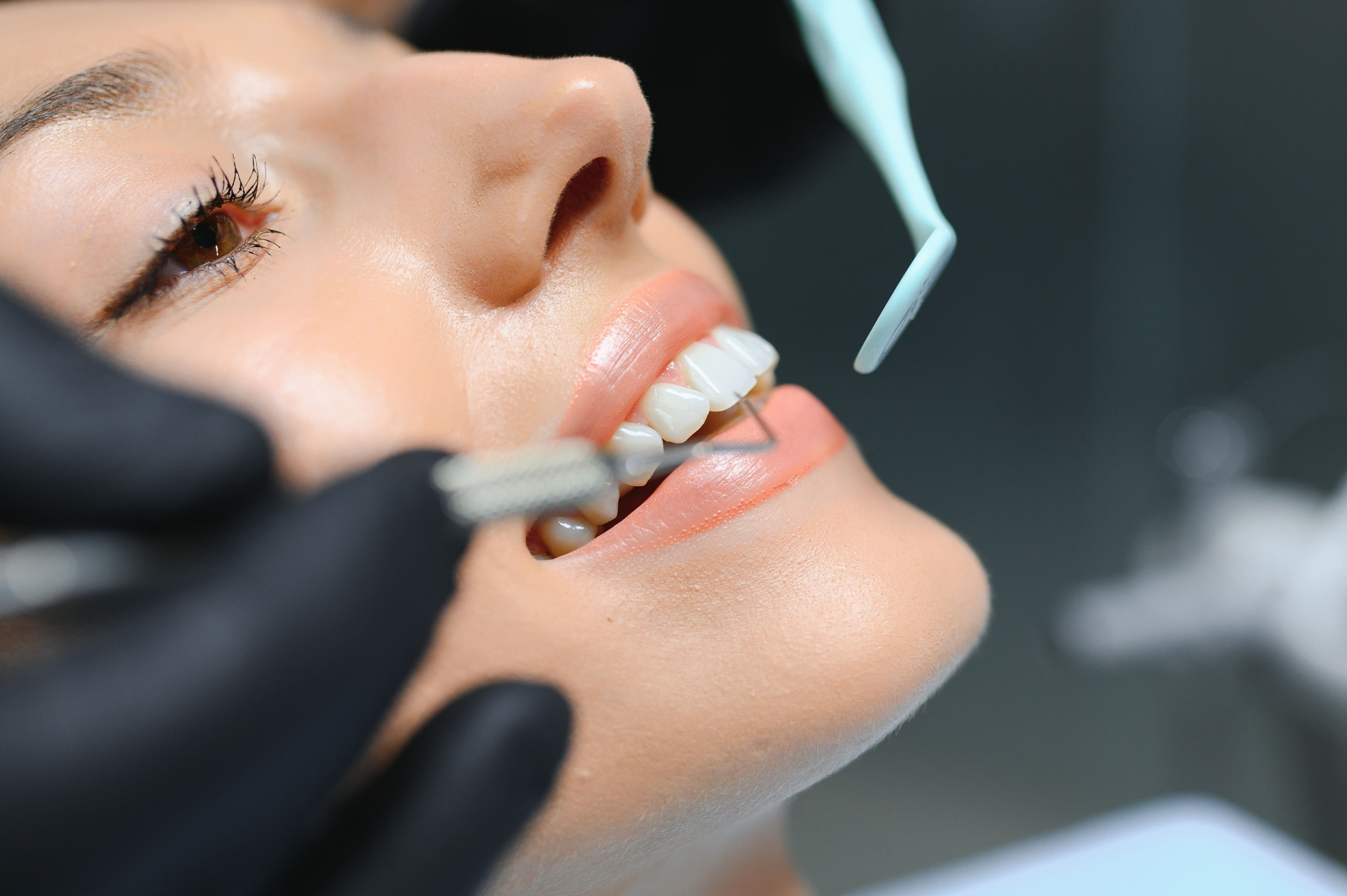
Tooth gems can be enamel-safe when applied with professional materials and removed correctly. The real risks come from low-quality adhesives, untrained application, and DIY removal. This guide separates myths from facts, gives you a quick safety checklist, and flags situations where you should wait.
Myths About Tooth Gem Safety
Most concerns about tooth gem safety come from conflating bad technique with a bad procedure. Here's what the myths get wrong — and what's actually true when the right materials and process are used.
There should be no drilling on sound enamel. A dental-grade resin bonds the gem to the enamel surface and can be professionally polished off when you are ready to remove it. The procedure uses the same bonding chemistry as orthodontic brackets — temporary, reversible, and non-invasive when done correctly.
With professional bonding materials and correct removal technique, enamel should remain smooth and intact. Enamel issues typically trace back to non-dental adhesives (super glue, nail glue) or prying the gem off at home — not the gem or the bonding process itself.
Super glue, nail glue, and craft adhesives are not formulated for intraoral use. They can irritate gums, stain enamel, bond to soft tissue, and make professional removal significantly harder without enamel risk. Only dental-grade bonding materials — etch, bond coat, and light-cure composite — should be used for tooth gems. See the full tooth gem glue guide for the correct system.
With correct etch, bond, and LED curing, gentle brushing is perfectly safe. Use a soft-bristle toothbrush with gentle strokes around the gem and its margins, and continue flossing normally. What dislodges gems is biting directly on them, sticky foods in the first 24 hours, and physical prying — not routine brushing.
Quick Safety Decision Checklist
Use this checklist before saying yes to a tooth gem appointment. Every "no" is a red flag worth addressing before you proceed.
- 1 Provider: Are they trained? Do they explain etch, bond, LED curing, and aftercare — not just the gem design?
- 2 Materials: Are the gems and adhesives specifically designed for teeth — not craft crystals or nail glue?
- 3 Placement: Is the proposed location mid-facial and away from biting edges? Incisal edge placements fail faster and carry more enamel risk.
- 4 Hygiene plan: Do you understand brushing, flossing, and what to avoid in the first 24 hours after placement?
- 5 Exit plan: Does the provider offer professional removal and polishing — not just placement?
Who Should Wait Before Getting a Tooth Gem
Tooth gems are a cosmetic service, not a clinical necessity — there is no urgency, and waiting until conditions are right protects both the enamel and the result.
- Anyone with active cavities, untreated gum disease, or cracked teeth in the target area
- Anyone with new orthodontic attachments on the target tooth or within the proposed placement zone
- Anyone experiencing recent whitening sensitivity or ongoing enamel pain
- Anyone who plays high-contact sports without a mouthguard (the gem becomes a bite risk)
- Anyone whose provider is offering nail glue, super glue, or cannot explain their bonding system
What Dental Professionals Actually Worry About
Dental professionals are generally not opposed to tooth gems as a concept — they are cautious about three specific things: unregulated adhesives, DIY removal, and plaque accumulation at poorly finished gem margins.
The dental concern about tooth gems is not the gem itself or the etch-bond-cure bonding process (which is the same chemistry used for orthodontic brackets). The concern is the unregulated market around tooth gems, where non-dental adhesives, untrained application, and forced home removal are common. Each of these carries real enamel risk. The procedure performed correctly does not.
The safest approach: use dental-intended materials, follow the correct bonding and curing protocol, keep hygiene around the gem margins strong throughout wear, and rely on professional removal when you are done. See the professional aftercare and safety guide for the clinical protocol.
Safer Choices Start with Better Materials
Whether you are shopping for gems to use yourself or sourcing supplies for a professional service, choosing materials specifically designed for dental application is the single most important safety decision. The difference between a smooth, uneventful tooth gem experience and an enamel damage story usually starts here.
Are Tooth Gems Safe? FAQ
8 questions covering the actual safety concerns people search for — from enamel risk and nail glue to kids, veneers, and DIY removal.
Are tooth gems safe for enamel?
Yes — tooth gems are enamel-safe when applied with dental-grade bonding materials (etch, bond, and light-cure composite), placed by a trained provider, and removed professionally rather than pried off at home. The etch step creates minor temporary micro-roughness that the enamel reverses naturally over time.
The main risks are non-dental adhesives and DIY removal. Super glue, nail glue, and craft adhesives are not formulated for intraoral use, can adhere to soft tissue, and make professional removal significantly harder without enamel risk. The bonding process used for tooth gems is the same chemistry used for orthodontic brackets — it is a well-established, reversible procedure when done with the right materials.
Do tooth gems damage teeth?
Not when applied and removed correctly with dental-grade materials. Tooth gem damage occurs when: non-dental adhesives are used, the gem is pried or scraped off at home rather than professionally polished off, or the gem is placed on compromised enamel (cracks, active decay, heavy enamel wear). The procedure itself does not damage healthy enamel when performed correctly.
Most enamel damage stories from tooth gems trace to one of these three causes — typically DIY removal or household adhesives. When you hear "tooth gems ruined my enamel," it is almost always about the removal method, not the placement.
Is nail glue safe for tooth gems?
No. Nail glue, super glue, eyelash glue, and craft adhesives should never be used for tooth gems. They are cyanoacrylate-based and not formulated for intraoral use. They can bond instantly to soft tissue (gums, cheek lining), are extremely difficult to remove without enamel risk, and were never tested or approved for use inside the mouth.
If a tooth gem has been applied with nail glue or super glue, do not attempt DIY removal. See a dental professional who can assess the enamel and use appropriate instruments to remove the adhesive safely. The difficulty of removing a super-glue bond cleanly is significantly higher than removing dental composite.
Can I brush my teeth normally with a tooth gem?
Yes. Brush twice daily with a soft-bristled toothbrush, using gentle strokes around and near the gem. Do not scrub aggressively at the placement margins. Floss normally, being careful not to snap the floss against the base of the gem. Keeping the area clean prevents plaque accumulation at the composite margins — which is the main ongoing hygiene concern with tooth gems.
The gem itself is harder than enamel and won't be damaged by normal brushing. What you're protecting is the composite margin around the base of the gem, which can accumulate plaque if brushing in that area is skipped or too light.
Who should not get a tooth gem?
Avoid tooth gem placement on: teeth with active decay, cracks, or significant enamel wear; teeth adjacent to active gum disease; teeth recently treated with orthodontic brackets in the same zone; or teeth that are in heavy bite contact. Anyone playing contact sports without a mouthguard should wait — an impact on a tooth gem can fracture the gem and potentially chip enamel.
Certain provider red flags should also prompt you to decline: a provider who can't explain their bonding system, who uses nail glue or super glue, who doesn't discuss aftercare, or who doesn't offer professional removal. The gem can be safe — the provider's technique and materials are what determine whether it is.
Can I get a tooth gem if I have veneers or crowns?
Tooth gem adhesive works on natural tooth enamel — it does not bond reliably to porcelain veneers, ceramic crowns, or bonded restorations. Attempting to bond a gem to a veneer or crown risks damaging the restoration surface. If you have veneers or crowns on the front teeth where you want a gem, discuss the specific tooth with your provider before proceeding.
Some providers will place tooth gems on natural teeth adjacent to restorations, avoiding the restoration surface itself. Others will decline entirely if the target tooth or the neighboring teeth have significant restorative work. The safest approach is an honest conversation with both the tooth gem provider and the dentist who did your restorative work.
How should tooth gems be removed safely?
Tooth gems should be removed by a trained professional using a dental handpiece and polishing instruments to lift the gem body and clean any composite residue from the enamel surface without scratching. Never pry, chip, or scrape a tooth gem off at home — shear force applied to a well-bonded gem can chip or micro-fracture the enamel at the bond site.
If a gem comes loose and falls off naturally, save it and contact your provider rather than trying to remove remaining adhesive at home. Leftover composite is much easier for a professional to polish away cleanly than composite that has been partially disturbed by home instruments.
Are tooth gems safe for teenagers and kids?
Tooth gems on fully erupted, healthy permanent teeth in teenagers are generally appropriate with parental consent and provider evaluation. Tooth gems are not recommended on baby teeth (primary dentition) or on teeth still erupting, as enamel is thinner and less mature. Most tooth gem professionals recommend waiting until permanent teeth are fully erupted — typically mid-teenage years for the front teeth most commonly used for gem placement.
For younger teens, a consultation with a dentist before a first tooth gem appointment is good practice — particularly to confirm the target tooth is fully erupted, healthy, and has no existing enamel issues that would make bonding or removal riskier than normal.