At-home whitening guide
Teeth whitening trays hold a whitening gel against your teeth so it can work evenly, and the type you choose changes fit, comfort and results. Here is how custom, boil-and-bite and LED mouth trays compare, how to use bleaching trays at home, how long it takes and which gel belongs in a tray.
Short answer: Custom trays from a dentist fit best; boil-and-bite trays are cheaper but looser; LED kits pair gel with a ready-made mouthpiece. Whatever you choose, use a take-home gel as directed, never a professional in-office gel.
- Custom trays fit best and use the least gel
- Boil-and-bite trays are cheaper but looser
- LED kits pair gel with a ready-made mouthpiece
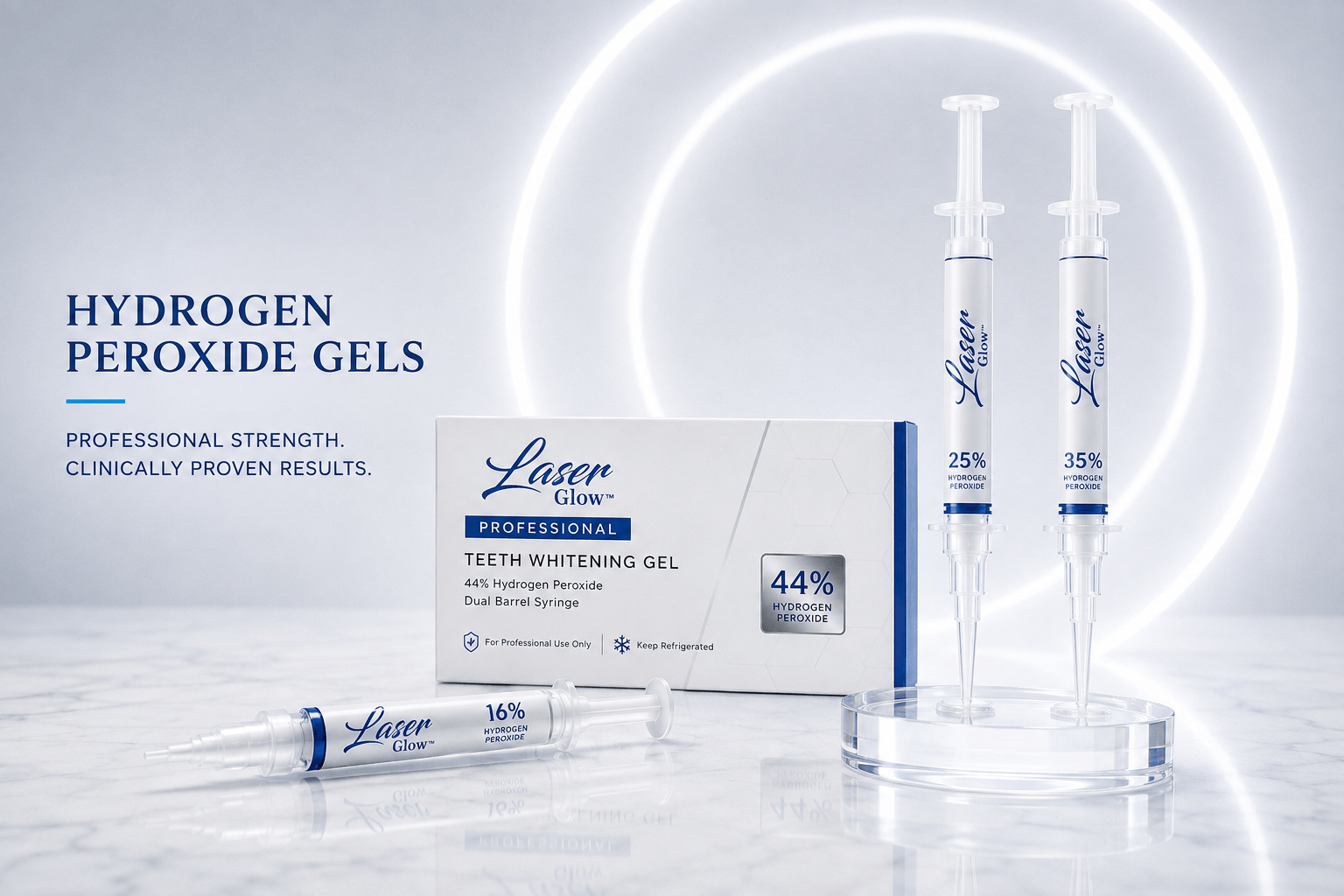
- Professional 16–44% HP gels never go in trays
The basics
What are teeth whitening trays?
Before comparing types, it helps to know what a tray actually does.
A tray holds gel against your teeth
Teeth whitening trays, also called bleaching trays, are thin mouthguards that keep a whitening gel in contact with the front surfaces of your teeth for a set time. The gel does the whitening; the tray keeps it where it belongs and away from your gums.
Most tray systems use a lower-strength take-home gel, often carbamide peroxide, worn for a set time each day over one to two weeks.
Fit is everything
Why the fit matters so much
A close-fitting tray keeps a thin, even layer of gel on each tooth. A loose tray lets gel pool in some spots, miss others and leak onto the gums, which is the most common cause of patchy results and gum irritation.
Compare
Custom vs boil-and-bite vs LED: whitening tray types compared
There are three common kinds of dental whitening trays, plus a no-tray option. Each trades fit, cost and convenience differently.
| Type | How it works | Strengths | Trade-offs |
|---|---|---|---|
| Custom trays from a dentist | Made from an impression or scan of your teeth | Closest fit, even gel layer, least leakage | Dental visit and lab time; highest upfront cost |
| Boil-and-bite trays | Stock trays softened in hot water and molded at home | Low cost, available online and in stores | Looser fit; gel can pool or leak onto gums |
| LED mouth-tray kits | Gel is applied to the teeth, then a ready-made LED mouthpiece is worn | Nothing to mold; light is part of a timed routine | Results depend on the gel and following the directions |
| No tray: strips | Gel or active ingredient sits on a flexible strip | Simplest; nothing to fit or clean | Covers mainly the front teeth |
No type is right for everyone. Custom dentist whitening trays give the most controlled fit; LED kits and strips trade some of that control for convenience. For the bigger picture, read professional vs at-home teeth whitening.
Step by step
How to use teeth bleaching trays at home
These steps apply to most take-home tray systems. Your gel’s own instructions always come first.
- Brush and floss firstClean teeth let the gel make even contact. Wait a little after brushing if your gums feel tender.
- Use a small amount of gelPlace a small drop on the front-facing side of each tooth space in the tray. More gel does not whiten faster; it mostly leaks onto the gums.
- Seat the tray gentlyPress it into place and wipe away any gel that squeezes out onto your gums with a clean cloth or cotton swab.
- Wear it for the directed timeFollow the time on your gel’s instructions. Do not wear trays overnight unless the product and your dentist say to.
- Remove, rinse and brushRinse your mouth, gently brush off leftover gel and rinse the tray in cool water.
- Store it dryKeep the tray in its case away from heat, which can warp it.
Stop and check with a dentist if you get strong or lasting sensitivity, white or sore gums, or pain in one tooth. See sensitive teeth after whitening and gums turned white after whitening.
Timeline
How long to bleach teeth with trays
Tray whitening is a short daily routine repeated over days, not a one-time treatment.
Typical course
Most take-home tray systems are used once a day for about one to two weeks, with the daily wear time set by the gel’s strength and directions. Change builds gradually rather than overnight.
Skipping days slows results. Doubling up does not speed them up and mainly adds sensitivity.
Faster alternatives
If you want a change in a single visit, in-office whitening takes about 50 minutes. Compare every timeline in how long does teeth whitening take.
What goes in the tray
Bleaching gel for trays: what to use and what to avoid
The gel matters more than the tray. This is where most at-home mistakes happen.
Want to know how the two peroxide types differ? Read carbamide peroxide vs hydrogen peroxide and is hydrogen peroxide bad for your teeth. Using a retainer or aligner instead of a whitening tray? See whitening gel for retainers.
No molding required
At-home options from LaserGlow, with and without a tray
LaserGlow does not sell custom or boil-and-bite trays. If you want the routine without molding a tray, these are the options.
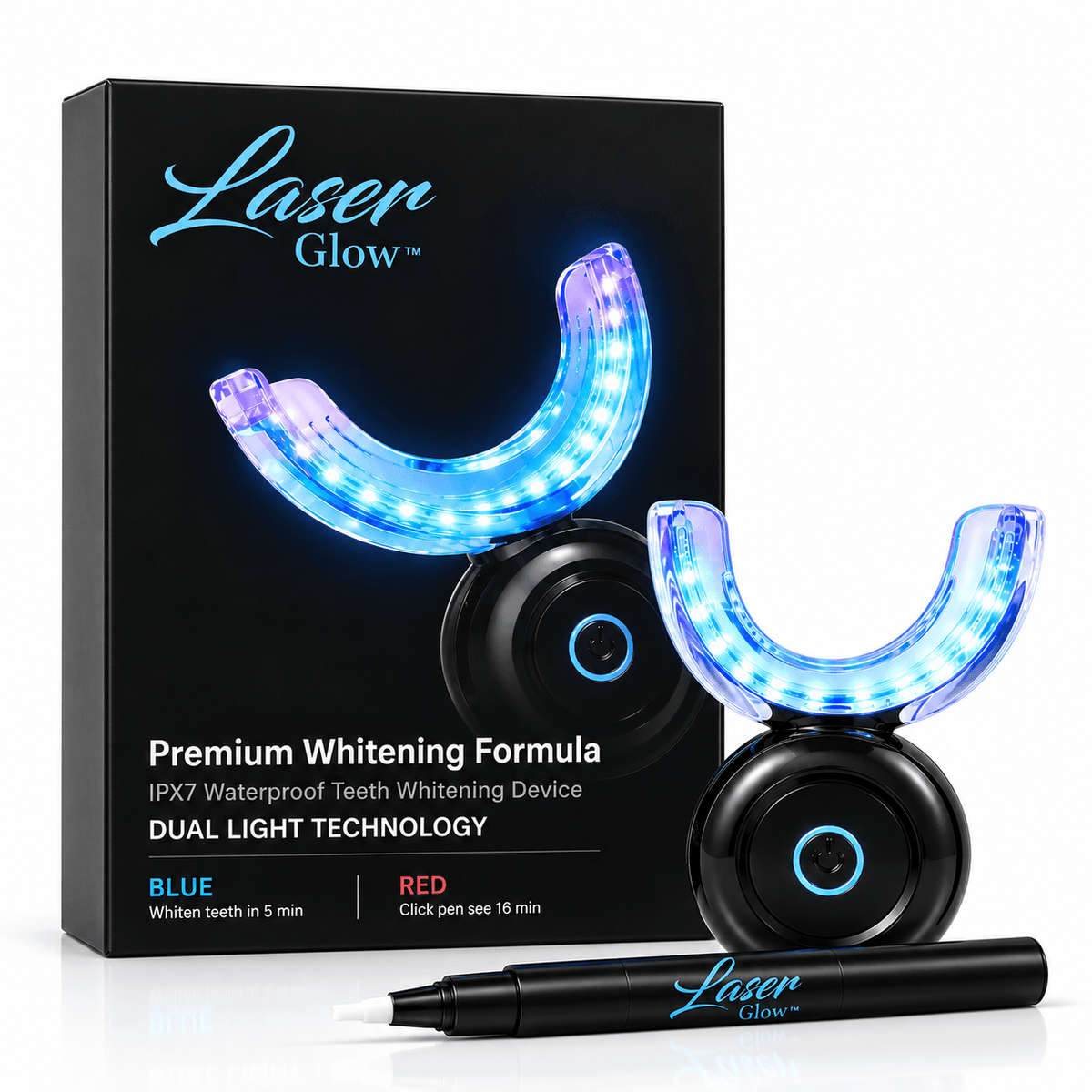
LED Teeth Whitening Kit
A cordless 32-bulb LED mouth tray with blue and red light, two 44% carbamide peroxide whitening pens and a 10-minute routine. Nothing to boil or mold. $49.
See the LED kit →Wireless LED kit with UV case
Three light modes, 44% carbamide peroxide gel, 16-minute sessions and a UV sterilizing case for the mouthpiece. $129.99.
See the wireless kit →Purple Whitening Strips
Peroxide-free PAP strips with purple color correction: 28 strips for 14 treatments, no tray or light needed. $29.
See the strips →Whitening pen refills
A 44% carbamide peroxide whitening pen for touch-ups between treatments. Use as directed.
See the pen →Natural teeth only: no tray, kit or strip changes the color of veneers, crowns or bonding, and LaserGlow’s purple products are not meant for clients whose visible front teeth are restorations. Read can you whiten veneers first if that applies to you.
Keep it clean
Caring for whitening trays and mouthpieces
- Rinse with cool water after every use; hot water can warp trays
- Brush gently with a soft toothbrush and plain water or mild soap
- Let it air-dry fully before storing it in its case
- Never share trays or mouthpieces
- Replace a tray that is cracked, warped or no longer fits closely
Soaking options for trays, aligners and night guards are compared in retainer cleaner tablets. After whitening, protect your result with what to eat after teeth whitening.
Do teeth whitening trays work?
Yes, when they are used with a proper whitening gel at the directed strength and wear time.
Fit matters: close-fitting trays give the most even results. Results vary with your starting shade and stain type.
Are custom trays better than boil-and-bite trays?
Custom trays fit more closely, so they hold gel more evenly and leak less. Boil-and-bite trays cost less but fit more loosely.
How long should I wear whitening trays?
Follow your gel’s instructions. Most take-home systems use a set daily wear time over about one to two weeks.
Can I use professional whitening gel in trays at home?
No. Professional 16% to 44% hydrogen peroxide gels are for trained providers only, with a gingival barrier, and are not for home or tray use.
Can I sleep with whitening trays in?
Only if your gel’s instructions and your dentist say so. Many take-home gels are designed for shorter daytime wear.
Is there a way to whiten at home without trays?
Yes. Strips and LED kits with a ready-made mouthpiece need no molding.
LaserGlow’s Purple Whitening Strips are peroxide-free and need no tray or light.
Whiten at home without molding a tray
Try an LED kit with a ready-made mouthpiece, or peroxide-free strips with no tray at all.