Peroxide safety
Is hydrogen peroxide bad for your teeth? Not when it is used the right way. It is the ingredient behind most teeth whitening, and in the right strength for the right amount of time it lightens natural teeth without harming healthy enamel. Here is what it actually does, what strength means and where the real risks are.
Short answer: Used as directed in a product made for teeth, hydrogen peroxide is not bad for your teeth. Temporary sensitivity and gum irritation are the common side effects, and both are usually short-lived.
- Used as directed, not harmful to enamel
- Temporary sensitivity is the most common side effect
- Strength and contact time decide the risk
- Skip DIY peroxide rinses and pastes
How it works
What does hydrogen peroxide do for your teeth?
Hydrogen peroxide is the active ingredient behind most teeth whitening, from strips to in-office treatments. It is good at one specific job: lightening the color of natural teeth.
-
1
It moves into the tooth
Hydrogen peroxide is a small molecule. Applied as a gel, it passes through the enamel and into the dentin underneath, where most deep discoloration sits.
-
2
It breaks down stain molecules
Inside the tooth, peroxide releases reactive oxygen that breaks large, dark stain molecules into smaller ones that reflect less color. The tooth itself is not bleached away.
-
3
It lightens natural tooth structure only
Peroxide changes the shade of natural enamel and dentin. Veneers, crowns, bonding and fillings keep their color.
-
4
It does not clean or protect teeth
Peroxide is a whitening agent, not a replacement for brushing, flossing or fluoride. It does not prevent cavities or treat gum disease.
Carbamide peroxide, used in many take-home products, breaks down into hydrogen peroxide in the mouth, so it works the same way more slowly. The differences are covered in carbamide peroxide vs hydrogen peroxide.
The real answer
Is hydrogen peroxide bad for your teeth?
The honest answer is that hydrogen peroxide is not bad for your teeth when it is used correctly. The dose, the time on the teeth and the condition of your mouth make the difference.
What about enamel?
This is the most common worry. Research on whitening used as directed generally finds no clinically meaningful damage to enamel. The full evidence is in does teeth whitening damage enamel.
Why it feels harsher than it is
The sharp, cold-triggered feeling some people get is the nerve reacting to peroxide reaching the dentin. It feels alarming but is usually temporary. See sensitive teeth after whitening for how long it lasts and what helps.
Concentration
What percentage of hydrogen peroxide is safe for teeth?
There is no single safe number. The safe strength depends on who applies it, how long it stays on and how the gums are protected. Higher strength works faster and asks for more control.
| Product type | Relative strength | What it does | How it is used |
|---|---|---|---|
| Toothpastes and rinses | Low | Short contact; mainly helps with surface stain | Daily maintenance, as labeled |
| At-home strips and kits | Low to moderate | Gradual change over repeated sessions | Follow product instructions exactly |
| Take-home carbamide peroxide | Moderate (releases HP slowly) | Gradual change, often worn longer | As directed by the product or provider |
| Professional in-office gel | High | The fastest change, in one supervised visit | Trained providers only, with a gingival barrier |
Rules differ by country
In the European Union, consumer products can contain no more than 0.1% hydrogen peroxide, and products up to 6% are limited to use through dental professionals. In the United States, strengths vary by product, so reading the label and following the directions matters.
Professional gels
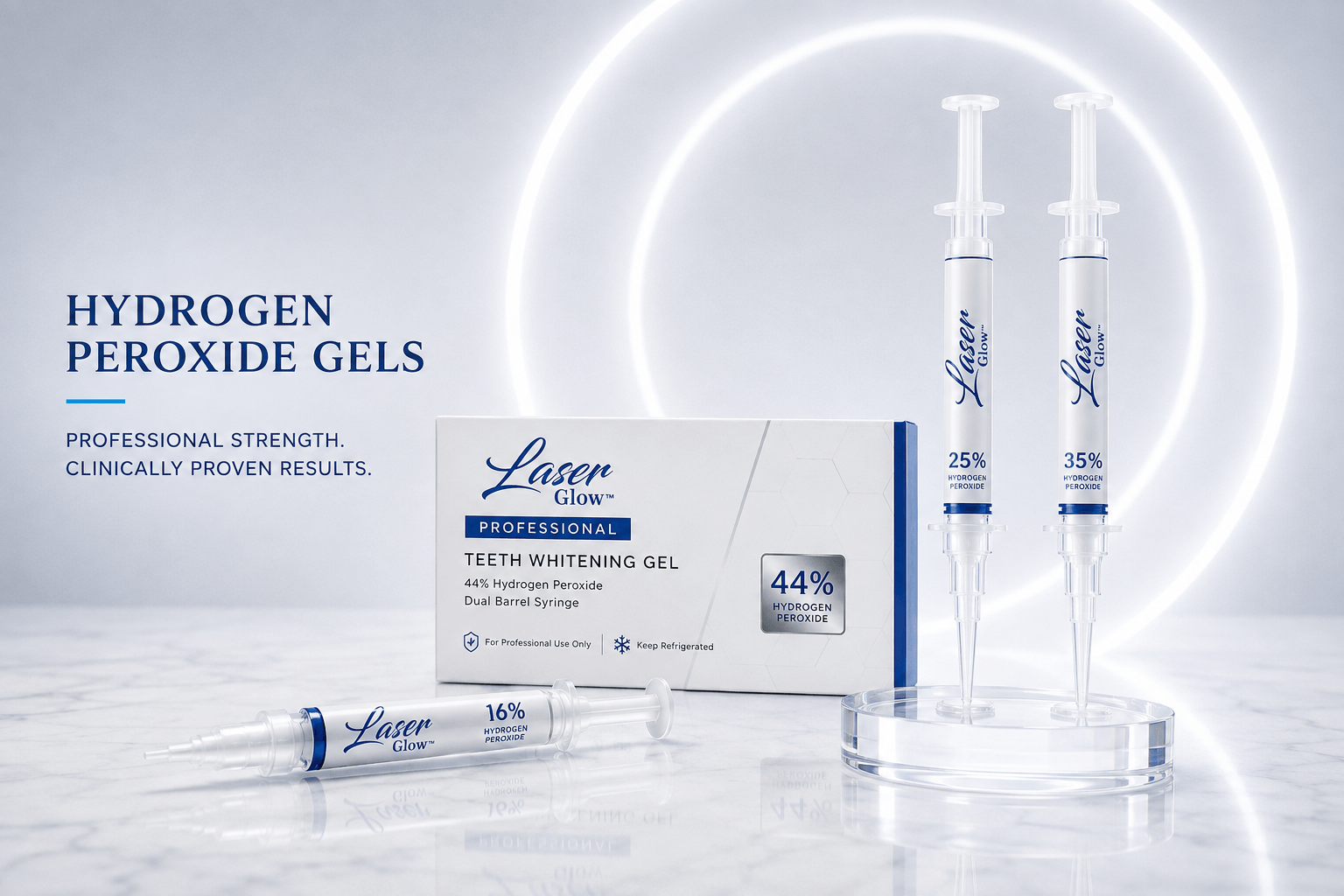
16% to 44% is professional territory
LaserGlow’s hydrogen peroxide gels run from 16% to 44%. They are for professional use only, by trained providers, with a gingival barrier on every treatment and mandatory at 35% and above. They are not for home or tray use.
Providers choosing a strength can compare every concentration in the hydrogen peroxide whitening gel strength guide.
Side effects
The real side effects of hydrogen peroxide on teeth
These are the side effects worth knowing about. Most are mild, temporary and avoidable with the right product and routine.
Tooth sensitivity
The most common side effect. Usually temporary, peaking in the first day and easing within one to two days.
Sensitive teeth after whitening →Gum irritation
Gel on unprotected gums can cause white patches or soreness. It is usually short-lived and preventable with proper isolation.
Gums turned white after whitening →Uneven results
Restorations do not change color, and untreated decay or white spots can look more obvious after whitening.
Can you whiten veneers? →Overuse
Whitening too often or for too long adds sensitivity without adding whiteness. Results also fade over time no matter what.
How long does teeth whitening last? →Skip this
Is it safe to rinse or brush with drugstore hydrogen peroxide?
This is one of the most searched peroxide questions, and the answer is no.
Why we advise against it
The brown-bottle 3% hydrogen peroxide sold in pharmacies is a household antiseptic, not a whitening product. Swishing it, brushing with homemade peroxide pastes or soaking cotton on your teeth gives you no control over contact time or gum exposure.
Frequent, uncontrolled use can irritate gums and make teeth sensitive, and the results are unpredictable. Use a product made and labeled for whitening teeth instead, and follow its directions.
Better options
- Whitening toothpaste for surface stain. Compare it in whitening toothpaste vs professional whitening
- A labeled at-home whitening kit, used exactly as directed
- Peroxide-free PAP products if peroxide does not suit you. See is PAP as good as peroxide
- Professional whitening for the fastest, supervised change
Check first
Who should avoid hydrogen peroxide whitening?
- Anyone under 18. LaserGlow’s whitening protocols are written for adults
- Pregnant or breastfeeding clients. Most professionals recommend waiting; see can you whiten teeth while pregnant
- People with untreated cavities, cracked teeth or active gum disease, until those are treated
- Anyone with a known sensitivity or allergy to peroxide
- People with severe existing tooth sensitivity or significant gum recession, until a dentist has checked them
- Anyone whose visible front teeth are mostly veneers or crowns, since those will not change color
Providers: screening questions, consent and documentation are in the teeth whitening safety and compliance guide. For myths about whitening in general, read is teeth whitening safe.
FAQ
Hydrogen peroxide and teeth FAQ
Quick answers about peroxide and your teeth. Still unsure? Contact our team.
Is hydrogen peroxide good for your teeth?
It is good at whitening natural teeth when used in a product made for that purpose and used as directed.
It does not clean teeth, prevent cavities or replace fluoride toothpaste.
Does hydrogen peroxide damage enamel?
Used as directed, research generally finds no clinically meaningful enamel damage from whitening.
Read does teeth whitening damage enamel for the details.
Why do my teeth hurt after using hydrogen peroxide?
Peroxide reaches the dentin and temporarily makes the nerve more reactive. This is usually short-lived.
See sensitive teeth after whitening for relief tips and red flags.
Can I use hydrogen peroxide to whiten my teeth at home?
Use a whitening product made and labeled for teeth, and follow its directions. Skip drugstore peroxide rinses and homemade pastes.
Is hydrogen peroxide better than carbamide peroxide?
Neither is better for everyone. Hydrogen peroxide acts faster; carbamide peroxide releases it more slowly.
Compare them in carbamide peroxide vs hydrogen peroxide.
What strength of hydrogen peroxide do professionals use?
Professional in-office gels are higher strength. LaserGlow’s range is 16% to 44%, for trained providers only, with a gingival barrier.
Choose whitening that fits your teeth
Start with the right product strength, and protect comfort from day one.