Whitening technology
Teeth whitening technology has changed more in delivery than in chemistry. This overview covers the advances that matter today: dual-barrel automixing gels, LED light systems, PAP+ peroxide-free formulas and remineralizing aftercare, what each one changes, and where to read the full guide.
Overview
Teeth whitening technology at a glance
Hydrogen peroxide and carbamide peroxide have whitened teeth for decades, and the core chemistry has not been reinvented. What is new is everything around it: how gel is mixed and delivered, how it is activated, how sensitivity is managed and what supports enamel afterward. These are the teeth whitening advances worth knowing.
| Advance | What it changes | Full guide |
|---|---|---|
| Dual-barrel automixing | How professional gel is mixed and dispensed | Dual-barrel vs single syringe |
| LED light systems | How a session is structured and, possibly, how fast gel reacts | Does LED whitening work? |
| PAP+ formulas | A peroxide-free whitening chemistry | HP vs CP vs PAP+ |
| Remineralizing aftercare | Comfort and enamel support after whitening | Desensitizing gel guide |
Professional gels mentioned here are for professional use only, by trained providers. Follow product instructions and confirm the rules in your state.
Delivery
From single syringes to dual-barrel automixing
What changed
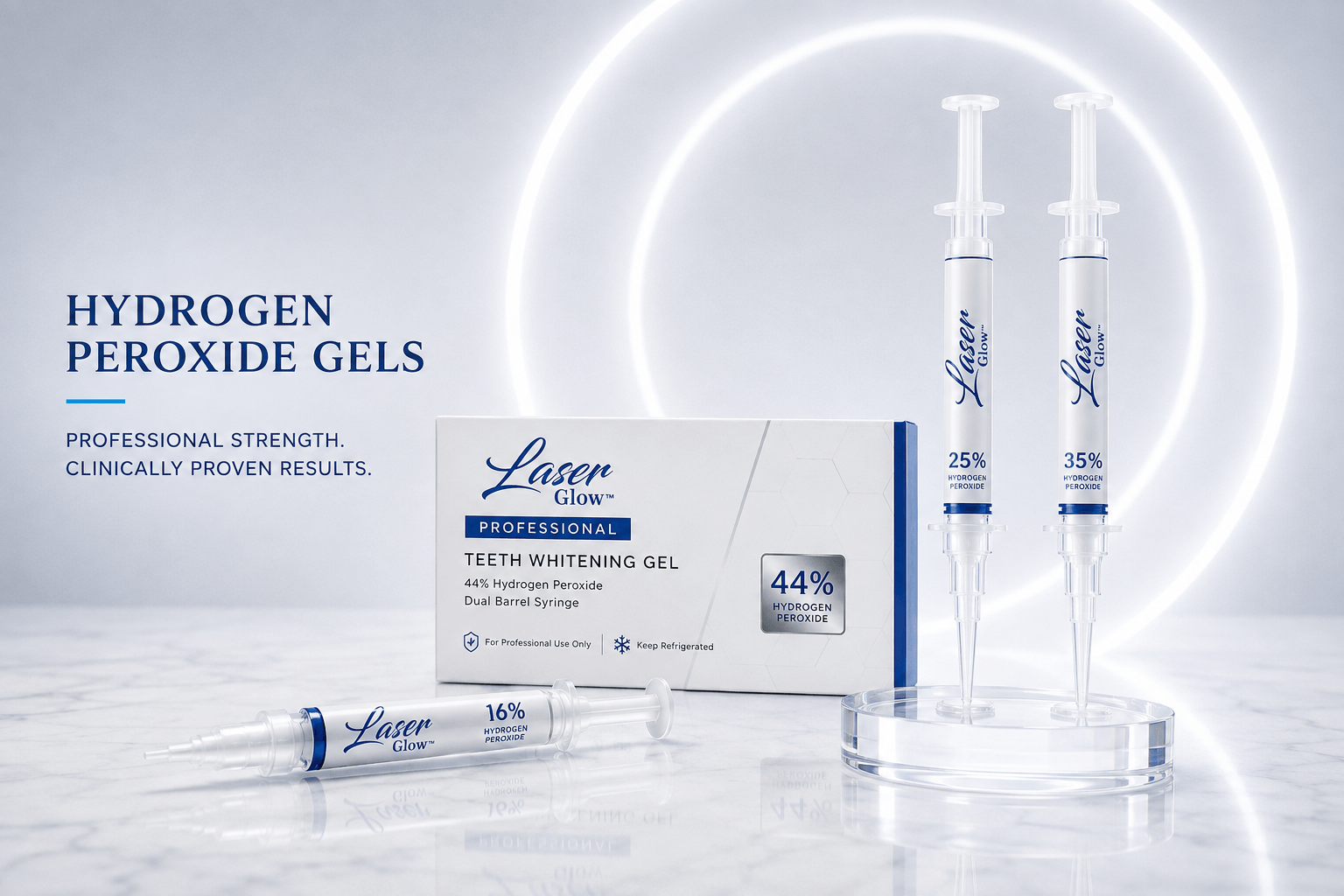
Traditional single-syringe gel comes pre-mixed and ready to apply. Dual-barrel systems keep two components separate and combine them through an automatic mixing tip at the point of application, which can give a more consistent ratio and reduce waste when used as instructed.
For higher-concentration protocols, controlled dispensing matters. The full comparison is in dual-barrel vs single-syringe whitening gel.
Why it matters
Consistency at higher strengths
An uneven ratio can affect working consistency, treatment performance and the likelihood of sensitivity or soft-tissue irritation. Automixing takes that variable out of the provider’s hands.
Activation
LED and light-activated whitening
What the technology does
LED light does not whiten teeth by itself. Some gels are formulated for use with a light that may help accelerate the reaction, and LED units have become common in professional and consumer whitening because they are generally less expensive and produce less heat than many older light systems. Not every gel benefits from light, so follow the gel manufacturer’s instructions.
For the chemistry and the research, read does LED teeth whitening work. For pros, cons and side effects, see blue light teeth whitening.
Equipment
Professional lamps and home kits
Providers can compare every teeth whitening machine we carry, including the clinic LED whitening lamp. At home, the wireless LED whitening kit pairs a timed routine with an LED mouthpiece.
Comfort
PAP+, remineralizing aftercare and sensitivity control
Sensitivity is one of the main reasons people stop whitening early, and it is where the most practical advances sit.
PAP+ peroxide-free whitening
PAP+ uses phthalimidoperoxycaproic acid instead of hydrogen or carbamide peroxide, and has gained attention among people who have had sensitivity with peroxide. Performance depends on the full formula, and peroxide-based professional gels may still suit deeper discoloration better. Compare the chemistries in PAP vs peroxide whitening, or see the 12% PAP+ teeth whitening gel.
Nano-hydroxyapatite and remineralizing care
Remineralizing ingredients don’t whiten. Their role is aftercare: supporting the enamel surface and comfort after whitening. That is the job of a desensitizing gel, explained in desensitizing gel for teeth.
Modern protocols manage sensitivity with several tools at once: lower-concentration formulas, shorter intervals, peroxide-free options, careful soft-tissue isolation with a gingival barrier, and desensitizing products before or after treatment. Gentler at-home options are in teeth whitening for sensitive teeth.
Putting it together
Which whitening technology fits your practice or routine
A starting framework. Individual sensitivity, enamel condition, product instructions and professional requirements still decide the final choice.
| If you are | Consider | Why |
|---|---|---|
| A new provider building a whitening menu | Professional teeth whitening kit | Equipment and core supplies in one matched system |
| Running a higher-volume schedule | Dual-barrel professional gels | Controlled dispensing and potentially less waste |
| Working with sensitivity-prone clients | Lower-concentration or PAP+ options | The protocol can prioritize comfort and tolerance |
| Whitening at home for the first time | Sensitive whitening strips | A simple format that is easy to start |
| Looking for a structured home routine | Wireless LED whitening kit | A timed application routine with an LED mouthpiece |
Gel strength should follow the client, not the newest technology: see which whitening gel strength to use. The strongest concentration is not automatically the best choice. Related reading: does leaving whitening gel on longer work.
FAQ
Whitening technology FAQ
Quick answers about modern whitening. Questions about equipment? Contact our team.
What is the new teeth whitening technology?
Most recent advances are in delivery and comfort rather than new bleaching chemistry: dual-barrel automixing, LED systems, PAP+ formulas and remineralizing aftercare.
What is PAP+ teeth whitening?
PAP+ uses phthalimidoperoxycaproic acid as a peroxide-free whitening ingredient, often chosen by people concerned about sensitivity.
Results vary by formula, stain type and protocol. See PAP vs peroxide whitening.
Does LED light make whitening more effective?
LED light does not whiten by itself. It may accelerate gels formulated for light, but results depend mainly on the gel, concentration and contact time.
More in does LED teeth whitening work.
Is nano-hydroxyapatite a replacement for whitening gel?
No. It supports enamel and comfort after whitening but does not whiten stains like peroxide or PAP+.
Are at-home LED kits catching up to professional results?
At-home systems have improved, but professional treatments use stronger gels, controlled isolation and direct supervision.
At-home kits are designed for gradual results through repeated use.
How often should a whitening practice upgrade its equipment?
There is no universal schedule. Reassess when light output becomes inconsistent, maintenance problems grow, results decline or a newer system meaningfully improves safety, efficiency or consistency.
Build a setup with modern whitening technology
Professional gels, LED equipment and aftercare for trained providers, plus at-home options for clients.