Blue LED whitening
Blue light teeth whitening pairs a peroxide gel with visible blue LED light, and the gel does the actual whitening. Here are the real pros and cons, the most common LED teeth whitening side effects, who should be cautious, and how in-office and at-home blue light systems compare.
Short answer: blue light whitening is generally considered safe when used as directed. The light doesn’t whiten on its own; temporary sensitivity and gum irritation are the main side effects, and both usually come from the gel.

The basics
What is blue light teeth whitening, and does it work?
Light teeth whitening sounds high-tech, but the principle is simple: the gel whitens, and the light is a supporting tool.
Gel plus light
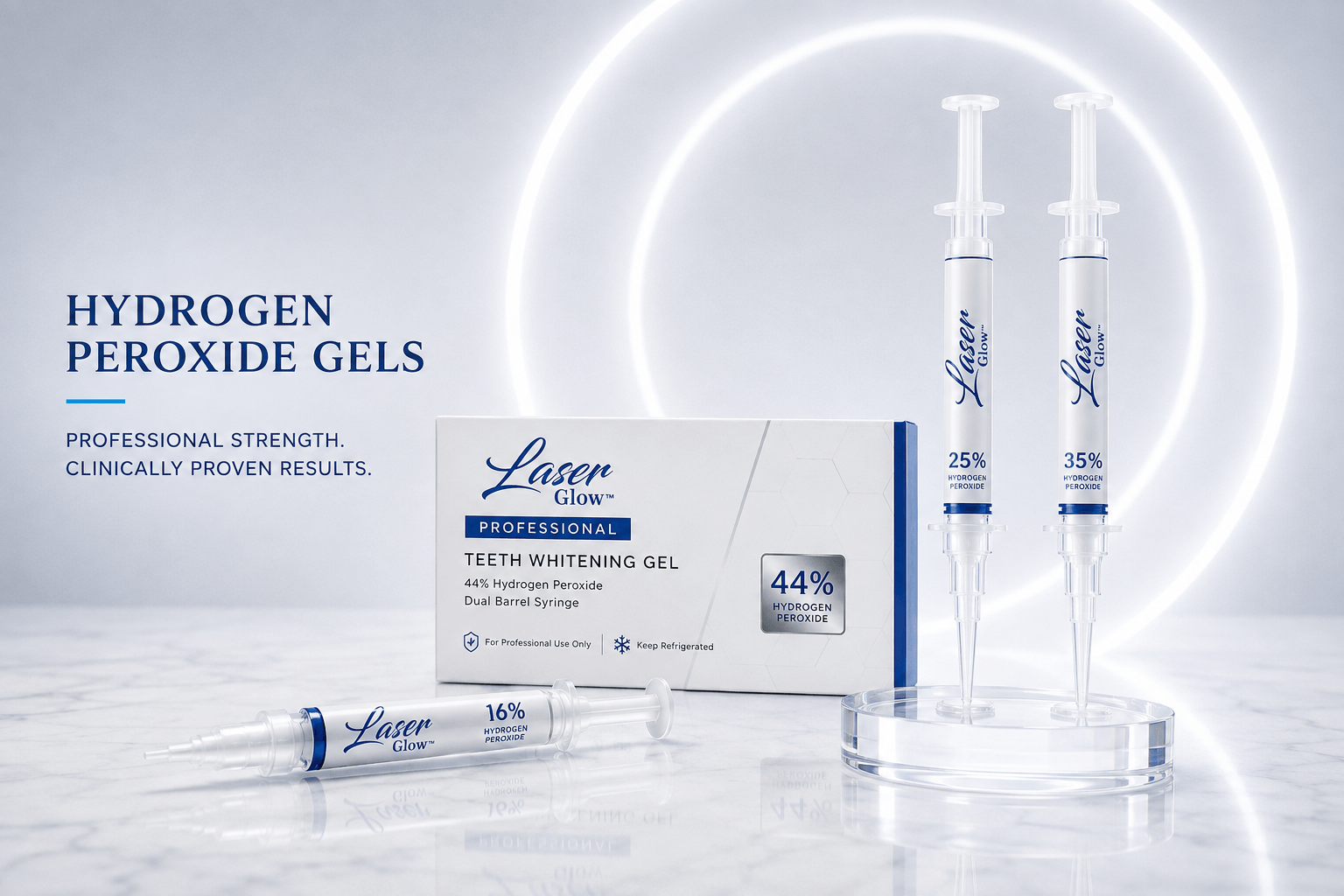
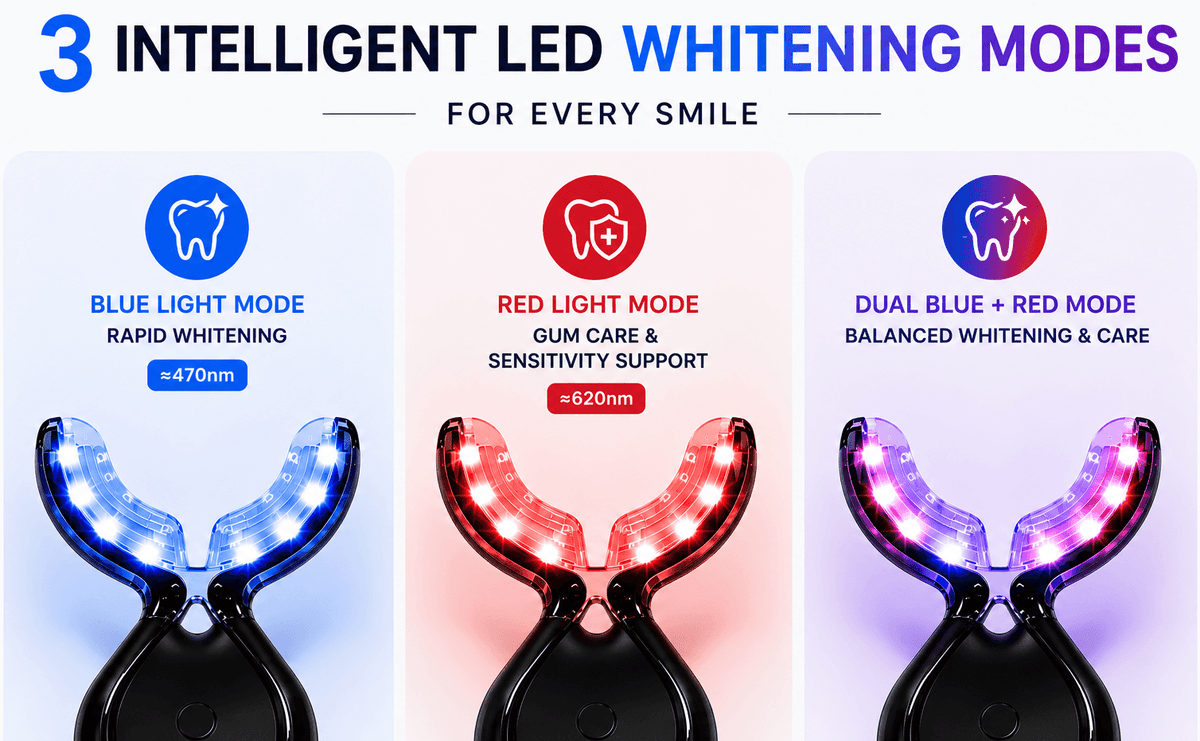
Blue light teeth whitening pairs a visible blue LED light with a peroxide whitening gel, usually hydrogen peroxide or carbamide peroxide. The gel breaks down the stain molecules that make teeth look yellow or dull; the light is used during timed cycles to support that process.
In a professional setting, the provider protects the gums, applies the gel, positions the lamp and monitors the session. At home, LED mouthpieces are paired with lower-strength gels for gradual whitening and maintenance.
How does blue light whiten teeth?
It doesn’t, on its own
Blue LED light alone does not whiten teeth in a meaningful way. The peroxide gel is the active part of the treatment. The light is intended to support the reaction, and how much it adds is still debated. For the chemistry and the research, read does LED teeth whitening work.
Weigh it up
Blue light teeth whitening pros and cons
Pros
- Can create faster visible whitening than toothpaste alone
- Works well on surface stains from coffee, tea, wine, tobacco and lifestyle habits
- Uses visible blue light, not UV light
- Gives the session a structured, timed format
- Available as an in-office treatment or lower-strength at-home maintenance
Cons
- May not fully correct internal discoloration from trauma, fluorosis or medication
- Does not whiten crowns, veneers, fillings, bonding or other restorations
- Can cause temporary sensitivity, or gum irritation if gel touches soft tissue
- Results fade and need maintenance if you regularly consume staining foods and drinks
- The light’s added benefit over the same gel without light is uncertain
How to judge LED whitening claims: be skeptical of any product that says the light alone whitens teeth, promises a set number of shades or calls an LED device a laser. Ask what gel is used, at what strength, and whether soft tissue is protected.
Know the risks
LED teeth whitening side effects
Blue light teeth whitening is generally considered safe when used correctly and according to product instructions or professional guidance. Most side effects are temporary and come from the gel.
-
01
Temporary tooth sensitivity
The most common side effect. It usually comes from the whitening gel, not the light, though some research has linked light activation to a higher rate of temporary sensitivity.
-
02
Gum irritation
Mild irritation or white patches on the gums if whitening gel touches unprotected tissue. It usually settles, but it means isolation needs attention.
-
03
Short “zings”
Brief, sharp sensations during or after whitening, typically linked to gel concentration and exposure time.
-
04
Soft-tissue dryness
Dry or slightly irritated lips and gums, especially if aftercare is ignored after a session.
Risks of LED light teeth whitening, kept low
LED light does not use ultraviolet radiation and does not rely on the high heat associated with some older whitening light systems. Most risk sits with the gel, which is why soft-tissue protection, correct gel placement, timing and client screening matter so much. Comparing UV and LED devices? See UV light for teeth whitening.
In the office, that means a gingival barrier, retraction and protective eyewear. If a client reports unexpected heat or discomfort, the session stops. The provider-side setup is in soft tissue isolation teeth whitening.
If sensitivity develops
Pause whitening and follow the product’s aftercare directions. A desensitizing gel can support post-whitening comfort and enamel care.
Sensitivity lasting beyond 72 hours, or gum irritation that does not settle within 48 hours, is outside the normal range: contact your provider or dentist. For gentler options, see teeth whitening for sensitive teeth.
Screening
Who should be cautious with LED whitening
Under 18
LaserGlow whitening protocols are written for adults.
Pregnant or breastfeeding
Delay cosmetic whitening and ask your provider first.
Whitening and pregnancy →Untreated dental problems
Cavities, gum disease, infections, exposed roots or significant sensitivity need a dental professional first.
Is teeth whitening safe? →Visible restorations
Crowns, veneers, fillings and bonding in the smile zone won’t change shade.
Whitening with crowns or veneers →The best candidates are healthy adults with natural teeth, realistic expectations and staining from everyday habits such as coffee, tea, wine, smoking or colored foods.
In-office or at home
Choosing a blue light tooth whitening system
A strong plan often starts with in-office whitening, then uses an at-home LED kit or maintenance products to keep results fresh. Compare professional vs at home teeth whitening in more depth.
How long results last
Professional whitening results commonly hold 6 to 18 months, depending on starting shade, stain type, oral hygiene, diet and smoking. Avoid heavy staining foods and drinks for 24 to 48 hours afterward, use a soft toothbrush, and rinse with water after coffee, tea and red wine.
Why shade drifts back: why teeth whitening results fade. Prefer peroxide-free upkeep on natural teeth? Consider purple teeth whitening strips, following the product schedule.
For providers
Buying a professional lamp?
Match the light to your gel and protocol, not to marketing. Our buying guide covers how to choose a professional teeth whitening light, and every teeth whitening machine we carry is compared there. Professional use only.
FAQ
Blue LED teeth whitening FAQ
Quick answers on safety, side effects and results. Still unsure? Contact our team.
Does blue light whiten teeth by itself?
No. Blue LED light does not meaningfully whiten teeth on its own. The peroxide gel is the active part of the treatment.
The research on how much the light adds is covered in does LED teeth whitening work.
Is blue light teeth whitening safe?
When used correctly and as directed, it is generally considered safe for healthy adults. Most side effects come from the gel.
Screening, soft-tissue protection and correct timing are what keep it that way.
What are the most common LED teeth whitening side effects?
Temporary tooth sensitivity, brief zings, and mild gum irritation if gel touches the gums.
These are usually temporary. Contact your provider if sensitivity lasts beyond 72 hours or gum irritation does not settle within 48 hours.
Is LED whitening better than whitening strips?
In-office LED whitening can deliver a more controlled, faster refresh than strips. Strips remain useful for gradual at-home brightening or maintenance.
How long do LED whitening results last?
Professional results commonly hold 6 to 18 months, depending on diet, oral hygiene, smoking and maintenance.
Touch-ups and stain-conscious aftercare help extend them.
Does LED whitening work on crowns or veneers?
No. Whitening gels work on natural teeth only. Crowns, veneers, fillings and bonding do not change color.
Whiten with the right expectations
Understand what the light does, protect your comfort and choose the right format for your smile.