How peroxide whitening works
Hydrogen peroxide teeth whitening is the most common way teeth are whitened, from strips and trays to in-office treatments. The peroxide breaks down stain molecules inside the tooth, and the strength of the gel and the time it stays on decide how fast the shade changes. Here is how each option works, what to expect and how long results last.
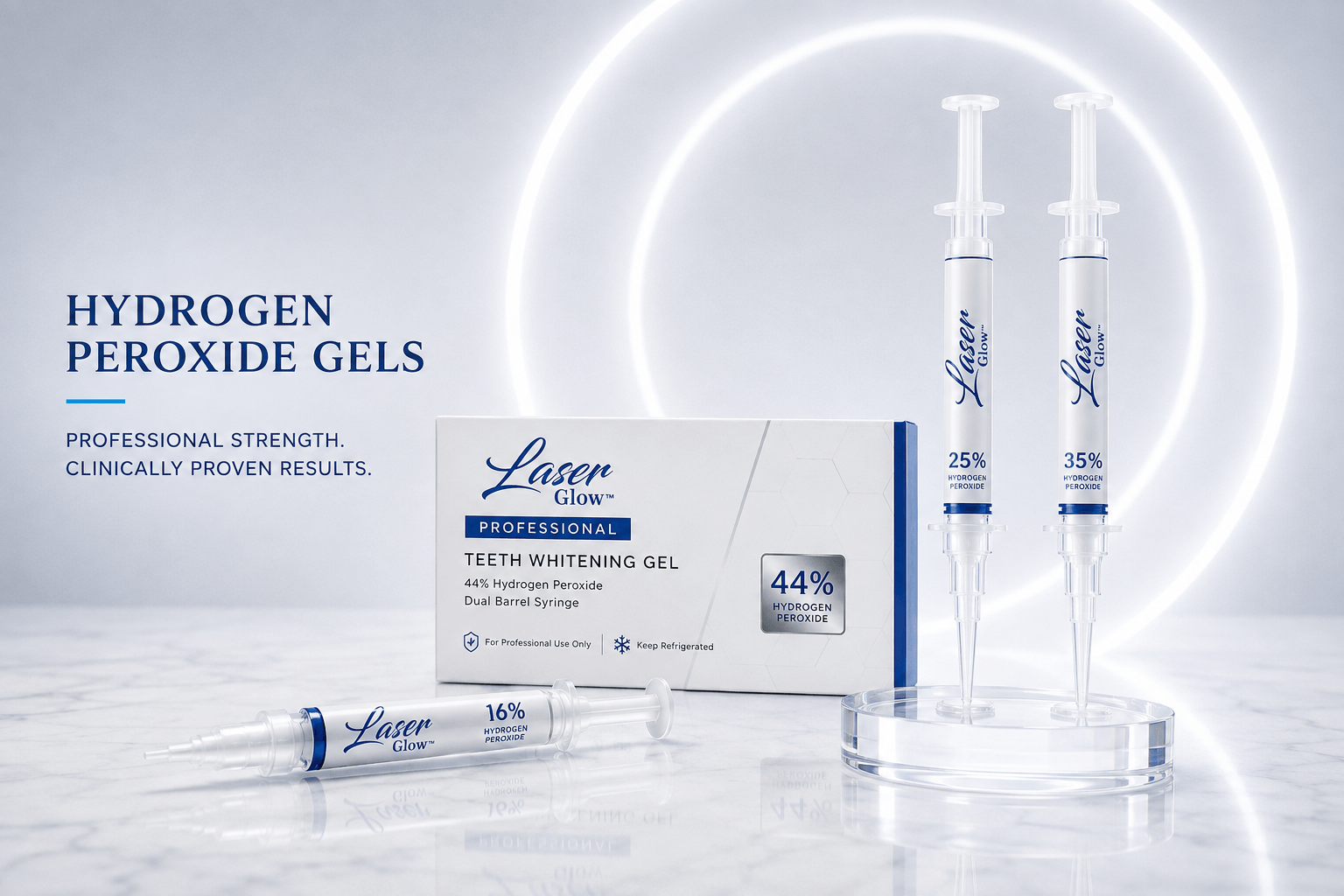
Short answer: hydrogen peroxide whitens teeth by breaking down stain molecules inside enamel and dentin. Professional in-office gels (16% to 44%) can change the shade in one visit; lower-strength home products work over one to two weeks. Results vary and fade gradually.
- Peroxide lightens stain inside the tooth
- Strength and contact time set the speed
- In-office: one visit; at-home: one to two weeks
- Veneers, crowns and bonding don’t change color
The chemistry, simply
How does hydrogen peroxide whiten teeth?
Hydrogen peroxide whitens teeth by oxidizing the stain molecules that make teeth look yellow or dull. It works inside the tooth, which is why it changes the shade instead of only polishing the surface.
-
1
Gel goes on the front teeth
A whitening gel containing hydrogen peroxide, or carbamide peroxide that turns into it, is applied to the visible surfaces of the teeth.
-
2
Peroxide moves into the tooth
The small peroxide molecule passes through enamel into the dentin underneath, where deeper discoloration sits.
-
3
Stain molecules break apart
Reactive oxygen breaks large, dark stain molecules into smaller ones that reflect less color, so the tooth looks lighter.
-
4
Only natural teeth change
Enamel and dentin lighten. Veneers, crowns, bonding and fillings keep their original color.
Light from an LED whitening lamp is used with many professional gels to support the process during timed cycles. The gel does the whitening. See how LED teeth whitening works.
Your options
In-office vs at-home hydrogen peroxide whitening
The same ingredient works in every format. What changes is the strength, who applies it and how long it takes to see a difference.
| Option | Peroxide strength | Time to a visible change | Who applies it |
|---|---|---|---|
| Whitening toothpaste | Low, short contact | Mainly removes surface stain over weeks | You, daily |
| Strips and pens | Low to moderate | Gradual, over a 1 to 2 week course | You, following the label |
| Take-home trays | Moderate, often carbamide peroxide | Gradual, over 1 to 2 weeks or more | You, as directed |
| In-office whitening | Professional gels, 16% to 44% HP | One visit, with results that vary by starting shade | A trained provider, with a gingival barrier |
When at-home makes sense
Light surface stain, a flexible timeline and a budget that favors a kit. Use a product made for teeth and follow its directions exactly. Our at-home whitening range covers strips, pens and LED kits.
Professional strength
When in-office makes sense
Deeper staining, an event coming up, or wanting the change in one appointment. Professional hydrogen peroxide teeth whitening gels are for trained providers only, with a gingival barrier on every treatment.
In the chair
What happens during a professional hydrogen peroxide treatment?
A chairside session follows the same order every time. The exact timing comes from the gel’s product instructions.
- Screen and record the shadeThe provider checks sensitivity history and restorations, then records the starting shade against a guide.
- Protect the gumsA light-cured gingival barrier goes along the gumline. It is required with every professional hydrogen peroxide gel.
- Apply the gelA thin, even layer goes on the front surfaces of the teeth. See how whitening gel syringes are used.
- Run timed cyclesMost LaserGlow professional gels run about 15 to 20 minutes per cycle, with fresh gel between cycles, as the product directs.
- Remove and compareGel and barrier come off, and the finishing shade is recorded against the same guide.
- AftercareClients go home with aftercare guidance and often a desensitizing gel.
Providers: the full chairside workflow is in the Professional Teeth Whitening Guide.
What to expect
How long do hydrogen peroxide whitening results last?
Results fade gradually as new stain builds up. How long they last depends far more on habits than on the product used.
Starting shade matters
Yellow-toned teeth usually respond well. Gray or intrinsic staining responds more slowly, and results vary from person to person.
Teeth color chart →Habits set the timeline
Coffee, tea, red wine and smoking bring stain back faster. Rinsing after them and regular cleanings slow it down.
Foods that stain after whitening →Touch-ups keep it
Short at-home touch-ups between professional sessions help hold the shade.
How long whitening lasts →Don’t overdo it
More often or longer sessions add sensitivity, not whiteness.
Does longer work better? →Safety
Is hydrogen peroxide teeth whitening safe?
Used as directed in a product made for teeth, yes. Temporary sensitivity and gum irritation are the common side effects, and both are usually short-lived.
Skip drugstore peroxide
The 3% hydrogen peroxide sold as a household antiseptic is not a whitening product. Rinsing or brushing with it gives you no control over contact time or gum exposure. Use a product labeled for whitening teeth instead.
FAQ
Hydrogen peroxide teeth whitening FAQ
Quick answers about peroxide whitening. Still unsure? Contact our team.
How fast does hydrogen peroxide whiten teeth?
Professional in-office gels can change the shade in one visit. Home strips, pens and trays work gradually over one to two weeks. Results vary by starting shade.
What percentage of hydrogen peroxide is used for teeth whitening?
Home products use lower strengths made for unsupervised use. Professional in-office gels are stronger. LaserGlow’s professional range is 16% to 44%, for trained providers only, with a gingival barrier.
Is hydrogen peroxide or carbamide peroxide better for whitening?
Neither is better for everyone. Hydrogen peroxide acts faster; carbamide peroxide releases it more slowly, which suits take-home trays and pens.
Compare them in carbamide peroxide vs hydrogen peroxide.
Can I whiten my teeth with drugstore hydrogen peroxide?
We advise against it. Household peroxide is an antiseptic, not a whitening product, and DIY rinses or pastes give no control over gum exposure. Use a product labeled for whitening teeth.
Does hydrogen peroxide whiten veneers or crowns?
No. Peroxide lightens natural enamel and dentin only. Veneers, crowns and bonding keep their color.
Why do teeth feel sensitive after peroxide whitening?
Peroxide reaching the dentin can make the nerve temporarily more reactive. It usually eases within one to two days.
Pick the right peroxide whitening for you
At-home kits for gradual change, or professional gels for providers who whiten chairside.